

Beyond the Org Chart: Building Networks That Actually Work.
Golden Hook & Introduction
SECTION
Nova: What if the very thing we’ve been taught makes organizations strong—centralized control, a clear hierarchy—is actually their greatest, most fundamental weakness?
Atlas: Oh man. That feels like a direct challenge to pretty much every organizational chart I’ve ever seen. Are we really saying that top-down structures are inherently flawed? That feels… revolutionary.
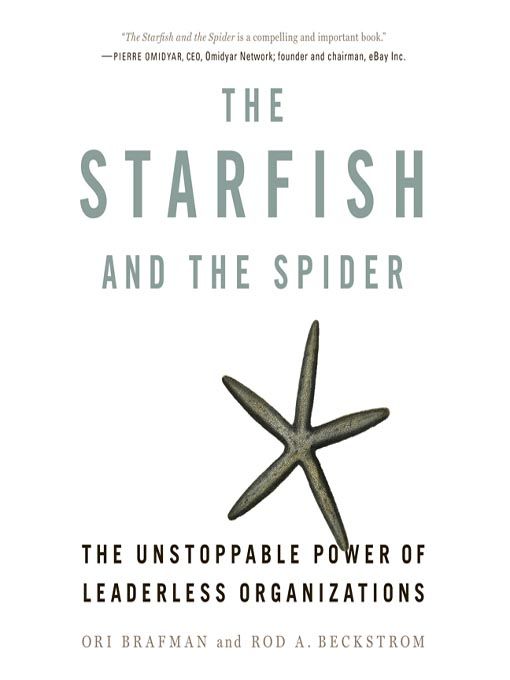
Nova: It absolutely flips traditional thinking on its head, Atlas. Today, we’re diving into two brilliant books that explore just that. First, “The Starfish and the Spider” by Ori Brafman and Rod A. Beckstrom, and then we’ll look at “Open Organizations” by Jim Whitehurst. Brafman and Beckstrom’s work truly resonated because it took a simple biological metaphor and applied it to business and social movements in a way that almost predicted the resilience of decentralized movements years ago.
Atlas: Right. And Jim Whitehurst. I know him from Red Hat.
Nova: Exactly! Whitehurst, as the former CEO of Red Hat, a highly successful open-source company, gave us a rare, practitioner's view on to actually lead an open organization through significant growth, all while maintaining that core open culture. It’s a powerful combination of theory and real-world application.
Atlas: Okay, so we’re talking about a fundamental rethink of how we build, how we lead, and how we create structures that actually. For anyone trying to build lasting impact, trying to lay down a strategic foundation, this is crucial. It’s about resilience, not just rigidity.
Nova: Precisely. And that’s where our journey begins today: understanding the hidden power of networks that actually work.
The Power of Decentralization (Starfish vs. Spider)
SECTION
Nova: Let’s start with “The Starfish and the Spider.” The book posits two fundamental types of organizations, using these incredibly vivid metaphors. The 'spider' organization is what most of us are used to: a central head, a command-and-control structure. Think of traditional corporations, the military, or even many government agencies. If you cut off the head, the organization dies. It’s efficient, but it’s brittle.
Atlas: I see that. It’s a single point of failure. I imagine a lot of our listeners, especially those building strategic frameworks, are familiar with this model. It feels stable, predictable. You know who’s in charge.
Nova: Exactly. That sense of stability is often an illusion. But then, there's the 'starfish.' This is the decentralized model. Think of a literal starfish: no central brain. Cut off a leg, it grows a new one. Cut it in half, and in some species, you get starfish. This is the peer-to-peer network, the decentralized model. Its power comes from its distributed nature.
Atlas: That sounds almost chaotic, Nova. How does anything get done without a clear head, without central direction? Where's the strategic guidance for someone trying to lay down a solid foundation if there's no central architect? It sounds like it could devolve into anarchy.
Nova: That’s the magic, and it’s why it’s so counter-intuitive. Starfish organizations thrive on principles of self-organization, shared purpose, and a culture of trust. They don't need a central authority to tell them what to do because the intelligence and decision-making capacity are distributed throughout the network. Think of Wikipedia, for instance. No single CEO, no editorial board dictating every entry, yet it’s one of the largest and most comprehensive encyclopedias ever created. Or the Apache software project, which powers a huge chunk of the internet’s web servers. Again, no central command, just a community of developers.
Atlas: Wow. So the book isn’t just theoretical. It’s showing us real-world examples of massive, valuable entities that operate without a traditional head. But I’m still wrestling with how that translates to, say, a business that needs to hit quarterly targets or launch a new product. How do you maintain cohesion?
Nova: That’s where the shared purpose and ideology come in. The book uses a fantastic case study: the music industry’s struggle against file-sharing. The industry, a classic spider, tried to chop off the "heads" of file-sharing services like Napster. But the network, the decentralized peer-to-peer sharing, just regenerated. Every time they shut one down, two more popped up. The music industry was fighting a starfish with spider tactics, and it was a losing battle. The network didn't have a head to cut off; it was everywhere.
Atlas: That’s a profound insight. The very act of trying to control it, to centralize the fight, made the decentralized network stronger and more elusive. It meant their traditional levers of control were not just ineffective, but actively counterproductive. For anyone trying to build something adaptable, something that can withstand external shocks, this is a game-changer. It means our instinct to control might be leading us down the wrong path. We might be building for fragility, not resilience.
Nova: Exactly. When you decentralize, you distribute the capacity to adapt, to innovate, and to survive. It’s not about absence of leadership, but a different kind of leadership – one that cultivates the environment for self-organization, rather than dictating every move. It’s about letting the network thrive.
Cultivating Openness & Empowerment (Lessons from Red Hat)
SECTION
Nova: And that naturally leads us from the of decentralization to the. Jim Whitehurst’s "Open Organizations" gives us a masterclass in putting these principles into practice, drawing directly from his experience leading Red Hat, which became an open-source powerhouse. He championed transparency, meritocracy, and community engagement as core tenets.
Atlas: Meritocracy and community engagement, I can definitely see how those foster a decentralized environment. But transparency in a large, complex organization? For someone who needs to make sure ideas are validated efficiently and securely, that could feel like a slowdown, or even a security risk. How do you keep it from becoming a free-for-all where everyone has an opinion on everything?
Nova: Whitehurst argues it’s about transparency, not absolute transparency. It’s not about sharing every single detail, but enough to build profound trust and empower employees to make smart decisions, even when leaders aren't directly involved. He talks about how Red Hat fostered a culture where the best ideas win, regardless of who proposed them or their title. This isn't just about sharing open-source code; it's about sharing strategy, sharing the challenges the company faces, and even openly discussing failures, so everyone learns.
Atlas: So it's about creating a culture where people to contribute and contribute meaningfully, without waiting for top-down approval or having to navigate layers of bureaucracy. That directly addresses our "tiny step" recommendation of delegating decision-making further down the hierarchy. It sounds like a massive cultural shift.
Nova: It is. He describes how they built "open source principles" into their management style. They treated employees not just as resources, but almost like volunteers in a community project, fostering intrinsic motivation rather than just relying on extrinsic rewards. It’s about giving people autonomy, mastery, and purpose, which are powerful drivers. He talks about how this trust-based approach allowed Red Hat to innovate faster and respond to market changes more effectively because decision-making was closer to the information.
Atlas: That’s a powerful shift. It sounds like it’s not just about organizational structure, but about a deep psychological reframe for leaders. How do you, as a leader who's used to being the central brain, embrace that journey of discovery and let go of control when you’re used to being the one with all the answers? It almost feels counter-intuitive to the idea of being a strategic architect.
Nova: It’s absolutely a challenge. Whitehurst himself came from a more traditional, hierarchical background and had to unlearn a lot. He realized that in an open-source world, you can't innovation; you have to it. You have to create the conditions for it to emerge. It’s about shifting from being a director to being an enabler, a facilitator, a catalyst. You set the vision, but then you trust your network to find the best path to get there. He talks about how this approach actually made him a more effective leader, not less.
Atlas: That makes me wonder about the implications for team culture. If everyone is empowered, if decisions are distributed, how does that impact the sense of belonging, the collective identity? Because building a strong culture is also about building a solid foundation.
Nova: It becomes even stronger, paradoxically. When people feel trusted, when their contributions are valued based on merit, not position, they become more engaged. Whitehurst highlights how this fosters a deep sense of ownership and community. People aren’t just working a company; they’re building it. It moves from a transactional relationship to a truly collaborative one, which is essential for lasting impact and resilience. It’s about building a culture where everyone feels like a co-creator.
Synthesis & Takeaways
SECTION
Nova: So, bringing it all together, Atlas, both books challenge us to rethink our fundamental assumptions about power, control, and how organizations truly thrive. The spider model, while seemingly strong and efficient in the short term, is fundamentally brittle. It's vulnerable to shocks, because all its intelligence and decision-making capacity are concentrated in one place.
Atlas: And the starfish model, while appearing chaotic or even less efficient from a traditional perspective, is incredibly resilient and innovative precisely because it distributes that intelligence and decision-making. It’s about building a foundation that isn’t just strong and rigid, but alive and adaptive. It’s about creating systems that can evolve and heal themselves.
Nova: Precisely. And Whitehurst, through Red Hat’s story, shows us how to actually those living foundations. It’s by valuing every voice, fostering genuine collaboration, and trusting our people to make good decisions. It's about trading the illusion of centralized control for genuine, distributed power and intelligence across the entire network. For anyone who is an architect of systems, a builder of organizations, or simply someone driven by lasting impact, this isn't just an option; it's the future of organizational design.
Atlas: It’s a powerful reminder that lasting impact and true resilience come not from tightly holding the reins, but from strategically empowering others to drive. It’s about building structures that can self-organize, adapt, and innovate without constant top-down direction. That’s a challenging path for any leader, but ultimately a far more rewarding one.
Nova: Absolutely. And for our listeners, that tiny step we mentioned earlier is still the most crucial: identify just one area in your team, however small, where you can delegate decision-making authority further down the hierarchy. Empower individuals to act autonomously in that space. Start small, celebrate those wins, and you’ll begin to see your organization transform.
Atlas: A journey of discovery, indeed. It’s about building for resilience, not just for today, but for whatever tomorrow throws at us.
Nova: This is Aibrary. Congratulations on your growth!