

The Unseen Architects of Health: Why Narratives Shape Our Well-being
Golden Hook & Introduction
SECTION
Nova: Atlas, five words. Describe the last time you felt truly healthy, but it wasn't just about your body.
Atlas: Mind-body-spirit, perfectly aligned. Boom.
Nova: Oh, I like that! "Mind-body-spirit, perfectly aligned." That's actually a fantastic segue into what we're exploring today, because we often think of health as purely biological, right? A collection of facts, a set of lab results. But what if our deepest health choices, our very experience of wellness or illness, are woven into something far less tangible? Something invisible?
Atlas: I'm curious. Are you talking about, like, positive thinking? Or is this something deeper? Because I think a lot of our listeners, especially those who approach things analytically, might be thinking, "Just give me the data, give me the science."
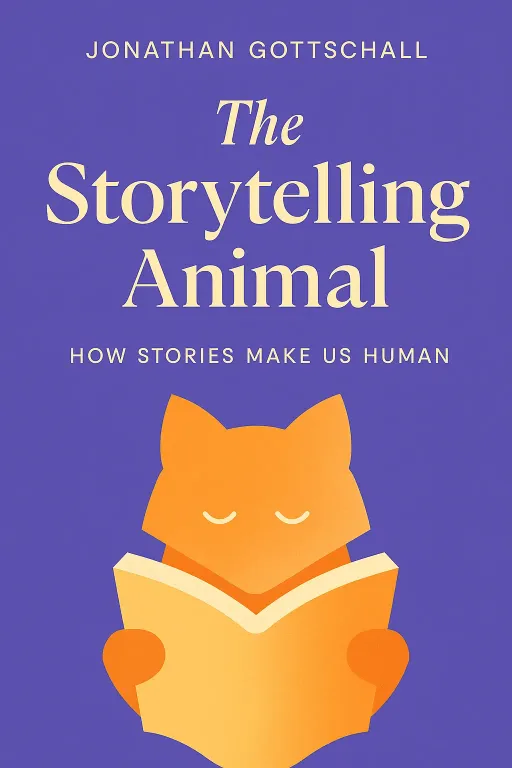
Nova: Exactly! That's the blind spot. We're diving into the unseen architects of health: the narratives. Today, we're drawing insights from two phenomenal books: "The Storytelling Animal" by Jonathan Gottschall, and "The Spirit Catches You and You Fall Down" by Anne Fadiman. It's fascinating how Gottschall, a literary scholar, brings such a fresh perspective to everything from evolution to psychology, showing how deeply narrative is embedded in our very being. He argues we are fundamentally story-making creatures.
Atlas: Oh, I see. So, not just reading stories, but living them out, even in our bodies. That's a pretty big claim.
The Storytelling Animal Within: How Narrative Shapes Personal Health Choices
SECTION
Nova: It absolutely is. And it's profound. Gottschall's premise is that our brains are hardwired for narrative. We don't just experience the world; we construct stories about it. This is true for everything, including our health. Imagine two individuals, both diagnosed with, say, a chronic autoimmune condition. One person might internalize a narrative of being "broken," a "victim" of their own body, constantly battling an enemy within. Their story might be one of inevitable decline.
Atlas: So, you're saying their brain isn't just processing symptoms, it's actually about them? Like, I can choose to be the hero or the victim of my own headache? That sounds a bit out there. How does that wiring impact something as concrete as medical adherence or self-care, especially for someone who needs to be very disciplined?
Nova: Precisely. Their narrative of being "broken" might lead them to feel helpless, to passively accept their fate, or even to unconsciously sabotage treatments because "nothing ever works for me." Their personal story becomes a self-fulfilling prophecy. They might interpret every new symptom as further proof of their narrative, reinforcing it.
Atlas: I get that. It’s like when a historian frames an event as a tragedy versus an opportunity; the framing dictates the interpretation of all subsequent facts. But what about the other person in your example?
Nova: The other person, with the exact same diagnosis, might tell a different story. Their narrative could be one of resilience, of their body being a complex system that needs careful management, a partner in their journey. They might see themselves as an active participant in their healing, a detective solving a puzzle.
Atlas: That makes sense. So, they're not just taking medication, they're actively engaging with their own internal narrative about what that medication for their future. How does this play out in everyday health choices we might not even realize are narrative-driven?
Nova: Think about someone who repeatedly struggles to maintain a healthy diet. Their story might be, "I'm just not strong-willed enough," or "Healthy food is boring, a punishment." Or someone who avoids preventative screenings because their family narrative is "we don't talk about illness until it's really bad." These aren't conscious decisions based on logic; they're echoes of the stories we've internalized about ourselves, our bodies, and our place in the world.
Atlas: Huh. So the unseen health narratives from our own lives aren't just abstract ideas, they are literally guiding our choices today, often without us even realizing it. That's a powerful thought.
Culture as a Health Architect: The Impact of Collective Narratives on Well-being
SECTION
Nova: If our personal stories are powerful, Atlas, imagine the weight of an entire culture's story. This is where Anne Fadiman's "The Spirit Catches You and You Fall Down" comes in, and it's a truly heartbreaking, yet incredibly illuminating, account. It tells the story of Lia Lee, a Hmong child with severe epilepsy, and the tragic clash between Western medicine and her family's profound Hmong cultural beliefs in rural California.
Atlas: Wow, that's incredibly distressing. So, it's not just a language barrier or a lack of information, but a fundamental difference in how they health, illness, and even the role of a healer? That sounds like a historical pattern we see in many cross-cultural encounters.
Nova: Exactly. For the Hmong, epilepsy wasn't just a neurological disorder; it was, "the spirit catches you and you fall down." It was a sacred illness, a sign that Lia had the potential to become a shaman, a bridge to the spirit world. Her seizures were not something to be eradicated, but a spiritual experience. Western doctors, on the other hand, saw it as a medical problem to be aggressively treated with drugs and procedures.
Atlas: I can see how that would create an insurmountable divide. The very definition of "healing" would be completely different. The doctors were trying to fix a biological problem, while the family was trying to honor a spiritual gift. It’s a complete disconnect in their operating narratives.
Nova: Absolutely. The Hmong family believed the medication was making Lia sicker, dulling her spirit. They couldn't understand why doctors insisted on aggressive treatments for what they perceived as a spiritual journey. This led to non-compliance, missed appointments, and a profound breakdown of trust. The doctors, operating from a narrative of scientific efficacy, saw the family as ignorant or uncooperative.
Atlas: That gives me chills. Two groups, both with the best intentions, but their fundamental narratives about the world, about health, about what's "good," were so utterly incompatible that it led to tragedy. Are there subtle versions of this happening today, even within a seemingly homogenous society? Like, how does a culture that values "toughing it out" impact mental health discussions, for instance?
Nova: That's an excellent point, and it's everywhere. Think about the cultural narrative in some societies that views mental illness as a weakness, or a moral failing, rather than a medical condition. Or the narrative that equates productivity with self-worth, leading to burnout and ignoring crucial self-care. These collective stories, just like the Hmong's, dictate how we perceive symptoms, whether we seek help, and how we respond to treatment. They are the invisible threads guiding our choices.
Atlas: That makes me wonder, if we as a society are so deeply shaped by these narratives, how do we even begin to recognize them, let alone change them? It feels like trying to see the water we're swimming in.
Synthesis & Takeaways
SECTION
Nova: That's the core challenge, isn't it? The blind spot. We're so immersed in these stories—personal and collective—that we don't even see them as stories; we see them as facts, as reality. But understanding that humans are storytelling animals, as Gottschall puts it, and that cultures wield immense narrative power, as Fadiman illustrates, allows for a far more compassionate and effective approach to well-being.
Atlas: So, the unexamined health narratives from our own lives, or our community... these aren't just abstract ideas, they're literally guiding our choices, our willingness to seek help, even how our bodies respond? It's like a historical record, written not in documents, but in our very cells and daily habits.
Nova: Exactly. Recognizing these narratives means we can start to question them. We can ask: Is this story serving me? Is this cultural narrative helping us heal, or is it creating new forms of illness and misunderstanding? It's about shifting from being passive recipients of stories to becoming active editors of our own health narratives.
Atlas: That's actually really inspiring. It means we have agency even over something as fundamental as our health, by simply becoming aware of the stories we tell. It's a powerful call to deep self-reflection. What unseen health narratives might be subtly guiding your choices today, dear listener? It's a question worth pondering.
Nova: Absolutely. And with that thought-provoking question, we wrap up today's exploration.
Atlas: This was a truly illuminating discussion, Nova.
Nova: Thank you, Atlas. This is Aibrary. Congratulations on your growth!