

The Ethical Compass: Navigating High-Stakes Medical Decisions.
Golden Hook & Introduction
SECTION
Nova: You know that feeling when you're so focused on achieving a specific outcome, like acing an exam or winning a game, that you completely miss the bigger picture? What if that 'bigger picture' was someone's entire life, their values, their dignity?
Atlas: Oh man, that's a gut punch of a question, Nova. I can definitely relate to that tunnel vision, especially when the stakes are high. But to apply it to someone's actual life... that's a whole different level of pressure and responsibility.
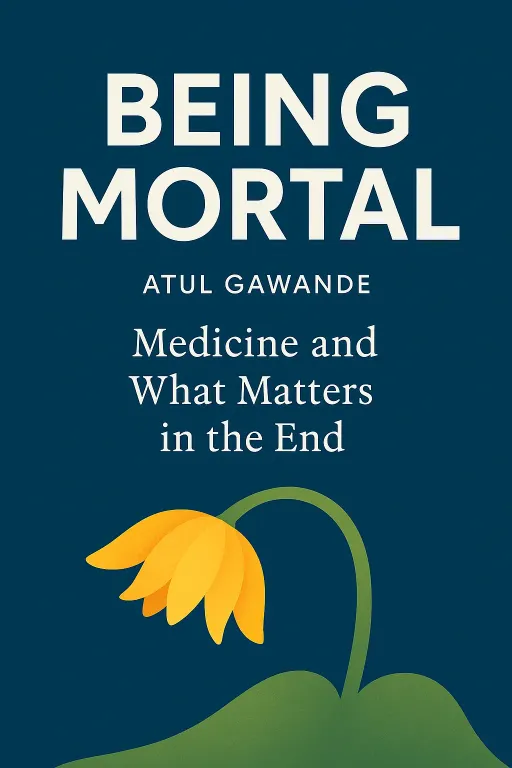
Nova: Absolutely. And that's precisely the ethical tightrope we're walking today. We're diving into the profound insights from two truly essential books: Atul Gawande's "Being Mortal" and Anne Fadiman's "The Spirit Catches You and You Fall Down." Gawande, a surgeon himself, shifted his focus to the deeply human experience of aging and dying, urging us to consider what makes life worth living. And Fadiman, through her incredible journalistic immersion, brought to light the tragic consequences of cultural misunderstandings in medicine.
Atlas: I’m curious, how do two authors from such different vantage points—one a surgeon, the other a journalist—converge on such critical issues in medical ethics? What was it about their unique perspectives that allowed them to see these problems so clearly?
Nova: That's a brilliant question, Atlas. It's their shared commitment to the human narrative, I think. They both expose what we call 'The Blind Spot' in high-stakes medical environments.
The Blind Spot: Prioritizing Quantity Over Quality of Life
SECTION
Nova: The blind spot is this: in the dazzling pursuit of technical knowledge, of extending life at all costs, we can inadvertently overlook the patient's individual values, their priorities, what truly gives their life meaning. It's not about malice; it's about a system designed for biological repair, not necessarily for holistic human experience.
Atlas: So basically you’re saying that the very brilliance of modern medicine, its ability to keep us alive longer, can sometimes become its own biggest hurdle to truly good care? That sounds a bit out there, isn't a doctor's primary role to save lives, to extend them?
Nova: It is, and that's the core of the ethical dilemma. Let me give you a hypothetical, but all too common, scenario. Imagine a patient, let's call her Mrs. Chen, in her late 80s, living with advanced cancer. She's tired, her body is frail, and her greatest joy is spending quiet afternoons with her grandchildren, tending her small garden. Her doctors, brilliant and well-meaning, offer another round of aggressive chemotherapy. It might extend her life by a few months, but it means debilitating side effects, constant hospital visits, and losing the energy for those precious moments.
Atlas: Wow, that’s kind of heartbreaking. You see the doctors trying to do good, but it sounds like they're missing the point of what 'good' means to Mrs. Chen.
Nova: Exactly. The focus is relentlessly on the of life, not the. Gawande beautifully illustrates this in "Being Mortal," arguing that modern medicine often fails to address the human experience of aging and dying. He’s not saying we shouldn't strive for longevity, but that we need to have open, honest conversations about what patients prioritize and fear. If Mrs. Chen's greatest fear is being bedridden and unable to see her garden, then a treatment that guarantees that outcome, even if it adds months, isn't truly serving her.
Atlas: Okay, so this isn't just about prolonging existence, it’s about understanding what that existence worth living. For someone aspiring to make a tangible difference in medicine, how does this 'blind spot' specifically impact the care plan and decision-making process? It feels like a huge weight.
Nova: It is a huge weight, and it leads to what we call "ethical exhaustion" for caregivers. If you're constantly pushing for interventions that don't align with a patient's deepest values, you're not just exhausting the patient, you're exhausting yourself and the system. The deep question becomes: how might acknowledging a patient's unique values change your approach to their care plan, especially when faced with difficult choices? It demands a shift in mindset.
The Shift: Embracing Patient Values and Cultural Humility
SECTION
Nova: This leads us directly to the 'shift' that both Gawande and Fadiman so powerfully advocate. It's about moving beyond protocols and towards profound empathy and cultural humility.
Atlas: That’s a great way to put it. 'Profound empathy and cultural humility.' But what does that actually look like in a high-stakes, fast-paced hospital environment where every second counts?
Nova: It means recognizing that every patient comes with a unique narrative, a personal history, and a cultural lens through which they view illness and healing. Fadiman's "The Spirit Catches You and You Fall Down" is a powerful, almost agonizing, account of this. It tells the story of Lia Lee, a Hmong child with severe epilepsy, and the profound cultural clashes between her family and her American doctors.
Atlas: Oh, I've heard snippets about that story. It's about how a lack of understanding led to tragic miscommunications, right? Like, the family believed the epilepsy was a spiritual blessing, while the doctors saw it purely as a neurological disorder.
Nova: Exactly. The doctors were brilliant, technically proficient, but they struggled to understand the Hmong family's spiritual beliefs, their diet, their healing practices. The family, in turn, struggled to comprehend the Western medical system's demands for strict medication adherence and hospital procedures. Both sides, with good intentions, ended up in a heartbreaking stalemate where Lia's health suffered. It wasn't about right or wrong; it was about a complete failure to bridge cultural gaps.
Atlas: That sounds incredibly complex. For someone trying to make a tangible difference, how do you even begin to bridge such deep cultural divides in a high-pressure environment without adding even more layers of difficulty? It seems like an impossible tightrope walk.
Nova: It's not easy, but it’s essential. The shift isn't just about speaking louder or explaining more; it's about listening more deeply, asking different questions, and being truly curious about a patient's worldview. It’s about cultural humility—acknowledging that your own cultural framework isn't universal and being open to learning from others. It means translating medical concepts into terms that resonate with a patient's values, rather than expecting them to abandon their beliefs. It's why ethical practice extends beyond just following protocols; it's about honoring individual narratives and the profound human experience of illness.
Atlas: So, beyond just awareness, what practical steps can future medical leaders take to integrate these values into care plans and truly influence positive change beyond the operating room? How do we make this more than just a nice idea?
Nova: It starts with specific training in cross-cultural communication, with ethics rounds that aren't just about legalities but about values, and with mentorships that emphasize not just surgical skill, but also the art of patient-centered conversation. It's about creating systems where doctors are given the time and resources to truly understand their patients, not just their diseases.
Synthesis & Takeaways
SECTION
Nova: So, in essence, what these books teach us is that navigating high-stakes medical decisions isn't just about cutting-edge science; it's about cultivating a profound human understanding of what makes life worth living for each individual. It’s about moving from a blind spot of purely technical solutions to a clear vision that embraces patient values and cultural humility.
Atlas: That’s such a powerful reframe. It’s like, instead of just solving the problem, you’re understanding the person who the problem. It fundamentally changes the approach. It makes me wonder, how many times do we, in our own lives, focus so intensely on the technical solution that we miss the human context?
Nova: Exactly! And for all our aspiring healers out there, this journey into medical ethics isn't just about learning rules; it's about developing the wisdom and resilience to make truly compassionate and effective decisions. Seek out those mentors who embody this kind of care. Engage in these conversations. It will sustain your passion.
Atlas: Definitely. It’s a call to action for deeper listening, deeper understanding. It's a reminder that the best care isn't just about what you to a patient, but how you with them.
Nova: Couldn't have said it better myself. This is Aibrary. Congratulations on your growth!