

Narratives of Healing: Inspiring Medical Journeys
Golden Hook & Introduction
SECTION
Nova: You know, Atlas, we often talk about what makes a great doctor: surgical precision, diagnostic genius, maybe even a groundbreaking research paper. But what if the true measure of a physician, the real mark of healing, lies not in extending life, but in understanding death?
Atlas: Whoa, that's a bold statement right out of the gate, Nova. Especially for our listeners who are meticulously planning careers dedicated to lives. You're saying the ultimate success might be found in accepting its end? That sounds a bit counterintuitive to the entire strategic framework of modern medicine.
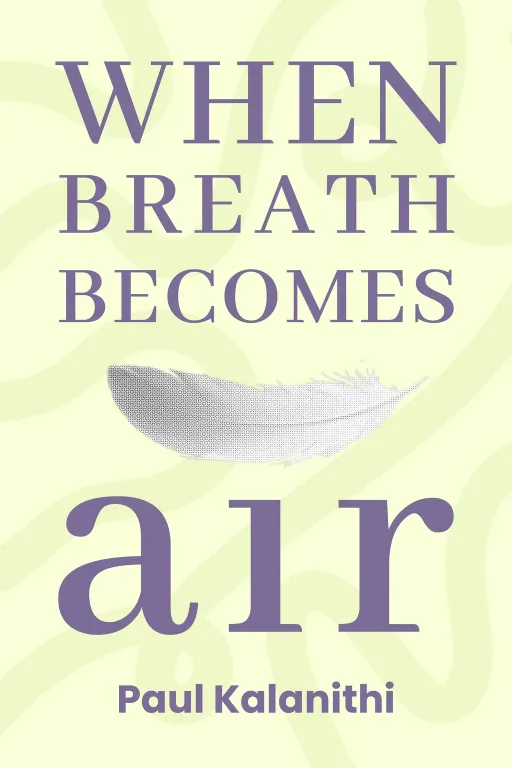
Nova: Exactly. Because today, we’re diving into two profoundly human narratives that challenge our very definition of healing and purpose. We're going to explore "When Breath Becomes Air" by the brilliant neurosurgeon Paul Kalanithi, and "The Spirit Catches You and You Fall Down" by the incredibly insightful Anne Fadiman.
Atlas: Kalanithi's story is particularly striking, isn't it? Here's a man who spent years mastering the most complex organ, the brain, only to receive a terminal cancer diagnosis himself. It’s like the universe handed him the ultimate case study on his own mortality.
Nova: It absolutely is. Paul Kalanithi, a Stanford neurosurgical resident on the cusp of completing a decade of training, went from treating the dying to becoming one of them. His memoir, written with a rare blend of scientific precision and poetic introspection, didn't just win awards; it shifted the conversation around what it means to live a meaningful life, especially when time is tragically short. He really forced the medical community, and indeed all of us, to confront the deeply personal, philosophical questions that medicine often tries to compartmentalize. And it’s through his journey that we begin our exploration today: finding meaning in mortality, directly from a doctor's perspective.
Finding Meaning in Mortality: A Doctor's Perspective
SECTION
Nova: Kalanithi’s entire professional life was about the pursuit of certainty, about wielding knowledge to conquer disease and extend life. He sought to understand the very essence of human identity through the brain. He was driven, disciplined, and strategic in his approach to medicine, believing that by understanding the physical structures, he could unlock the secrets of consciousness and personhood.
Atlas: And I imagine for anyone dedicating years to that kind of rigorous, high-stakes training, there's immense pressure to maintain that intellectual fortress of certainty. To always have the answer, or at least the path to the answer.
Nova: Absolutely. He was at the pinnacle of that fortress, specializing in the delicate dance of neurosurgery. But then, as he describes with chilling clarity, he became a patient. The one who had always delivered diagnoses was now receiving one: stage IV lung cancer. And just like that, his identity fractured. He was no longer just the doctor; he was the patient, the husband, the son, the father-to-be, grappling with the ultimate uncertainty.
Atlas: That must have been an existential earthquake. How do you even begin to reconcile that, when your entire purpose has been built around fighting the very thing that's now consuming you?
Nova: He did it by shifting his focus. He realized that while he had been training to understand life by dissecting brains, he needed to understand life by it, by confronting death head-on. His writing became his new surgery, a way to operate on his own experience and extract meaning. He asked: What makes life meaningful enough to go on living when you know it's ending? What makes it meaningful enough to bring a child into a world you won't be around to fully share with them?
Atlas: That's a profound redefinition of purpose. It sounds like he found meaning not in physical triumph over disease, but in understanding the human condition itself. So, what does that mean for how we define "healing" in its broadest sense? Is it about more than just physiological repair?
Nova: It's precisely about more. Kalanithi found healing in connection, in love, in the act of telling his story, and in the profound vulnerability of his final months. He continued to work as a surgeon for a time, then transitioned to writing, realizing his purpose wasn't just to bodies, but to to lives, including his own. He learned that the "healing moment" often isn't a cure, but an act of profound human connection and understanding in the face of inevitable suffering. He wanted to understand what made life worth living, not just what made it possible.
Atlas: That’s a powerful insight. It suggests that even in the most technologically advanced medical settings, the human element—empathy, connection, understanding—remains the most critical diagnostic and therapeutic tool. It reminds me that even the most strategic mind has to engage with the messy, unpredictable human experience.
Cultural Crossroads & Compassionate Care: Beyond the Diagnosis
SECTION
Nova: And if Kalanithi's story shows us the internal quest for meaning, then Anne Fadiman's work highlights the external, yet equally profound, challenges in translating that meaning across cultures. Her book, "The Spirit Catches You and You Fall Down," is a masterclass in how good intentions can tragically collide with deeply held beliefs. It’s a story that resonated widely, sparking critical conversations about cultural competency in healthcare when it was released.
Atlas: I can imagine. It's easy to say "be culturally sensitive," but in a high-stakes medical environment, how do you bridge such fundamental worldviews without compromising critical care? Especially when lives are on the line.
Nova: That's the heart of Fadiman's book. It tells the story of Lia Lee, a Hmong child in California who developed severe epilepsy. Lia's parents, refugees from Laos, viewed her condition—which they called "the spirit catches you and you fall down"—not as a disease but as a spiritual calling, a sign that she was blessed. They believed it was caused by a spirit, and traditional Hmong shamans were vital to her care.
Atlas: So, Western doctors saw a neurological disorder requiring medication, and her family saw a spiritual phenomenon requiring ritual. That's not just a language barrier; it’s a clash of entire strategic frameworks for understanding illness.
Nova: Exactly. The doctors, dedicated and well-meaning, followed standard Western protocols, prescribing multiple medications to control Lia's seizures. From their perspective, the parents were non-compliant, failing to administer medications correctly, putting Lia's life at risk. From the Hmong family's perspective, the doctors were invasive, disrespectful of their traditions, and their medicines often made Lia worse, or dulled her spiritual connection.
Atlas: That sounds like a tragic impasse, where both sides are trying to do what they believe is best, but are completely talking past each other. What were the consequences of this profound misunderstanding?
Nova: The consequences were devastating. Lia's condition worsened, she suffered more severe seizures, and eventually, due to a combination of medication issues and cultural misunderstandings, she ended up in a persistent vegetative state. Fadiman painstakingly details how the medical team and the family, despite their shared goal of helping Lia, were utterly unable to reconcile their approaches. The doctors saw the parents as ignorant, the parents saw the doctors as arrogant and unfeeling.
Atlas: That’s heartbreaking. It highlights that true healing isn't just about the right diagnosis or the right pill, it's about making sure the patient, and their family, are truly seen and understood within their own context. It's about empathy as a form of critical intelligence.
Nova: It absolutely is. Fadiman, through her meticulous reporting, shows us that the failure was not a lack of care or expertise, but a profound lack of cultural humility and the ability to bridge worldviews. The doctors were operating under one set of assumptions about health and illness, and the family under another, equally valid, set. It's a powerful lesson in how crucial it is to integrate cultural understanding into every aspect of patient care, recognizing that a holistic approach embraces not just the science, but the soul of the patient.
Synthesis & Takeaways
SECTION
Nova: So, when we look at Kalanithi's intensely personal journey and Lia Lee's tragic story, what emerges is a powerful, undeniable truth: the human heart of healthcare beats far beyond the sterile walls of an operating room or the pages of a textbook.
Atlas: That’s a powerful synthesis. It seems to suggest that the most advanced medical training, the most strategic approach to patient care, is incomplete without a profound engagement with the human story. So for someone building a fortress of focus for a future in medicine, what's the one indispensable takeaway from these stories about how to cultivate that deep, purposeful connection with patients, even amidst the science and strategy?
Nova: The indispensable takeaway is this: cultivate radical empathy as your most powerful diagnostic tool. Kalanithi showed us that understanding what makes life meaningful for a patient—their values, their fears, their hopes—is as crucial as understanding their pathology. And Fadiman's work illustrates that this understanding must extend across cultural divides, requiring us to set aside our own assumptions and truly listen to the patient's narrative, however different it may be from our own. It’s about seeing the whole person, not just the disease. That, Atlas, is where true purpose and profound healing reside.
Atlas: That’s a truly illuminating thought, Nova. It grounds the abstract pursuit of knowledge in the very real, very human context of care. It’s a call to connect the dots not just scientifically, but empathetically.
Nova: Indeed. And for anyone on this journey, I encourage you to seek out and reflect on these kinds of human stories. Let them deepen your empathy and reaffirm that compassionate drive.
Atlas: This is Aibrary. Congratulations on your growth!