

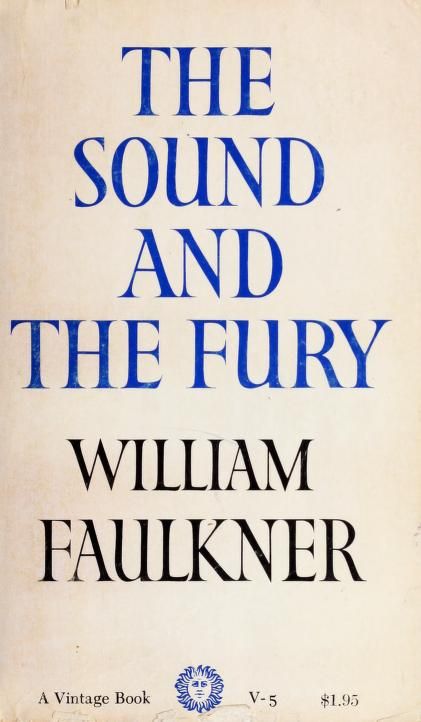
The Sound and the Fury
Introduction
Nova: Imagine opening a novel and finding yourself inside the mind of a thirty-three-year-old man who cannot speak, cannot tell time, and experiences the world as a chaotic flood of sensory impressions where past and present collapse into a single, eternal now. That is exactly what William Faulkner asks readers to do on the very first page of The Sound and the Fury. And here is the wild thing: that book, published in 1929, is now considered one of the greatest novels ever written in the English language.
Nova: : That opening sounds almost hostile to the reader. I mean, who starts a book by disorienting people that thoroughly?
Nova: Someone who believed that the only way to tell the truth was to break every rule of storytelling. Faulkner once said he wrote The Sound and the Fury five separate times, trying to tell the story of a little girl with muddy drawers climbing a tree. When none of those attempts worked, he decided to let her silent, intellectually disabled brother tell it instead. And that decision changed American literature forever.
Nova: : A little girl with muddy drawers? That is quite the origin story for a modernist masterpiece. What is this novel actually about at its core?
Nova: At its simplest, it is about the decline and fall of the Compson family, once proud Southern aristocrats in Jefferson, Mississippi. But that is like saying Moby-Dick is about a whale. The novel is really about time, memory, loss, shame, and the way the past devours the present. It is told in four sections, each from a different perspective, each on a different date, and each requiring the reader to piece together a shattered family portrait. The title comes from Macbeth: "Life's a tale told by an idiot, full of sound and fury, signifying nothing." And Faulkner takes that idea seriously enough to let an "idiot" tell the first part.
Nova: : So we are going to unpack this famously difficult novel today. Where do we even begin?
Nova: We begin where Faulkner begins: inside the mind of Benjamin Compson, on April 7, 1928.
Benjy's Section and the Collapse of Time
The Tale Told by an Idiot
Nova: Benjy Compson is thirty-three years old on the day of his narration, but mentally he has been frozen at the level of a very young child since birth. He cannot speak except to moan and bellow. He has no concept of clock time. And yet Faulkner chose him as the novel's first narrator. The section takes place on April 7, 1928, the Saturday before Easter, but Benjy's mind ricochets across decades based on sensory triggers.
Nova: : So how does that actually work on the page? How do you follow a narrator who cannot distinguish between something that happened thirty years ago and something happening right now?
Nova: Faulkner uses italics to signal time shifts. Benjy will smell trees, and suddenly we are in 1898 when his sister Caddy smelled like trees. He will catch his clothing on a nail, and instantly we are back to a day in 1900 when the same thing happened. There are over one hundred time shifts in Benjy's section alone, and Faulkner provides almost no signposting. You are meant to feel lost, because Benjy is lost. But here is the brilliance: if you surrender to it, patterns emerge. Certain words, certain smells, certain objects become anchors.
Nova: : It sounds almost like a musical composition rather than traditional narrative.
Nova: That is exactly right. Faulkner structured it like a piece of music with recurring motifs. The word "Caddy" appears nearly one hundred times in Benjy's section. The smell of trees, the golf course that was once the Compson pasture, the slipper that Benjy holds for comfort. These are like musical phrases that repeat and transform. And what emerges is devastating: Benjy's entire emotional world revolves around his sister Caddy, the only person who ever truly loved him without condition. When she is gone, his world collapses into chaos and grief.
Nova: : And Caddy is the little girl with the muddy drawers from Faulkner's origin story?
Nova: Yes. In one of the novel's most famous scenes, the Compson children are playing in a creek, and Caddy climbs a tree to look through a window at their grandmother's funeral. Her brothers look up from below and see her muddy drawers. That image, Faulkner said, was the seed of the entire novel. It captures everything: Caddy's boldness, her refusal to be constrained, the way her body and her sexuality will become the obsession that destroys her brothers. Benjy remembers it as a moment of pure sensory experience. Quentin will remember it as the beginning of his torment.
Nova: : So Benjy's section is this raw, unfiltered experience of grief and love. What happens when we move to the second section?
Nova: We jump backward in time eighteen years, to June 2, 1910, and into the mind of the oldest Compson son, Quentin. And if Benjy's section was difficult, Quentin's is harrowing.
Quentin's Section and the Obsession with Honor
The Day of the Suicide
Nova: Quentin Compson is a Harvard student, and his section takes place on the day he will drown himself in the Charles River. Faulkner gives us the interior monologue of a young man unraveling in real time. The prose is even more fractured than Benjy's. Sentences break apart mid-thought. Punctuation vanishes for pages at a time. Quentin is trying to impose order on a world that has betrayed him, and his mind is losing the battle.
Nova: : What is driving him to suicide? Is it just depression, or is there something more specific?
Nova: It is Caddy. Specifically, it is Caddy's loss of virginity. For Quentin, his sister's sexual purity is bound up with the entire code of Southern honor, family legacy, and his own identity. When Caddy becomes pregnant by a man named Dalton Ames, Quentin's world shatters. He tries to convince their father that he, Quentin, committed incest with Caddy, hoping that this terrible confession will somehow contain the damage. His father sees right through it and dismisses him with a weary nihilism.
Nova: : Wait, he claims he committed incest to protect her honor? That is a deeply twisted logic.
Nova: It is, and Faulkner knows it. Quentin cannot bear the idea that Caddy's sexuality exists outside his control. He would rather claim a sin he did not commit than accept that his sister is a sexual being who made her own choices. His father tells him that virginity is just an idea, that women are never virgins in the way men imagine. But Quentin cannot accept this. He is trapped between his father's cynical modernism and a code of honor that no longer functions in the world. The only escape he can see is death.
Nova: : And the prose itself reflects this disintegration?
Nova: Brilliantly. Quentin is obsessed with clocks and time. His father gave him a watch, saying it was the mausoleum of all hope and desire. Quentin tries to break the watch, to stop time, but the watch keeps ticking even with its hands torn off. The section is full of shadow imagery, references to drowning, and a recurring memory of Caddy lying in the water. By the end, Quentin's thoughts have become so fragmented that the reader feels the drowning happening on the page. It is one of the most extraordinary depictions of a mind in crisis in all of literature.
Nova: : After that intensity, the third section must feel like a relief.
Nova: In some ways, yes. But it brings a different kind of horror. We jump to April 6, 1928, the day before Benjy's section, and we are inside the mind of Jason Compson IV. And Jason is one of the most purely venomous characters in American fiction.
Jason's Section and the Poison of Resentment
The Tyrant in the Store
Nova: Jason Compson is the middle brother, and his section is told in straightforward, linear prose. No stream of consciousness, no time jumps. And that clarity makes his cruelty all the more chilling. Jason works as a clerk in a farm supply store, but his real occupation is resentment. He believes the world has cheated him out of everything he deserves.
Nova: : What exactly does he think he deserves?
Nova: A job at a bank that Caddy's husband was supposed to give him before the marriage fell apart. When Caddy's promiscuity was revealed and her husband divorced her, Jason's promised position vanished. He has spent the years since punishing everyone around him for that loss. He steals the money Caddy sends for her daughter, Miss Quentin. He torments Benjy. He verbally abuses his mother while pretending to be the dutiful son. He is a monster of petty tyranny.
Nova: : So Jason is the villain of the novel?
Nova: He is, but Faulkner makes him terrifyingly human. Jason's section is full of dark comedy. His internal monologue is a relentless stream of grievances, racist invective, and self-justification. He genuinely believes he is the victim. And here is the uncomfortable truth Faulkner forces us to confront: Jason's voice is the most accessible in the novel. His clear, angry, sarcastic prose is easier to follow than Benjy's sensory chaos or Quentin's lyrical despair. The reader almost feels relief at the clarity, and then realizes they are sympathizing with a monster.
Nova: : That is a trap Faulkner sets deliberately, isn't it?
Nova: Absolutely. Jason represents the new South: pragmatic, money-obsessed, stripped of the old aristocratic pretensions but retaining all the cruelty. He has no use for honor or family legacy except as tools for manipulation. He mocks Quentin's suicide as a waste. He sees Benjy as a burden to be institutionalized. And his treatment of Caddy's daughter, young Miss Quentin, is pure vindictiveness. He has been stealing from her for years, and when she finally steals the money back and runs away, Jason's rage is apocalyptic.
Nova: : And that brings us to the final section. After three brothers, who gets the last word?
Nova: Not a Compson at all. The fourth section, set on Easter Sunday, April 8, 1928, is told in the third person and centers on Dilsey Gibson, the Black cook who has served the Compson family for decades. And this is where Faulkner makes his most radical move.
Dilsey's Section and the Moral Center
They Endured
Nova: Dilsey Gibson is, in many ways, the novel's true hero. She is the one who actually holds the Compson household together while the family collapses around her. She cares for Benjy with genuine tenderness. She protects Miss Quentin from Jason's cruelty as much as she can. And she does all this while enduring the casual racism of Mrs. Compson, who treats her as both servant and emotional crutch.
Nova: : How does Faulkner handle writing a Black character in 1929? I imagine it is complicated.
Nova: It is deeply complicated. Faulkner's portrayal of Dilsey has been both celebrated and criticized. On one hand, she is the moral and spiritual center of the novel. Her section opens with her attending Easter church service, and the sermon she hears, delivered by a visiting preacher from St. Louis, is one of the most powerful passages Faulkner ever wrote. The preacher speaks of the blood of the Lamb, and Dilsey weeps, seeing in the story of suffering and redemption a truth that the Compsons, with all their pride and intellect, have lost.
Nova: : And on the other hand?
Nova: Critics have argued that Dilsey is too saintly, too much the noble sufferer, a stereotype rather than a fully realized character. Faulkner gives her interiority but not the radical interiority he grants the Compson brothers. She endures, but we do not get her stream of consciousness. Still, within the context of 1929 American literature, giving the final, authoritative section to a Black servant and presenting her as the only character with genuine spiritual integrity was a significant choice.
Nova: : What does the Easter Sunday setting signify?
Nova: Everything. The novel moves from Benjy's section on Holy Saturday, through the secular chaos of Jason's Good Friday, to Dilsey's Easter morning. Faulkner is making a theological argument. The Compson family has fallen because it has lost any connection to enduring values: love, sacrifice, community, faith. Dilsey possesses those values. The famous final line of her section, spoken by Dilsey herself, is: "I seed de beginnin, and now I sees de endin." She has witnessed the entire arc of the Compson tragedy and survived it.
Nova: : And the novel does not end with Dilsey, does it? I remember the very last pages belong to Benjy again.
Nova: Yes. The novel's final image is devastating. Luster, Dilsey's grandson, is driving Benjy in a carriage to the cemetery. He takes a wrong turn around the Confederate monument in the town square, going left instead of right. Benjy, who cannot bear any disruption to his routines, begins to howl in primal terror. The sound is described as "the grave, soundless, tremendous" bellowing of grief itself. Jason appears, strikes both Luster and Benjy, and corrects the carriage's direction. Order is restored, but it is Jason's brutal, hollow order. Benjy falls silent, and the novel ends with his broken flower held in his hand, his eyes "empty and blue and serene again."
Nova: : That is such a bleak final note. After all that suffering, we end with a man being beaten into silence.
Nova: It is bleak, but it is also honest. Faulkner does not offer easy redemption. The Compson family is beyond saving. But Dilsey endures. And the novel itself, this impossible, difficult, beautiful book, endures. Faulkner once wrote that he believed man would not merely endure, he would prevail. The Sound and the Fury is both a testament to human failure and, in its very existence as a work of art, a testament to the possibility of prevailing.
Caddy and the Art of Telling Without Telling
The Absent Center
Nova: Here is the strangest fact about The Sound and the Fury: the most important character in the novel never gets her own section. Caddy Compson, the sister and daughter around whom the entire story revolves, never speaks in her own voice. She exists only in the memories and obsessions of her three brothers.
Nova: : That seems like such a deliberate choice. Why would Faulkner build a novel around a character he never lets speak?
Nova: Faulkner himself said that Caddy was his heart's darling, the character he loved most. And he believed that the best way to convey her was through the effect she had on others. She is like a light source that you never see directly, only through the way it illuminates everything around it. Each brother sees a completely different Caddy. For Benjy, she is pure love, the smell of trees, the only person who smelled like comfort. For Quentin, she is purity and its loss, an ideal that must be protected at all costs. For Jason, she is the source of all his grievances, the woman whose sexuality cost him his future.
Nova: : So we never get the real Caddy?
Nova: That is the question, isn't it? Faulkner seems to be saying that we can never truly know another person, especially a woman in a patriarchal society. Caddy is defined entirely by male desire, male anxiety, male rage. She is a mother, a sister, a fallen woman, but never simply herself. When Faulkner wrote an appendix to the novel in 1946, he finally gave some details about Caddy's later life: multiple marriages, a career as a Nazi officer's mistress in occupied France, a faded photograph in a magazine. But even then, she remains elusive.
Nova: : It makes me think about how much of the novel is about the stories we tell about other people rather than the people themselves.
Nova: Exactly. The Sound and the Fury is a novel about storytelling itself. Each section is a failed attempt to capture the truth. Benjy cannot articulate it. Quentin cannot bear it. Jason distorts it. And the third-person narrator of the final section can only observe it from outside. The truth, Faulkner suggests, is always just beyond our grasp. But the attempt to reach it, the act of telling and retelling, is what makes us human.
Nova: : And that is why the novel is so difficult, isn't it? Because it refuses to give us the easy version.
Nova: Yes. Faulkner once advised readers who found the book confusing to read it four times. He was not being flippant. He believed that the novel's meaning emerged through the accumulation of perspectives, the way a cubist painting shows you multiple angles of the same face simultaneously. You cannot understand The Sound and the Fury by reading it once. You have to live inside it, let it disorient you, and then slowly, painfully, piece it together. And that process of reconstruction is the point.
Conclusion
Nova: So what do we take away from this strange, difficult, magnificent novel? First, that Faulkner expanded what fiction could do. Before The Sound and the Fury, the stream of consciousness technique existed, but no one had pushed it this far, using it to represent a mind as radically different as Benjy's. The novel demonstrated that difficulty in art could be a form of generosity, not elitism. Faulkner was not trying to exclude readers. He was trying to give them an experience they could not get any other way.
Nova: : And second?
Nova: That the past is never past. The Compson family is destroyed by history: the legacy of slavery, the collapse of the Southern aristocracy, the rigid codes of honor and shame. Faulkner shows us that you cannot escape what came before. The only question is how you bear it. Benjy bears it through sensation. Quentin cannot bear it at all. Jason weaponizes it. Dilsey transcends it through faith and endurance.
Nova: : What about the novel's relevance today? It was published nearly a century ago.
Nova: The Sound and the Fury remains startlingly contemporary. Its exploration of how families transmit trauma across generations, its critique of toxic masculinity and the objectification of women, its unflinching look at racism and class, its formal experimentation that challenges passive consumption. These are all urgent concerns in twenty-first century literature. Every writer who has tried to capture the texture of consciousness on the page, from Toni Morrison to Virginia Woolf to contemporary authors like George Saunders, owes something to what Faulkner achieved here.
Nova: : If someone is intimidated by this book, what would you say to them?
Nova: I would say: do not try to understand it on the first read. Just let it wash over you. Pay attention to the sensory details. Let yourself be confused. The confusion is part of the design. And when you finish, read the first section again. It will be a completely different book the second time. Faulkner said that The Sound and the Fury was the novel that cost him the most anguish, the one he felt most tender toward. It is a book that asks a lot of its readers, but what it gives back is immeasurable: a vision of human life in all its sound and fury, and a reminder that even in the midst of collapse, something can endure.
Nova: : This is Aibrary. Congratulations on your growth!
Nova: Congratulations on your growth!