

The Network City: Why Connections, Not Concrete, Build Resilience.
Golden Hook & Introduction
SECTION
Nova: What if the very things we celebrate in urban design – those gleaming skyscrapers and monumental plazas – are actually making our cities weaker, not stronger?
Atlas: Whoa, that's a bold claim, Nova. I mean, we're taught to associate progress and resilience with impressive architecture, right? The bigger, the bolder, the more resilient.
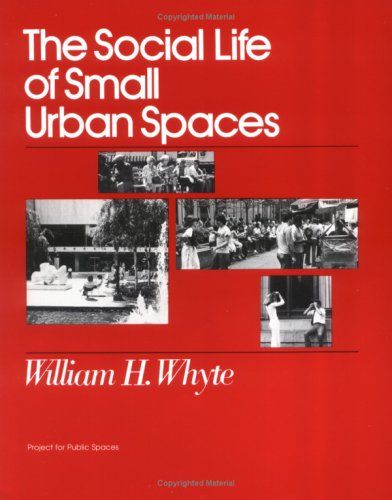
Nova: Exactly! And that's the myth we're here to unravel today. We're diving into a fascinating concept that challenges that very notion, drawing heavily from the insights within "The Network City: Why Connections, Not Concrete, Build Resilience." The ideas we'll explore today are deeply influenced by urban visionaries like William H. Whyte, whose seminal work, 'The Social Life of Small Urban Spaces,' fundamentally shifted how we look at public spaces, not through grand, top-down theories, but through the meticulous, almost anthropological observation of actual human behavior. It was a radical approach at the time, to simply people.
Atlas: Oh, I like that. So we're moving beyond the blueprints and into the actual human experience of a city. For anyone out there who's an 'Urban Alchemist' or a 'Community Architect,' this is going to be a fascinating journey.
The Social Fabric as Urban Infrastructure
SECTION
Nova: Absolutely. Because the cold, hard fact is that urban planning too often fixates on grand structures, on the concrete and steel, overlooking the subtle yet incredibly powerful dynamics of human interaction. And this, ironically, can lead to beautifully designed spaces that feel... lifeless. Cold. Underutilized.
Atlas: I can definitely relate to that. I've walked through some stunning, award-winning plazas that just felt empty, like stages without actors. So, are you saying that a city's true strength isn't in its skyline but in its social fabric?
Nova: Precisely. It’s the invisible threads of connection, the spontaneous conversations, the informal gatherings – that’s the true infrastructure. William H. Whyte, for instance, didn't just theorize about this. He spent years with a camera and a notebook, observing people in New York City's public spaces. He wanted to know some benches got used and others didn't, some plazas buzzed with life while others were ghost towns.
Atlas: That makes me wonder, though. For those of us who think in terms of grand theories and 'better futures,' how do Whyte's almost microscopic observations scale up? Is this just about a single park bench, or does it offer a 'grand theory' for resilience?
Nova: That’s a great question, Atlas. While his method was granular, his insights were anything but small. Whyte’s work a grand theory, but it's one built from the bottom up. He showed that elements like seating that can be moved and rearranged, or the presence of food vendors, or even the subtle relationship between a street and a plaza, are not just amenities – they are catalysts for social interaction. He proved that people gravitate to places where they can see activity, where they feel comfortable, and crucially, where they can choose to be alone part of a group. It’s about giving people agency in their public spaces.
Atlas: So, it's about designing for human nature, not just for aesthetics. It’s about crafting environments where connection is not just possible, but actively encouraged by the very layout and features of the space.
Designing for Spontaneous Interaction and Well-being
SECTION
Nova: Exactly. And that naturally leads us to the second key idea: how do we actively design for these spontaneous interactions? How do we move beyond blueprints and design for the living, breathing social networks that define a truly great city? Charles Montgomery, in his book "Happy City," delves into this, exploring the profound link between urban design and human well-being.
Atlas: Oh, I love that. "Happy City." Because ultimately, isn't that what we're all trying to build? Not just functional cities, but places that genuinely make people happier and healthier.
Nova: Absolutely. Montgomery argues that cities designed for connection and walkability lead to happier, healthier residents. Think about it: a walkable neighborhood with mixed-use buildings, where you can bump into neighbors at the local cafe or market. That’s a completely different experience from a car-dependent suburb where every interaction is planned and isolated. It's about designing for "loose ties"—those casual acquaintances that build a sense of community and support.
Atlas: But wait, for someone focused on 'forward-looking' and 'eco-visionary' urban planning, isn't focusing on 'spontaneous interaction' a bit... romantic, maybe? In a world of digital connections, does a perfectly placed park bench still hold that much sway over our overall well-being?
Nova: That’s a really insightful challenge, Atlas. And it’s not about replacing digital with physical; it’s about creating the for both to flourish. A well-designed public space can be where you meet a friend you connected with online, or where you simply feel a sense of belonging because you're surrounded by life, even if you’re just scrolling on your phone. Montgomery shows that these small, tangible elements—like benches facing each other, or accessible steps for sitting, or even just the presence of trees for shade—reduce stress, foster trust, and ultimately, contribute to a greater sense of collective happiness.
Atlas: That’s a great way to put it. It’s not either/or, it’s both. The physical space creates the container for the social. Okay, so thinking about this, the book suggests a tiny step: observe a public space you admire. What three specific elements encourage people to linger, interact, or simply feel comfortable?
Nova: A perfect exercise. Because once you start looking through this lens, you see the city differently. You see the power of a low wall that doubles as a seat, the warmth of a coffee cart, or the playful splash of a fountain. These aren't just decorative; they're social infrastructure.
Synthesis & Takeaways
SECTION
Nova: So, what we're really talking about today is a profound shift in perspective for anyone building or shaping our urban environments. It’s about understanding that the true resilience of a city, its ability to thrive and adapt, doesn't come from its imposing concrete structures, but from the strength and vibrancy of its social networks. It’s about prioritizing the human experience, the spontaneous smile, the shared moment, over sheer architectural grandeur.
Atlas: That’s actually really inspiring. It grounds those 'grand theories' in the 'messy reality' of human life, which is exactly what an 'Urban Alchemist' needs – a way to turn abstract ideas into tangible, positive impact. It’s about building better futures, not just bigger buildings.
Nova: Exactly. The ultimate takeaway is this: if you want to build a truly resilient, vibrant, and happy city, you must design for connection. You must listen to the subtle cues of human behavior and create spaces that invite interaction, even if it's just a moment of quiet comfort shared in proximity. This isn't just a design philosophy; it’s a blueprint for a more humane future.
Atlas: And it all starts with that "tiny step" – observing a space and seeing how it encourages connection. It’s a powerful call to action for anyone who cares about shaping society for good.
Nova: This is Aibrary. Congratulations on your growth!