The Eco-Curious's Compass: Navigating Interconnectedness in a Changing World
Golden Hook & Introduction
SECTION
Nova: What if I told you the biggest threat to our planet isn't climate change itself, but how we about it?
Atlas: Whoa, that's a bold claim, Nova. I imagine most people would point directly to rising temperatures or plastic in the oceans. What do you mean by 'how we think about it'?
Nova: Well, it’s about our tendency to view environmental issues in isolation, as separate problems to be solved one by one. But the natural world is a complex, intricate web where action creates ripples, often with unforeseen and far-reaching consequences. Our blind spot is in not seeing those connections.
Atlas: Oh, I see. So rather than a single monster, it's more like a hydra, and we keep chopping off heads without understanding the body that connects them all.
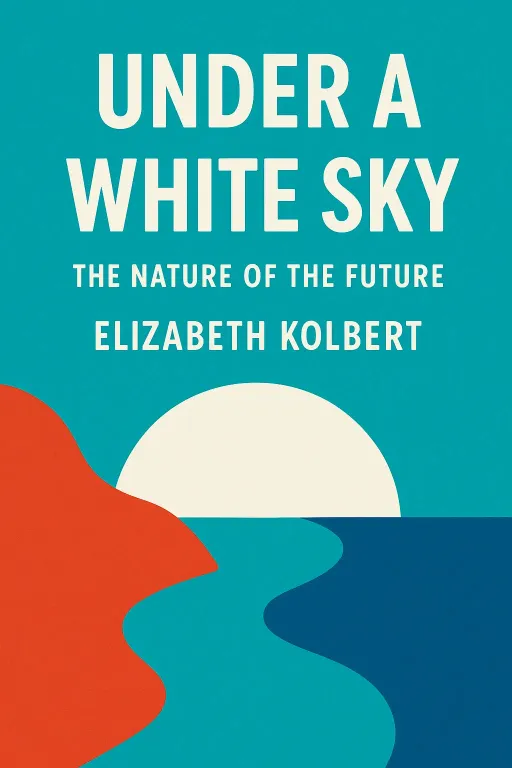
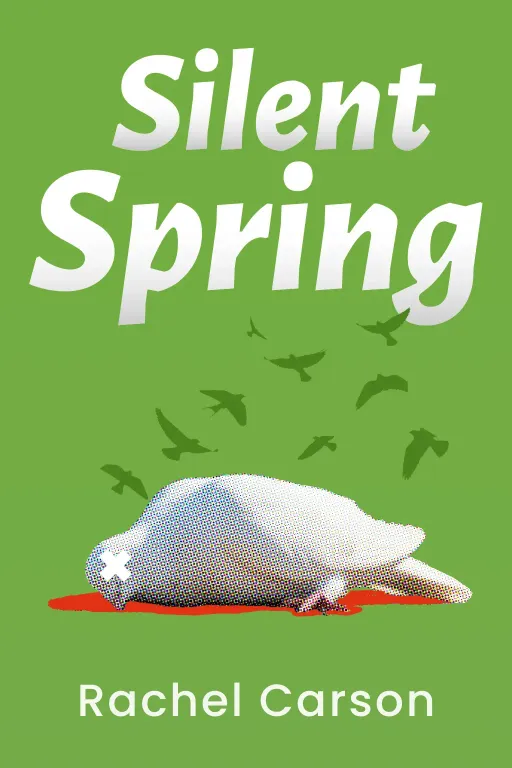
Nova: Exactly! And today, we're diving into the minds of two extraordinary women who forced us to see that web, to understand the profound interconnectedness of life. We're exploring the insights from by Rachel Carson and by Elizabeth Kolbert.
Atlas: Ah, Rachel Carson! I know is a landmark, but can you remind us why it was such a game-changer?
Nova: Absolutely. Carson, a brilliant marine biologist and editor for the U. S. Fish and Wildlife Service, almost had her book suppressed by powerful chemical companies. When it was published in 1962, it wasn't just a book release; it ignited a national debate and is widely credited with launching the modern environmental movement. It completely reframed how we understood our impact on the world.
Atlas: That's incredible – to think one book could spark such a massive societal shift.
Nova: It did, because Carson didn't just point out a problem; she illuminated the unseen connections.
The Illusion of Isolation: Environmental Blind Spots
SECTION
Nova: And that brings us to our first core idea: the illusion of isolation, or what we're calling the 'environmental blind spot.' We're wired to look for neat, contained problems. "Pesticide problem here, logging problem there." But nature doesn't work in neat boxes.
Atlas: That makes sense. It’s easier to tackle something if you can define its edges. But what happens when those edges are, well, blurry?
Nova: That's where the unforeseen consequences come in. Imagine a town plagued by mosquitos. The solution seems simple, right? Spray DDT. Problem solved. Or so they thought.
Atlas: Right, get rid of the pests. Classic human intervention.
Nova: But Carson revealed the devastating chain reactions. The DDT, designed to kill mosquitos, didn't just stay in the air. It washed into rivers and lakes, ingested by tiny plankton. Those plankton were eaten by small fish, which were then eaten by larger fish. And those larger fish became food for birds of prey—eagles, ospreys.
Atlas: Oh man, I know where this is going. Biomagnification. It just builds up the food chain.
Nova: Exactly. The DDT, in increasingly concentrated doses, accumulated in the birds. It didn't kill them outright, not always. But it subtly interfered with their calcium metabolism. Their eggshells became so thin, they'd crack under the weight of the incubating parent.
Atlas: That's heartbreaking. So, the direct target wasn't killed, but the entire reproductive cycle of these majestic birds was derailed.
Nova: Precisely. The outcome was a 'silent spring' – literally, a spring without the songs of birds, because their populations were decimated not by direct poisoning, but by a cascading, invisible effect from a seemingly localized action. It showed how a single pesticide application could unravel an entire ecosystem, piece by agonizing piece.
Atlas: Wow. That's such a powerful image, a 'silent spring.' It really drives home the point that you can't just fix one thing without understanding how it affects everything else. It reminds me of the complexity a visual storyteller faces when trying to capture something so vast and interconnected. How do you even that invisible chain?
Nova: That's the challenge, isn't it? Carson made it visible through meticulous research and compelling narrative. She forced people to see that the natural world is a complex web, where every action creates ripples far beyond our immediate sight. And it's why understanding that 'blind spot' is so crucial.
The Systemic Shift: From Isolated Incidents to Interconnected Crises
SECTION
Nova: And that naturally leads us to the second key idea, which often acts as a counterpoint to what Carson revealed. Carson showed us the ripples from a single action. Now, we're talking about the entire ocean shifting. This is where Elizabeth Kolbert's comes in.
Atlas: "The Sixth Extinction"? That sounds pretty dramatic. Are we really talking about something on scale, like dinosaurs disappearing?
Nova: We absolutely are. Kolbert explores past mass extinctions – the five great cataclysms that have reshaped life on Earth over hundreds of millions of years. But her core argument is that we are currently living through the mass extinction event, and this one is unique.
Atlas: Unique how? I mean, all extinctions are bad, right?
Nova: This one is unique because it's driven almost entirely by species: us. Human activity. We're not just causing local environmental damage; we're fundamentally altering the planet's life-support systems on a geological timescale. It shifts our view from isolated incidents, like the DDT example, to a systemic crisis that's unraveling biodiversity across the globe.
Atlas: So, Carson was about the unintended consequences of specific actions, and Kolbert is saying our collective way of life is causing a planetary-level collapse? That's a much bigger canvas.
Nova: It is. Think of it this way: Carson showed us how pulling a single thread could damage a small section of a tapestry. Kolbert is arguing that we're pulling so many threads, so quickly, that the entire tapestry of life is beginning to unravel. We're seeing habitat destruction on massive scales, climate change altering ecosystems faster than species can adapt, ocean acidification impacting marine life, and the introduction of invasive species.
Atlas: That's a pretty heavy thought. It's not just about saving the eagles anymore; it's about saving everything. How does someone, say, a visual storyteller, even begin to make sense of, let alone, something so vast and abstract – an entire ecosystem unraveling? It feels almost too big to grasp.
Nova: That's the profound challenge, and the profound opportunity. Both Carson and Kolbert, in their own ways, are urging us to see the whole system, not just its parts. They emphasize that true understanding comes from recognizing our profound and interconnected impact. For a visual storyteller, it means going beyond just showing the individual endangered animal, and instead illustrating the invisible forces and connections that put it at risk. It’s about making the abstract, systemic crisis visible and relatable.
Synthesis & Takeaways
SECTION
Nova: So, bringing these two powerful narratives together, what we see is an evolution in our understanding. Rachel Carson shone a spotlight on the hidden consequences of our actions, revealing the delicate web of life. Elizabeth Kolbert then expanded that lens, showing us that our collective footprint is now so immense, we're triggering a mass extinction event on par with asteroid impacts and volcanic eruptions.
Atlas: It's like, if you can't the web, how can you protect it? Both of these authors, in very different eras, forced humanity to open its eyes to the true scale of its impact. For an eco-curious visual storyteller, the mandate is clear: illuminate those unseen connections.
Nova: Exactly. It's about bridging that gap between the isolated problem and the systemic truth. It’s about helping people understand that a seemingly small action in one place can have monumental, cascading effects across the globe.
Atlas: And it makes me think about the deep question posed in our content: "How might your visual storytelling illuminate the unseen connections and cascading effects within an ecological system you care about?" It's not just about showing the beauty of nature, but the invisible threads that hold it together, and the ones we're inadvertently snapping.
Nova: Ultimately, both Carson and Kolbert remind us that our understanding of the natural world must shift from a collection of separate issues to a holistic, interconnected system. And our ability to tell that story, to make those connections visible, is more crucial now than ever.
Atlas: It really is. The power of narrative to transform our perception of these complex, systemic issues is immense.
Nova: This is Aibrary. Congratulations on your growth!