The Calculus of Change: Quantifying Environmental Impact
Golden Hook & Introduction
SECTION
Nova: Think about the biggest, most complex puzzle you've ever tried to solve. Now, imagine that puzzle is our entire planet, and the pieces are things like climate, biodiversity, economies, and human behavior. And oh, by the way, the clock is ticking.
Atlas: Whoa. That sounds less like a puzzle and more like a ticking time bomb. My brain is already calculating the variables and the probability of failure.
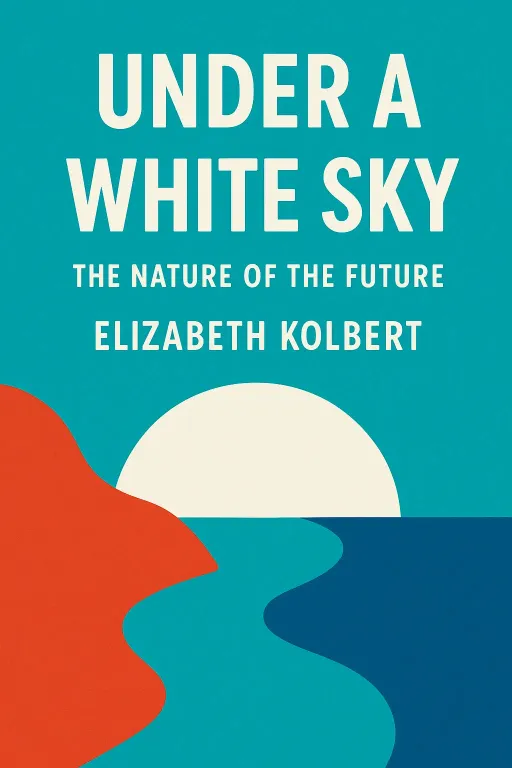
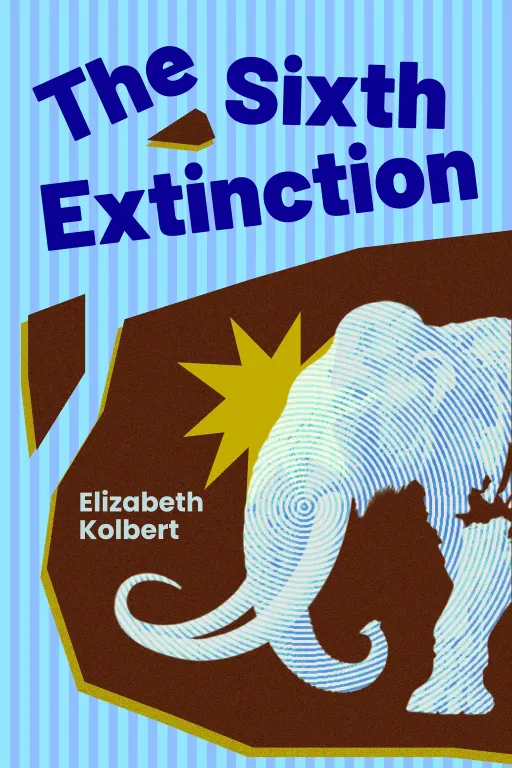
Nova: Exactly! And that's precisely what we're grappling with today. We're diving into the profound insights from two monumental books: Elizabeth Kolbert’s "The Sixth Extinction" and Jared Diamond’s "Collapse." Kolbert's work, which won a Pulitzer Prize for General Non-Fiction, really brought the concept of human-driven mass extinction into the mainstream consciousness, making it impossible to ignore.
Atlas: And Jared Diamond, with "Collapse," he's famous for taking these massive, sweeping historical narratives and boiling them down into actionable lessons, right? He’s not just telling stories, he's looking for patterns.
Nova: Absolutely. He's an intellectual powerhouse, a polymath who bridges geography, history, and environmental science. His ability to synthesize vast amounts of information and present it in a compelling, accessible way is remarkable. These aren't just academic texts; they're urgent calls to understand our place in the planetary system.
Atlas: So, we're looking at the 'why' and the 'how' of environmental crisis, but through a very analytical lens. How do we quantify something as massive as an unfolding crisis?
Nova: That's the million-dollar question, and it leads us directly into our first core topic: The Unfolding Crisis, and how human impact is literally reshaping planetary systems.
The Unfolding Crisis: Human Impact on Planetary Systems
SECTION
Nova: "The Sixth Extinction" by Elizabeth Kolbert is a masterclass in detailing how human activity has driven massive species loss. She takes us on a journey through geological time, showing how five previous mass extinctions wiped out the majority of life on Earth. Then, she starkly illustrates how we are living through the sixth, and this time, it's us causing it.
Atlas: It’s a sobering thought, that we, a single species, could be responsible for something on par with asteroid impacts or supervolcanoes. But how does she make that case so compellingly? Is it just a collection of sad stories about disappearing animals?
Nova: Not at all. Kolbert weaves together scientific research, historical accounts, and field observations. She’s not just reporting; she’s taking us to the front lines of extinction, from the acidification of oceans to the disappearing rainforests. She introduces us to the scientists who are literally watching species vanish in real-time. For example, she dedicates significant portions to the plight of amphibians, particularly frogs, which are disappearing at an alarming rate due to chytrid fungus, a pathogen exacerbated by climate change and human movement.
Atlas: So, it's not just about a few polar bears or pandas. It’s about entire ecosystems unraveling. I imagine a lot of our listeners, especially those in highly analytical fields, might be thinking, 'Okay, but what's the mechanism? What's the calculus of this unraveling?'
Nova: And that's where Jared Diamond's "Collapse" provides a fascinating parallel. Diamond examines past civilizations that failed due to a combination of environmental degradation, climate change, hostile neighbors, and shifts in friendly trade partners. He’s looking for the recurring patterns, the 'calculus of collapse' if you will, that could apply to our modern global society.
Atlas: So, he’s essentially running historical simulations. Looking back at societies like the Mayans, or the Norse in Greenland, and saying, 'What were their variables? Where did their models break down?'
Nova: Exactly. He meticulously details how the Norse settlers in Greenland, despite their European origins, failed to adapt to the harsh Arctic environment, clinging to unsustainable farming practices while ignoring the local Inuit who had thrived there for centuries. They cut down their limited trees, overgrazed their land, and were too rigid to change their cultural identity. The outcome was a slow, agonizing collapse.
Atlas: That’s fascinating. It suggests that environmental crisis isn't just about resource depletion, but also about the human element—our ability, or inability, to adapt and innovate. He’s not just blaming the environment; he’s also blaming our stubbornness.
Nova: Precisely. And this is where the two books really intersect for me. Kolbert shows us the sheer scale of our current impact, the 'what' of the crisis. Diamond, through historical examples, provides the 'how' and 'why' societies have faltered when faced with similar environmental pressures, offering a framework for analyzing our current sustainability challenges.
Atlas: So, the 'unfolding crisis' isn't just a future threat; it's a present reality, with roots in human behavior and a geological footprint that our advanced analytical tools are only just beginning to fully comprehend. That makes me wonder, how do we even begin to model something so vast and interconnected?
The Calculus of Collapse: Predicting and Preventing Environmental Degradation
SECTION
Nova: That’s a perfect pivot, Atlas. Because once we acknowledge the scale of the problem, the next intellectual challenge for someone with a sharp, analytical mind is: how can our advanced calculus and statistical methods be best applied to model and mitigate these crises? It’s moving from the realization of the problem to the engineering of solutions.
Atlas: I mean, we're talking about systems with millions of variables, feedback loops, and chaotic elements. It’s not a simple linear equation. Where do you even start?
Nova: You start by breaking it down. Think about a specific environmental problem in your local community. Perhaps it's water quality in a nearby river, or air pollution from a local industrial plant, or even urban heat islands. The 'tiny step' Diamond encourages us to take is to identify potential data points you could collect and analyze to understand its scope.
Atlas: Okay, so let's say it's water quality in a local river. I could brainstorm data points like pH levels, dissolved oxygen, turbidity, chemical pollutant concentrations, water temperature, flow rates, and even biodiversity indicators like macroinvertebrate counts. Then I'd need historical data, seasonal variations, and data on nearby land use.
Nova: Exactly! And that's just the beginning. Then you apply statistical methods to identify trends, correlations, and anomalies. You might use regression analysis to see if agricultural runoff correlates with increased nitrogen levels, or time-series analysis to predict future pollution spikes.
Atlas: And calculus would come in to model the rates of change, right? Like, the rate of pollutant dispersion, or the rate of ecosystem recovery after a mitigation effort. You could use differential equations to describe how these systems evolve over time.
Nova: Absolutely. For example, in modeling climate change, scientists use complex climate models that are essentially vast systems of differential equations representing atmospheric physics, ocean currents, ice sheet dynamics, and carbon cycles. These models allow us to simulate different scenarios, like the impact of varying greenhouse gas emissions.
Atlas: So, it's about building predictive models. If we can accurately model the trajectory of a problem, we can then model the impact of different interventions. It’s about quantifying the 'what if' scenarios.
Nova: And that’s where the ethical explorer in you comes in. It’s not just about crunching numbers; it’s about using those numbers to inform policy and drive change. It's the application of that advanced problem-solving strategy you're always seeking. For instance, understanding the 'carrying capacity' of an ecosystem—a concept that relies heavily on mathematical modeling—can help us determine sustainable resource extraction levels.
Atlas: It sounds like critical thinking in geography is essential here too. It’s not just about the math; it’s about understanding the spatial relationships, the interconnectedness of human activities and natural landscapes. How does urban sprawl in one area impact water quality downstream?
Nova: Precisely. And Kolbert, with her deep understanding of geological history, and Diamond, with his historical narratives, both underscore that these environmental systems are not static. They are dynamic, complex, and often have surprising tipping points. Our models need to be sophisticated enough to capture that complexity.
Atlas: So, the calculus of change isn't just about measuring the problem, but about measuring our capacity to respond to it. It’s about leveraging that powerful intellect to not just understand complex theories, but to apply them to tangible, real-world results.
Synthesis & Takeaways
SECTION
Nova: What these books ultimately impress upon us is a profound sense of responsibility. Kolbert shows us the sheer magnitude of our geological impact, a future where our species is the primary force reshaping life on Earth. Diamond, through the echoes of collapsed civilizations, provides a stark warning: our intelligence alone isn't enough; adaptability and a willingness to change are paramount.
Atlas: It’s a powerful call to action for anyone who values tangible results and wants to make an impact. The ethical explorer part of me feels a profound urgency, but the analytical architect also sees an immense challenge, a puzzle that demands every ounce of our intellectual rigor.
Nova: And that's the beauty of connecting abstract ideas to concrete examples. The 'why' behind the 'what' in sustainable solutions isn't just philosophical; it's deeply scientific, mathematical, and requires a multidisciplinary approach. It's about using your sharp mind to navigate the journey of discovery, seeing each challenge as a step forward.
Atlas: So, whether it's modeling the spread of a pathogen or predicting the impact of deforestation, the core message is that our advanced analytical tools are not just for understanding the problem, but for actively designing the solutions. It’s about mastering the data to master our destiny.
Nova: Absolutely. And that curiosity, that desire for mastery, is a gift that can genuinely make a difference in how we approach the environmental challenges of our time. It’s about taking those deep questions and breaking them down into tiny, actionable steps.
Atlas: The scale of the challenge can feel overwhelming, but these books, and our discussion, really highlight that the tools for understanding and mitigation are within our grasp, if we choose to use them wisely.
Nova: This is Aibrary. Congratulations on your growth!