Beyond Borders: How Cultural Exchange Forged Our Global Identity
9 minGolden Hook & Introduction
SECTION
Nova: Atlas, quick question for you. When you think about your own culture, or any culture really, what's the first thing that comes to mind? Like, what makes it uniquely?
Atlas: Oh, that's easy, Nova. I think of traditions, shared stories, particular foods, maybe a certain way of speaking. You know, those distinct characteristics that set one group apart from another. It feels... solid. Like a distinct, beautifully crafted puzzle piece in the world's mosaic.
Nova: That's a great image, Atlas. A distinct puzzle piece. But what if I told you that everything you you know about cultural identity, about those distinct, solid pieces, might actually be a beautiful, elaborate illusion?
Atlas: Whoa, an illusion? Come on, Nova. Are you saying my grandma's secret recipe for spicy noodles isn't authentically hers? Because I'm pretty sure that recipe has been in our family for generations!
Nova: Well, maybe it authentically hers, in that beautiful, evolving way. Because today, we're diving into a topic that cracks open that very idea of cultural distinctiveness. We're exploring how cultural exchange isn't just a modern phenomenon, but the very forge of our global identity, making those "distinct" puzzle pieces far more interconnected than we ever realized.
Atlas: Okay, you've got my attention. My spicy noodles are on the line here. What are we talking about?
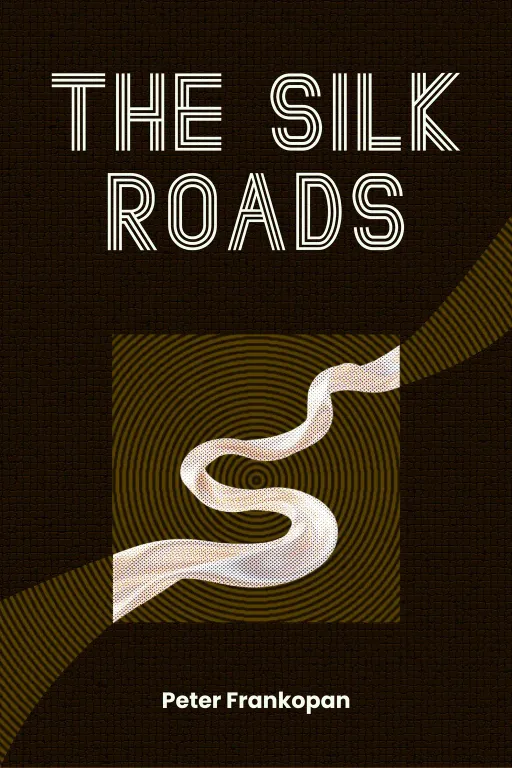
Nova: We're drawing insights from two incredible books that utterly transform our understanding of history and culture. First, Peter Frankopan’s "The Silk Roads," which famously re-centers world history away from Europe and towards the vibrant heart of Asia, showing us how interconnected humanity has always been. And then, Charles C. Mann’s "1491," a groundbreaking work that completely rewrote the narrative of the Americas before Columbus, revealing incredibly sophisticated and globally impactful societies. These aren't just history books; they're mirror-shattering experiences that reveal our shared humanity.
Atlas: So, we're essentially challenging the very idea of cultural purity, which, honestly, feels like a pretty big blind spot in how most of us view the world.
The Myth of Cultural Purity & The Silk Roads
SECTION
Nova: Exactly, Atlas, "the blind spot" is a perfect way to put it. We're taught to see cultures as these distinct, almost immutable entities. Like they sprang fully formed from a single source, untouched by outside influences. But history, as Frankopan and Mann so brilliantly show, tells a radically different story. Cultures are in constant flux, shaped by trade, migration, and the relentless exchange of ideas.
Atlas: That makes sense, but why do we have this "blind spot" in the first place? Is it comforting to think our culture is somehow unique and untouched?
Nova: Perhaps it is. There's a certain romanticism to the idea of a 'pure' origin. But the reality is far more dynamic and, frankly, much richer. Take Frankopan's "The Silk Roads" – he doesn't just talk about trade routes; he talks about "vibrant arteries." Imagine these ancient pathways, not just for silk and spices, but for entire belief systems, groundbreaking technologies, and artistic styles.
Atlas: So, we're not just talking about merchants haggling over prices. We're talking about people, ideas, and even spiritual journeys crossing continents. Can you give me a really vivid example?
Nova: Absolutely. Think about the journey of paper-making. It originated in China, but through the Silk Roads, the technology traveled west, reaching the Islamic world, then Europe. Or how about the concept of zero, which we take for granted? That came from India, spreading through the Middle East, and then fundamentally transforming mathematics and science in the West. It reshaped how we understand the universe!
Atlas: Wow. So, something as fundamental as paper or the number zero, which feels so ingrained globally, has this incredible, cross-cultural lineage. That's actually mind-blowing. It's like finding out your favorite modern pop song has ancient folk roots you never knew about.
Nova: Precisely! Or how Buddhism traveled from India across Central Asia into China, transforming entire societies and artistic expressions along the way. These routes weren't just economic; they were highways of spiritual and intellectual transfer. What we often perceive as distinct Chinese Buddhism, for instance, is a deeply interwoven tapestry of Indian origins and local adaptations.
Atlas: That's incredible. So, when people talk about 'cultural appropriation' today, it almost feels like a modern term for a process that has been happening for millennia, just at a different scale and with different power dynamics. The core idea of exchange isn't new at all.
Nova: Exactly. It highlights that cultural "purity" is a myth. Our shared human story is one of constant interaction and mutual influence. Ignoring this interconnectedness, as the book content points out, misses a huge part of what makes our world so rich and complex. It's not about taking away from cultures; it's about appreciating the incredible journeys their elements have taken.
Historical Engines of Global Identity: Trade, Migration, and Ideas & 1491
SECTION
Nova: And if we think the Silk Roads were transformative, we often overlook another massive network of exchange, completely rewriting our understanding of an entire continent. This brings us to Charles C. Mann’s "1491."
Atlas: Oh, I've heard whispers about this one. It challenges the whole "Columbus discovered America" narrative, right?
Nova: It absolutely shatters it. Mann reveals that before Columbus, the Americas were not some pristine, untouched wilderness sparsely populated by simple tribes. They were home to incredibly sophisticated, vast, and interconnected societies. We’re talking about massive cities, advanced agricultural systems, and complex social structures.
Atlas: So, the "New World" wasn't really "new" at all in terms of human development or societal complexity. That makes me wonder, how did these American innovations actually change the rest of the world, if they were so advanced?
Nova: That's the crucial part! The impact was profound, especially on global diets and economies. Think about maize, potatoes, chocolate, tomatoes, chili peppers – these staples, now integral to cuisines worldwide, all originated in the Americas. Before their introduction to Europe, for example, the Irish had no potatoes, Italians had no tomatoes for their pasta, and Swiss didn't have chocolate.
Atlas: Wait, so no pizza before 1492? My entire understanding of Italian cuisine is crumbling before my eyes! That’s a huge impact!
Nova: A massive one! These American crops fueled population booms in Europe, Asia, and Africa. They literally changed the caloric intake and agricultural practices of entire continents. Mann also delves into how these societies managed their environments, often on scales we're only now beginning to appreciate, like the Amazon rainforest being a managed ecosystem rather than a natural wilderness.
Atlas: That’s fascinating because it flips the script entirely. We often think of cultural influence flowing predominantly from Europe outwards, but "1491" shows a powerful, reciprocal flow. It wasn't just Europe "discovering" and imposing; it was the Americas profoundly shaping the global landscape.
Nova: Exactly. These accounts highlight that cultural purity is not just a myth, it’s an impediment to understanding our true history. Our shared human story is one of constant interaction and mutual influence, creating a global identity forged by countless exchanges. The "discovery" paradigm often erases the agency and profound contributions of entire civilizations.
Atlas: And it makes you realize that the world we inhabit today, from our food to our numbers to our spiritual practices, is a testament to this incredible, centuries-long global conversation. It's not just about what we take, but what we've given and received, often unknowingly.
Synthesis & Takeaways
SECTION
Nova: Absolutely, Atlas. When you look at Frankopan's Silk Roads and Mann's 1491, the message is clear: humanity has always been a global network. Our identities, our cultures, our very ways of life are not isolated creations, but magnificent mosaics built from countless threads woven across continents and centuries.
Atlas: It makes you feel incredibly connected, doesn't it? Like, every time I enjoy a cup of coffee, I'm participating in a global story of trade and cultural exchange that spans centuries and continents. It's a humbling thought, really.
Nova: It is. The biggest takeaway for us today, living in this hyper-connected world, is perhaps a sense of humility and a deeper appreciation for the rich tapestry of human experience. It demands that we look beyond superficial differences and recognize the profound, often invisible, influences that have shaped us all.
Atlas: So, if cultural purity is a myth, and our identities are forged by these incredible historical exchanges, it makes me think about the "Deep Question" from the book content: What aspect of your own culture can you trace back to an unexpected historical exchange or influence?
Nova: That's a powerful question, Atlas. It's not about finding a single origin point, but about appreciating the journey. It's about looking at your favorite dish, a local tradition, or even a common saying, and wondering where those threads truly began. It’s an invitation to rediscover your own story through a global lens.
Atlas: I'm going to be thinking about my spicy noodles all week now, trying to trace their global lineage! What an incredible journey of discovery.
Nova: And that's precisely the point. This is Aibrary. Congratulations on your growth!