

The Tech Paradox: How to Master Your Tools Without Becoming Their Slave.
Golden Hook & Introduction
SECTION
Nova: Alright, Atlas, quick game. I'm going to throw out a word, you give me the first thing that comes to mind, no filter. Ready? "Internet."
Atlas: Efficiency. Information. Uh... cat videos?
Nova: Good. Now, "smartphone."
Atlas: Connection. Productivity. Oh, and "endless scroll."
Nova: Okay, perfect. Now, what if I told you that those very tools, designed for connection and efficiency, are actually making us... dumber?
Atlas: Whoa. Dumber? That's a pretty bold claim, Nova. I mean, we're literally surrounded by information, by incredible technology. How could that possibly be true?
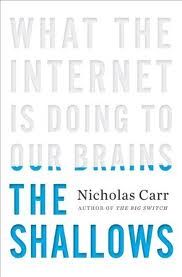
Nova: Well, that's "The Tech Paradox," Atlas. And it's what we're diving into today, drawing insights from two incredibly impactful books: Nicholas Carr's "The Shallows: What the Internet Is Doing to Our Brains," and Cal Newport's "Digital Minimalism: Choosing a Focused Life in a Noisy World." These aren't just academic texts; they're urgent calls to action.
Atlas: That's a great choice. I remember reading about Carr's motivation for "The Shallows." He's a Pulitzer Prize finalist, but what compelled him to write it was a deeply personal experience. He noticed his own ability to concentrate, to read long, complex books, was diminishing. He literally felt the internet changing his brain, making him realize this wasn't just a general societal shift, but something happening inside.
Nova: Exactly! It makes it so much more resonant, doesn't it? It wasn't just an abstract observation; it was a self-diagnosis that led to a profound intellectual journey. And that's where we start today: with the surprising, and frankly, a little unsettling, reality of how our digital lives are actually rewiring our brains.
The Digital Rewiring of Our Brains
SECTION
Nova: Carr's central thesis in "The Shallows" is a powerful one. He argues that the internet isn't just a passive tool; it's an environment that actively shapes our cognitive processes. Think about the very structure of the internet: hyperlinks, constant notifications, fragmented information, the endless stream. It encourages a very specific mode of thinking.
Atlas: So you're saying it's not just a bad habit, like checking Twitter too much, but a physical change? Like our brains are actually adapting to this environment?
Nova: Precisely. Our brains are incredibly plastic, meaning they adapt to how we use them. If we constantly engage in shallow, rapid-fire information consumption – jumping from link to link, scanning headlines, responding to pings – our brains get really good at. They prioritize speed and breadth over depth and sustained focus. Carr talks about how historical media, like the printing press, also reshaped thought, but the internet's impact is unique in its intensity and pervasiveness.
Atlas: That's a bit alarming. So, if I'm trying to read a long report for work, how exactly does this "rewiring" manifest? What does it feel like when my brain has been "shallow-fied," for lack of a better term?
Nova: It feels like an itch, Atlas. It's that constant urge to check your phone, to open a new tab, to quickly switch tasks. You might find yourself reading a paragraph, and your mind is already anticipating the next notification or thinking about what else you could be doing online. It's what psychologists call "attentional residue." Even after you switch tasks, a part of your attention is still lingering on the previous digital activity, making it harder to fully immerse yourself in the new one.
Atlas: Oh, I know that feeling. You close a tab, but you're still half-thinking about that email you just read, or that news article. It's like a mental quicksand, pulling you away from the deep work. That's going to resonate with anyone who struggles with getting deep work done, especially those who value autonomy and self-discipline, and need that focused time.
Nova: Exactly. We're training our brains to be easily distracted. And the long-term cost? A diminished capacity for deep concentration, for sustained critical thinking, for the kind of slow, deliberate contemplation that leads to truly original ideas or profound problem-solving. We gain efficiency in breadth, but we lose depth.
Reclaiming Attention Through Digital Minimalism
SECTION
Nova: So, if our brains are getting rewired, and our capacity for deep thought is eroding, is all hope lost? Or is there a way to fight back against this digital tide?
Atlas: I mean, it sounds pretty dire when you put it like that. Is there a way to un-rewire ourselves? Or at least, to protect ourselves? We can't just throw out our phones and computers, especially for those of us who rely on technology to build and create.
Nova: Absolutely not. And that's where Cal Newport's "Digital Minimalism" comes in. He offers a powerful philosophy, not just a set of tips and tricks. Newport argues that most of us approach technology like a casual diner at a buffet, grabbing whatever looks good. Digital minimalists, however, are like skilled chefs, carefully selecting only the ingredients that truly serve their deep values.
Atlas: Okay, so it's not about rejecting technology entirely, but about being extremely intentional with it. But for someone who relies on technology for their work, for expanding into new fields, isn't a full "digital declutter" almost impossible? How do you balance that with being effective and expanding new technologies?
Nova: That's a crucial distinction, Atlas. Newport isn't advocating for Luddism. He's saying our use of technology should be. It's about asking: "Does this tool, used in this way, genuinely support something I deeply value?" If the answer isn't a resounding yes, then it's a distraction. He even proposes a "digital declutter" process: a 30-day period where you abstain from all optional digital activities.
Atlas: Hold on. A 30-day digital fast? That sounds pretty intense. What's the point of that?
Nova: The point is to reset your relationship with technology. During that month, you're forced to confront what you truly miss and what you were just doing out of habit or obligation. After the 30 days, you strategically reintroduce only those technologies that genuinely serve a deep value, and you define you'll use them. It's like going on a strict diet to understand your body better, then reintroducing foods mindfully.
Atlas: I can see how that would help you identify the signal from the noise. But what's one small, pragmatic step someone could take to start applying this without needing to completely unplug for a month? For the self-starter who's all about practical application and tangible results.
Nova: One powerful step is to schedule dedicated focus blocks and protect that time fiercely. Turn off all notifications. Close unnecessary tabs. Tell people you're unavailable during those periods. Another is to identify one or two "low-value" digital habits – maybe endless social media scrolling, or checking news alerts every five minutes – and intentionally replace them with a high-value offline activity, even for just 10 or 15 minutes. It's about conscious substitution.
Synthesis & Takeaways
SECTION
Nova: So, what we've learned from "The Shallows" and "Digital Minimalism" is that we're in a tech paradox. Our tools promise connection and efficiency, but they often deliver distraction and fragmentation, literally reshaping our brains. Understanding this profound impact, as Carr illuminates, is the first step.
Atlas: And then, as Newport shows us, we have the power to reclaim our autonomy. This isn't about blaming technology; it's about mastering our tools so we don't become their slave. It's about designing a digital environment that supports our deep values, our capacity for deep thought, and ultimately, our effectiveness. It's about protecting that inner compass.
Nova: Exactly. It's about conscious design of our digital environment to protect our most valuable asset: our attention and our capacity for deep thinking. For anyone driven by effectiveness and personal control, this is absolutely essential. It's not about doing less with technology; it's about doing of what truly matters, with greater focus.
Atlas: That's a powerful way to put it. So, where in your daily routine could a moment of intentional digital disconnection create space for deeper thinking or problem-solving? Think about that.
Nova: This is Aibrary. Congratulations on your growth!