

Decoding the Digital Mind: Understanding Online Behavior
Golden Hook & Introduction
SECTION
Nova: You know, Atlas, what if I told you that the average person checks their phone over 300 times a day? And that's not by accident. It's by design.
Atlas: Whoa, 300 times? That number alone is a gut punch. But "by design"... that implies a level of intentionality that's almost a little chilling, doesn't it? Like we're all just puppets on digital strings.
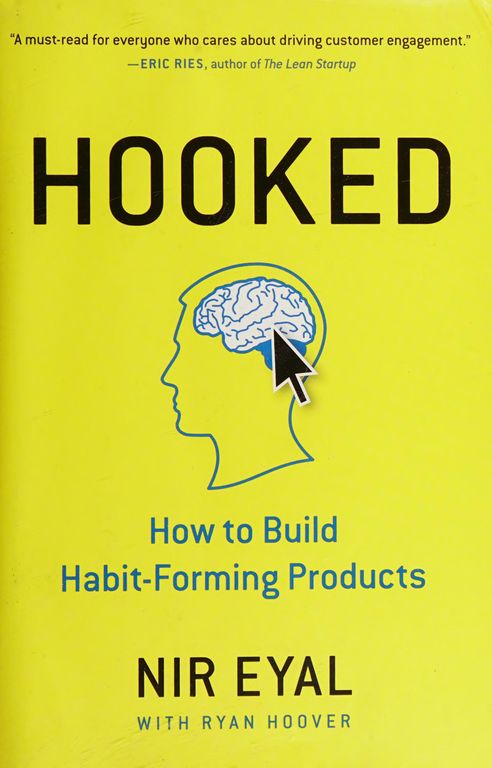
Nova: Exactly. And that's precisely what we're dissecting today. We’re pulling back the curtain on the invisible architecture that shapes our online habits, drawing insights from two incredibly influential, yet often debated, books. First, we'll dive into by Nir Eyal. It's a book that became a sort of bible in Silicon Valley, offering a practical playbook for creating engaging user experiences.
Atlas: And then there's the other side of that coin, I imagine? Because while "hooked" sounds great for a product, it sounds a little less great for a human brain.
Nova: Spot on. We'll then turn to by Nicholas Carr. This book, a Pulitzer Prize finalist, offers a stark and critical counter-narrative, exploring the profound cognitive shifts occurring due to our constant digital engagement. It really sparked a global conversation about neuroplasticity and the internet’s long-term effects on our minds.
Atlas: So, we're essentially looking at the engineering of attention, and then the fallout. For anyone trying to build something meaningful online, or just navigate their own digital life, understanding both sides of this equation is absolutely critical.
The 'Hook Model' and the Engineering of Digital Habits
SECTION
Nova: Let's start with the engineering. Nir Eyal, in, lays out what he calls the 'Hook Model' – a four-step process that product designers use to build products people can't put down. It's a cycle designed to bring users back repeatedly without conscious thought.
Atlas: Okay, so what are these four steps? Lay them out for us, because I imagine many listeners, myself included, are probably caught in these "hooks" without even realizing it.
Nova: Absolutely. The first step is the. This is the cue that prompts an action. It can be external, like a notification ping on your phone, or internal, like a feeling of boredom, loneliness, or uncertainty.
Atlas: So, the phone buzzes, or I'm waiting in line and feel that familiar itch to just... open an app. That makes perfect sense. What's next?
Nova: Next comes the. This is the simplest behavior done in anticipation of a reward. Think scrolling, clicking, opening an app, typing a search query. It has to be easy enough to do without much thought.
Atlas: Right, it's not a complex task. It's low-friction.
Nova: Precisely. And that leads us to the third step: the. This is the crucial part. Unlike fixed rewards, where you always know what you're getting, variable rewards introduce an element of surprise and delight. Think of the endless scroll on social media, or a slot machine. You don't know what amazing post or jackpot you'll see next, but you know will be there.
Atlas: Oh, I love that. The variability. It makes total sense why that's so captivating. It taps into our primal hunting instincts, doesn't it? That anticipation of the unknown. Like opening a new email and wondering if it’s good news or just another newsletter.
Nova: Exactly! It leverages our innate human desire for novelty and uncertainty. And the final step is. This is when users put something into the product, which then loads the next trigger. It could be time, data, effort, social capital, or money. For instance, when you post a photo on Instagram, you're investing time and content. The likes and comments you receive become the variable reward, and the desire to check for more of those interactions becomes the next internal trigger.
Atlas: So, by posting, I'm not just the product, I'm it better, and for others, which then makes want to come back. It's a self-perpetuating loop. But wait, this all sounds a little... manipulative. Eyal’s framework is often seen as a guide to creating "addictive" products. How does he address that? For strategic analysts driven by impact and ethics, this is a huge concern.
Nova: That’s a fundamental question, and Eyal is quite clear on this. He argues that the Hook Model itself is neutral. It's a tool, like fire. Fire can cook your food and keep you warm, or it can burn down your house. He states that the goal is to help people build that improve their lives, not create addiction. He even suggests a "manipulation matrix" to help product designers determine if they're building something that truly benefits the user. If the product isn't improving the user's life, and they wouldn't use it without manipulation, then it's unethical.
Atlas: So it's about intentionality and the ultimate impact. It's not just about maximizing engagement metrics, but about asking: That really resonates with the idea of being an ethical innovator.
Cognitive Shifts and the Ethical Imperative of Digital Engagement
SECTION
Nova: Precisely. And that naturally leads us to the second key idea we need to talk about, which often acts as a stark counterpoint to the relentless pursuit of engagement we just discussed. If the Hook Model is about how we're drawn in, Nicholas Carr's is about what happens we're pulled into that digital stream.
Atlas: Rewiring our brains? That sounds pretty dramatic. Is he talking about literal physiological changes?
Nova: He absolutely is. Carr argues that our constant engagement with digital media, this endless stream of triggers and variable rewards, is having a profound cognitive and neurological impact. He posits that the internet, with its rapid-fire information, hyperlinks, and constant distractions, is essentially rewiring our brains, specifically impacting our capacity for deep reading, sustained concentration, and even memory formation. He dives into the concept of neuroplasticity – the brain's ability to reorganize itself by forming new neural connections throughout life.
Atlas: So, our brains are adapting to the internet's demands. We're becoming better at scanning, multitasking, processing snippets of information... but at what cost? What are the downsides he highlights?
Nova: The major downside, Carr argues, is the erosion of our capacity for deep, contemplative thought. Our brains, trained by the internet for speed and breadth, become less adept at depth and focus. Think about it: when was the last time you sat down with a dense book for hours without feeling the urge to check your phone, or open another tab? This preference for skimming over deep reading, for quick answers over nuanced understanding, can diminish our ability to synthesize complex ideas, engage in critical thinking, and even foster empathy.
Atlas: That hits home for anyone in a strategic role. To make profound impact, you need to understand the 'why', you need to connect systems, you need holistic thinking. Fragmented attention is the enemy of that. For our listeners who are trying to foster innovation and deep work in their teams, this is a huge challenge. How do we design for engagement when everything is pulling us towards fragmented, shallow attention?
Nova: That's the million-dollar question, Atlas. And it brings us to the core of what we call 'Nova's Take' on this. It's not enough to simply understand digital products hook us, or even they're doing to our brains. We have to actively move towards designing for. This means prioritizing well-being and productivity over mere engagement metrics. It means consciously building digital experiences that encourage focus, reflection, and meaningful connection, rather than just maximizing screen time.
Atlas: So, it's about shifting the paradigm from "how do we get more eyeballs?" to "how do we help people thrive technology?" That's a powerful reframing, especially for ethical innovators.
Synthesis & Takeaways
SECTION
Nova: Absolutely. When you put Eyal and Carr side-by-side, you see this fascinating, almost unsettling, dynamic. Eyal gives us the blueprint for building habit-forming products, a blueprint that's incredibly effective. But Carr then shows us the potential cognitive and neurological consequences of living in a world built with that blueprint.
Atlas: It's like we've created these incredibly powerful tools, but we haven't fully grasped the long-term impact on the user, on the human. So, for the strategic analyst, the impact driver, the ethical innovator, what's the tangible takeaway here? Beyond just being aware?
Nova: The immediate takeaway is to become a conscious digital citizen and a conscious digital designer. For individuals, that means analyzing the digital products you use. Can you identify the triggers, actions, rewards, and investments that keep you 'hooked'? Once you see the mechanics, you can start to intentionally redesign your own interaction with them for more deliberate, intentional use.
Atlas: That's a great "tiny step." It empowers the individual. But for those of us building things, or leading teams, what’s the "deep question" we should be asking ourselves? How do we leverage these insights to create online experiences that promote well-being and productivity, rather than just maximizing engagement metrics?
Nova: The deep question is precisely that: How do we pivot our design thinking from "capture attention at all costs" to "cultivate meaningful attention"? It's about recognizing that true impact comes from fostering healthy engagement, not just addiction. It’s about building digital environments that respect human cognition and promote flourishing. It’s a challenge, but also a massive opportunity for ethical innovation.
Atlas: So, it's about bringing humanity back into the machine. Understanding the science of engagement, but applying it with a profound sense of ethical responsibility, to build a digital world that actually serves us, rather than enslaving our attention.
Nova: Exactly. It’s time to move beyond passively consuming engineered environments and start actively engineering environments for human flourishing.
Atlas: A powerful call to action. We need to be the architects of our own attention, and the ethical architects of the digital experiences we create for others.
Nova: Indeed.
Atlas: This is Aibrary. Congratulations on your growth!