

Unlocking Your Baby's Brain: A Guide to Cognitive Development
Golden Hook & Introduction
SECTION
Nova: You know, Atlas, there’s a moment in every new parent’s life, usually around 3 AM, when you’re staring at this tiny, gurgling human, and you think, “What are you even thinking in there? What's going on in that little brain?”
Atlas: Oh, I've had that exact thought! It’s like they’re running complex algorithms in their heads, but all the output is just… drool and inscrutable smiles. You just want a user manual for that tiny, powerful CPU.
Nova: Exactly! And that’s precisely what we’re diving into today: decoding the incredible cognitive architecture of our littlest learners. We’re going deep into “Unlocking Your Baby's Brain: A Guide to Cognitive Development,” drawing insights from three foundational books.
Atlas: Three! That’s a powerful combo. So, which brilliant minds are we tapping into for this brain-building expedition?
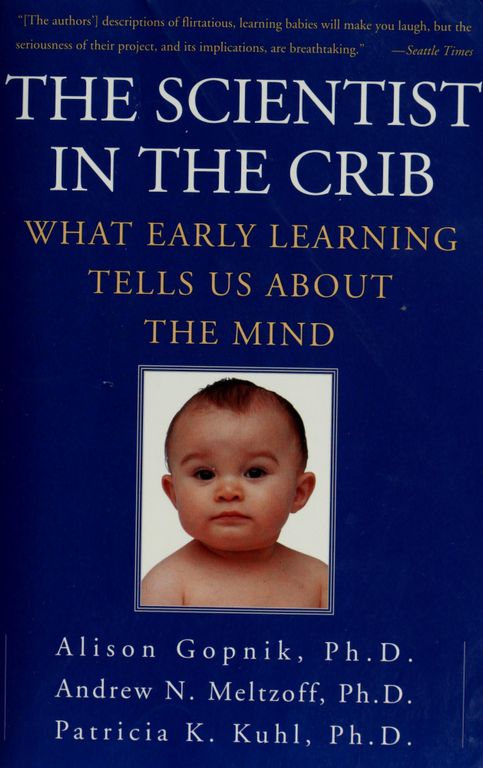
Nova: We’re pulling from the groundbreaking work of Alison Gopnik, Andrew N. Meltzoff, and Patricia K. Kuhl in "The Scientist in the Crib," the practical brilliance of John Medina's "Brain Rules for Baby," and the integrative wisdom of Daniel J. Siegel and Tina Payne Bryson’s "The Whole-Brain Child." What’s fascinating about these authors is their diverse backgrounds—from developmental psychology to molecular biology to neuropsychiatry—all converging on this one profound truth: babies are not just miniature adults. They're actually superior learning machines.
Atlas: Superior learning machines? That's a bold claim. I always just thought they were cute, highly demanding dependents. But I guess that’s the “nurturing potential” part of the equation, right? You're saying these books give us the roadmap to not just survive, but actively optimize that potential.
Nova: Precisely. They offer a scientific yet incredibly accessible roadmap. And for anyone who loves to solve problems, who sees systems, and who's driven by growth, these insights are gold. They transform those everyday, sometimes exhausting, interactions into powerful, brain-shaping opportunities.
The Tiny Scientists in the Crib
SECTION
Nova: Let's start with this idea from "The Scientist in the Crib" – that babies are essentially tiny scientists. It’s such a powerful reframe. Gopnik, Meltzoff, and Kuhl argue that from birth, babies are engaged in a sophisticated process of observation, experimentation, and statistical analysis. They're not just passively absorbing information; they're actively testing hypotheses about the world around them.
Atlas: Whoa, that's a bit mind-bending. I always pictured them more like sponges, soaking it all in. But you're saying they're more like miniature Einsteins, running experiments? Can you give me an example of what that actually looks like in practice?
Nova: Absolutely. Think about a baby dropping a toy from their high chair, over and over again. To us, it might seem like a mischievous game. But what they're doing is experimenting with gravity, cause and effect, and object permanence. They're observing: "If I let go, it falls." They're experimenting: "What if I drop it from a different height? What if I drop something soft versus something hard?" And they're collecting data, statistically analyzing the outcomes.
Atlas: Oh, I like that! So it’s not just about annoying mom and dad; it’s about conducting empirical research. That makes a lot more sense. What kind of tools are they using for this "research"?
Nova: Their primary tools are their senses and their motor skills. They're constantly manipulating objects, looking intently, listening to sounds, and feeling textures. And what's crucial is their innate curiosity. Unlike adults, they don't come with preconceived notions about how the world work. Every new input is an opportunity for discovery. They're building predictive models of reality based on the statistical regularities they observe.
Atlas: So they're building their own internal "physics engine" based on what they experience. That's actually really cool. It reminds me of how a software engineer might approach a new system, trying to understand its rules by poking and prodding.
Nova: It’s a perfect analogy for a strategist like you! And this isn't just about physical objects. They apply this scientific method to social interactions too. They're observing facial expressions, vocal tones, and reactions to their own actions, trying to decipher the complex rules of human emotion and communication. This is where the concept of 'serve and return' interactions comes in.
Atlas: 'Serve and return'? That sounds like tennis for babies. How does that fit into the scientific method?
Nova: It’s about responsive care. When a baby babbles, gestures, or points, that's their "serve." When a parent or caregiver responds with a smile, a word, or a similar gesture, that's the "return." These back-and-forth exchanges are like mini-experiments in social communication. The baby is testing: "If I make this sound, does my caregiver respond? What kind of response do I get?" Each successful "return" reinforces neural connections and helps them understand the social world.
Atlas: That makes sense. So, it's not just about being physically present, but actively engaging and reciprocating their bids for connection and information. It’s like they're debugging their social algorithms.
Building Emotional Intelligence and Exploration
SECTION
Nova: Exactly. And this leads us beautifully into the insights from John Medina's "Brain Rules for Baby." While "Scientist in the Crib" emphasizes the cognitive mechanics, Medina brings it all back to twelve key rules for optimizing brain development, with a strong emphasis on emotional intelligence and exploration. He argues that a baby's emotional state profoundly impacts their ability to learn. A stressed baby is a baby whose learning potential is compromised.
Atlas: That sounds rough, but it also resonates. If I’m stressed in a high-pressure situation, my ability to think clearly definitely takes a hit. So, how does Medina connect emotional well-being to brain development for a baby?
Nova: He emphasizes that a child's earliest experiences with emotional security and responsive care lay the groundwork for their entire emotional regulation system. One of his "rules" is "smart parents make smart kids, but it's not what you think." He's not talking about flashcards or early academics. He's talking about parents who are emotionally attuned, who create a secure base for exploration. He argues that a child who feels safe and loved is free to explore, and exploration is fundamental to learning.
Atlas: I can see that. It's like, if you're constantly worried about your safety, you're not going to be focused on discovering how gravity works. You're focused on survival. So, how do we intentionally design an environment that encourages this natural exploration and discovery, beyond just dropping toys?
Nova: That’s a deep question, and it's something Medina addresses directly. It's about providing a rich, stimulating environment that's also safe and predictable. It’s not about expensive gadgets. It’s about having objects of different textures, shapes, and sizes. It’s about providing opportunities for movement and sensory play. But crucially, it's about the parent being present and responsive, not just a passive observer. It's about letting them lead their own play, even if it looks messy or unconventional to us.
Atlas: So, it's about giving them the freedom to be their own scientists, with us as the supportive lab assistants. And this concept of a "secure base" – how does that connect to the "Whole-Brain Child" approach by Siegel and Bryson?
Nova: It connects directly, Atlas. Siegel and Bryson build on this by introducing strategies for integrating different parts of a child's brain, promoting emotional regulation, and fostering healthy development. They talk about the "upstairs brain" and the "downstairs brain". The goal is to help these two parts communicate effectively.
Atlas: Ah, the classic logic versus emotion battle. I feel like I'm still trying to integrate those two parts of my own brain most days! How do you even begin to do that with a baby?
Nova: That's a great way to put it! They introduce concepts like "name it to tame it." When a child is having a big emotional outburst—a "downstairs brain" moment—instead of dismissing it, you help them put words to their feelings. "You seem really angry right now because your block tower fell." This helps connect the emotional experience with the language centers in the "upstairs brain," building those neural pathways for emotional regulation.
Atlas: So, it’s about acknowledging the emotion, validating it, and then helping them process it verbally, even if they can't speak yet. It's like giving them the tools to understand their own internal operating system.
Nova: Exactly. And they also talk about connecting rather than redirecting. If a child is upset, the first step is to connect emotionally, to show empathy, before trying to solve the problem or distract them. This builds trust and strengthens their sense of security, which, as Medina highlighted, is foundational for learning. These authors, they're not just giving parenting tips; they're explaining the underlying neural mechanisms. What’s amazing is that Allison Gopnik, for example, has been a pioneer in cognitive development research for decades, establishing how much more sophisticated infant learning is than we ever imagined. Her work has truly shifted the paradigm from babies as blank slates to active explorers.
Atlas: That's actually really inspiring. So, it's not about being the perfect parent, but about being a responsive, engaged guide who understands the incredible learning process happening within their child. It gives you a framework, a strategy, for nurturing that potential.
Synthesis & Takeaways
SECTION
Nova: So, by understanding babies as these tiny, sophisticated scientists, by prioritizing emotional security as the foundation for exploration, and by actively helping them integrate their emotional and logical brains, we’re not just raising kids. We’re empowering future problem-solvers, innovators, and emotionally intelligent individuals.
Atlas: That’s a powerful reframing. It makes me think that all those little moments – the dropped spoon, the unexplained giggle, the tantrum – they’re not just isolated incidents. They’re data points, experiments, and opportunities for connection and growth. It's like every interaction is a chance to build a stronger, more resilient brain.
Nova: Absolutely. And the healing moment here, for any parent feeling overwhelmed, is to remember that your presence and responsive care are the most powerful tools. More so than any toy or gadget. Those serve and return interactions, that secure base, the calm processing of big emotions—these are the architects of early learning.
Atlas: So, it’s about showing up, being present, and trusting that the little scientist in the crib is already doing most of the heavy lifting. We’re just there to facilitate and provide the best possible research lab.
Nova: Precisely. It’s an incredible journey, and these books truly unlock the wonder of it all. It’s about transforming what might feel like mundane daily tasks into profound acts of developmental support.
Atlas: That’s a beautiful way to put it. It’s not just about surviving parenthood; it’s about thriving in it, and helping your child thrive too.
Nova: This is Aibrary. Congratulations on your growth!