

The Ultimate Funding Funnel: Marketing Yourself for Educational Dividends
Golden Hook & Introduction
SECTION
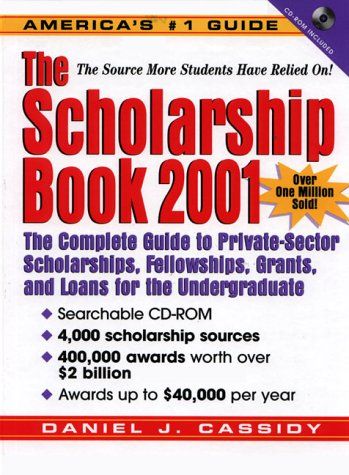
Dr. Celeste Vega: Imagine walking into a room where billions of dollars are just sitting on a table, waiting for someone to claim them. No strings attached, no equity given up, just pure capital ready to fund your growth. It sounds like a fantasy, right? But according to Daniel J. Cassidy's classic guide,, this is exactly what the educational funding landscape looks like. The catch? Most people don't know where to look, or how to pitch themselves to the people holding the checkbook. Today, we're going to look at this massive directory not just as a list of college funds, but as a masterclass in strategic investing and personal marketing. Joining me is Ashma, a marketing manager and aspiring investor who is constantly looking for ways to evolve and grow. Ashma, welcome!
Ashma: Thanks, Celeste! I am so excited to be here. You know, when I first looked at Cassidy's book, I didn't just see a directory of scholarships. As a marketing girlie and someone who's always analyzing market trends, I saw a massive database of untapped opportunities. It's essentially a market inefficiency. There are millions of dollars left on the table every single year because of a mismatch between the 'supply' of funds and the 'demand' of qualified applicants who know how to position themselves. For me, this is where the youngness in me is evolving—moving from just looking for opportunities to strategically engineering them.
Dr. Celeste Vega: I love that framing! "Strategically engineering opportunities." That is so precise. Today, we're going to tackle this book from two distinct angles. First, we'll explore how to treat the scholarship landscape as a market of undervalued assets using an investor's mindset. And second, we'll discuss how to build a high-converting personal brand to pitch successfully to these funding committees. Let's dive in!
The Human Capital Portfolio
SECTION
Dr. Celeste Vega: Let's start with the sheer scale of what Cassidy laid out. contains thousands of individual funding sources, totaling billions of dollars. But to the average high school graduate or college student, looking at this book can feel incredibly overwhelming. It's like looking at a phone book from the pre-internet era. Celeste, how do we begin to filter this?
Ashma: Well, Celeste, as an INTJ, my brain immediately goes to systems and filters. If you look at Cassidy's book, he organizes scholarships by major, by geographic location, by physical characteristics, by heritage, and even by hobbies. To an investor, this is exactly like using a stock screener. You don't just buy random stocks; you filter by sector, market cap, and valuation.
Dr. Celeste Vega: That's a brilliant comparison. A stock screener for human capital! Cassidy actually emphasizes that the biggest mistake students make is only applying to the "blue-chip" scholarships—the massive, national ones like the Gates Millennium Scholarship or the Coca-Cola Scholars Program. What happens when everyone crowds into those same assets?
Ashma: Oh, the conversion rate plummets! It's basic market saturation. If ten thousand people apply for one slot, your probability of winning is incredibly low, no matter how good your application is. From a marketing perspective, we call this the "long tail." The real gold is in the niche, low-competition segments. Cassidy lists hundreds of highly specific scholarships. For example, there are scholarships specifically for left-handed people, or for students who want to study vacuum technology, or for descendants of specific historical groups.
Dr. Celeste Vega: Yes! He mentions one funded by the National Association to Preserve and Encourage Storytelling. It's highly specific. If you fit that niche, your competition isn't ten thousand people; it might be ten people.
Ashma: Exactly! As an investor, you want to find undervalued assets where the barrier to entry is low but the return on investment—the ROI—is incredibly high. If it takes you two hours to apply for a highly niche five-hundred-dollar scholarship, and only three people apply, your expected value is much higher than spending forty hours competing with the entire country for a ten-thousand-dollar prize. It's about diversifying your portfolio of applications. You don't put all your capital into one high-risk stock; you spread it across several high-probability, niche opportunities.
Dr. Celeste Vega: That makes so much sense. But to find those niches, you have to do the research. Cassidy's book is essentially a map of these niches. He talks about the importance of using the indexes in the back of the book. He has a "Quick Find" index, an alphabetical index, and a subject index. It's all about cross-referencing.
Ashma: It really is. And that cross-referencing is what we in marketing call "audience segmentation." You are segmenting the database to find the exact intersection of your unique traits. Let's say you're a marketing enthusiast, you live in a specific county, and you have a passion for investing. If you can find a scholarship that sits at the intersection of those three circles, you've found your sweet spot. You've eliminated ninety-nine percent of the competition before you've even written a single word of your essay.
Dr. Celeste Vega: And Cassidy points out that many of these smaller, niche scholarships go completely unclaimed because nobody applied. Think about that—free money, sitting in a trust fund, because of a lack of market awareness!
Ashma: It's a tragedy of marketing, honestly! The organizations offering these funds often don't have the marketing budget to promote them. They rely on directories like Cassidy's. So, if you are willing to do the deep-dive research—to be the analytical "mastermind" who digs through the data—you can uncover these hidden gems. It's the ultimate low-risk, high-reward investment in your own education.
The Conversion Funnel
SECTION
Dr. Celeste Vega: So, once we've identified these undervalued assets—these niche scholarships—we have to actually apply. And this is where Cassidy's advice gets incredibly practical, and frankly, a bit retro, given the 2001 publication date. He talks a lot about sending physical letters, including a self-addressed stamped envelope, or SASE. Ashma, when you read about the self-addressed stamped envelope, what went through your mind?
Ashma: I actually laughed out loud! It's so retro, but from a modern marketing perspective, it's a brilliant lesson in "friction reduction." Why did Cassidy insist on including a self-addressed stamped envelope? Because it made it incredibly easy for the scholarship committee to reply to you. You were removing a barrier to action for your "customer"—the committee. Today, we do this with one-click checkout buttons or pre-filled forms. The principle is exactly the same: if you make it hard for people to give you money, they won't do it.
Dr. Celeste Vega: That is such a great way to look at it. Even in a digital age, we have to reduce friction. If a committee asks for a PDF, don't send a Word document. If they ask for three references, don't send two or four. Follow the instructions to the letter to make their decision-making process as smooth as possible.
Ashma: Exactly. In marketing, we talk about the "conversion funnel." The top of the funnel is awareness—getting the committee to notice your application. The middle is interest and decision—making them read your essay and consider you. The bottom is action—them writing you the check. At every stage of that funnel, you want to eliminate drop-off. If your essay is hard to read, or if you didn't format your resume correctly, you are creating friction, and your conversion rate will drop to zero.
Dr. Celeste Vega: Let's talk about the essay, because Cassidy devotes a whole chapter to this. He says the essay is where you breathe life into your application. It's where you cease to be a list of grades and test scores and become a real human being. How do we apply marketing principles to writing a winning scholarship essay?
Ashma: This is all about finding your Unique Value Proposition, or UVP. In marketing, if you try to appeal to everyone, you appeal to no one. You become a generic commodity. Many students write generic essays about how they want to "help people" or "change the world." It's nice, but it's not a UVP. You need to position yourself as a specific solution to a specific problem that the scholarship committee cares about.
Dr. Celeste Vega: Can you give us an example of how that would look in practice?
Ashma: Sure! Let's say a local community foundation is offering a scholarship funded by a retired business owner. The generic approach is to write about how much you love business. The strategic, marketed approach is to research that retired business owner, understand their values—maybe they were passionate about local job creation—and then write your essay about how you plan to use your education to start a business in your hometown and hire local youth. You are aligning your brand with their brand. You are showing them that investing in you will yield the exact "social return" they are looking for.
Dr. Celeste Vega: That is incredibly powerful. You're shifting the dynamic from "please give me charity" to "let's partner to achieve a shared goal." You are pitching a business proposal where the product is your future impact.
Ashma: Yes! And as an aspiring investor, I love this framing. Scholarship committees aren't giving away money out of pure randomness; they are investors. They are investing their capital into human beings, hoping to get a return in the form of community impact, scientific progress, or industry innovation. Your job in the essay is to prove that you are the highest-yielding, lowest-risk investment in their portfolio. You do that by showing a clear track record of growth, a concrete plan for the future, and a deep alignment with their mission.
Dr. Celeste Vega: Cassidy also emphasizes the importance of the "follow-up." He suggests sending a thank-you note after an interview, or even after receiving a rejection letter, to keep the relationship warm. In marketing, we call this lead nurturing, right?
Ashma: Absolutely! A "no" today isn't necessarily a "no" tomorrow. Sometimes, the first-choice candidate declines the scholarship because they got a better offer elsewhere. If you were the runner-up, and you sent a polite, professional thank-you note expressing your continued interest, guess who they are going to call first? You! It's about building long-term brand equity. Even if you don't get the funding this time, you've left a lasting, positive impression that could open doors down the road.
Synthesis & Takeaways
SECTION
Dr. Celeste Vega: This has been such an eye-opening conversation, Ashma. We've taken a book that many might dismiss as an outdated directory from 2001 and extracted timeless strategic principles. We've looked at the scholarship market as a database of undervalued assets, and we've framed the application process as a high-converting marketing funnel.
Ashma: It's really shown me how much my own perspective is evolving. When I was younger, I thought of scholarships as things you just "apply for" and hope for the best, like a lottery. But now, looking through the lens of marketing and investing, I see it as a game of strategy, data analysis, and brand positioning. It's about taking control of your own growth trajectory.
Dr. Celeste Vega: If you had to leave our listeners with one actionable takeaway from our discussion of, what would it be?
Ashma: I would say: treat yourself as an asset worth investing in, and treat your application as a professional pitch. Don't just look for the biggest pots of money; look for the niches where your unique story and skills have the highest conversion rate. Do the market research, find your Unique Value Proposition, and reduce the friction for the people who want to fund your evolution.
Dr. Celeste Vega: Beautifully said, Ashma. The "youngness" in all of us is constantly evolving when we take charge of our own education and our own capital. Thank you so much for sharing your marketing and investing insights with us today.
Ashma: Thank you, Celeste! This was incredibly fun.
Dr. Celeste Vega: And to our listeners, next time you see a massive database or a daunting list of requirements, don't walk away. Put on your investor hat, find the market inefficiencies, and start pitching. Until next time, keep learning, keep growing, and keep investing in your future.