The Great Debate of Economic Systems
Golden Hook & Introduction
SECTION
Nova: We spend our entire adult lives chasing financial freedom, yet most of us are operating on a mental map of the economy that was drawn by people who died a century ago. We assume the system is just background noise, like the weather, but the architecture of our economy is a set of choices, not a force of nature.
Atlas: That is a jarring way to put it. I usually think of economics as just the price of gas or the rent on my apartment, not as a conscious design choice. It feels like we are all just passengers in a car driving itself, and we have no idea who set the GPS coordinates.
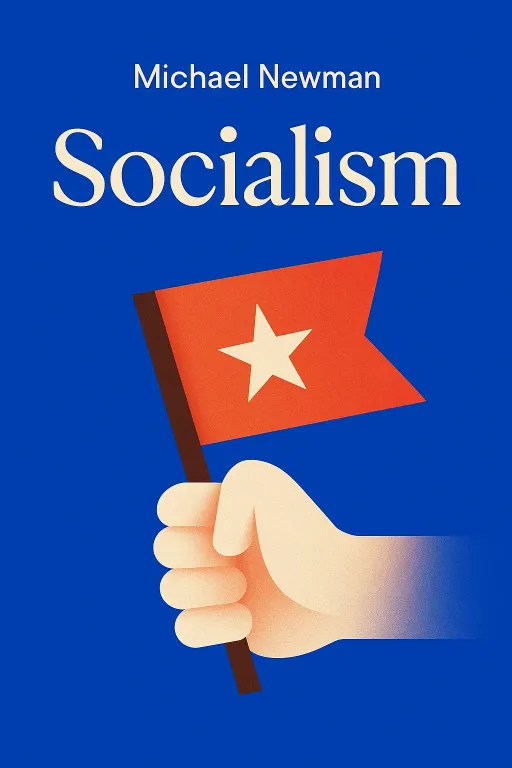
Nova: Exactly. And that is why today is so critical. We are looking at the two massive, clashing ideologies that shaped the modern world. On one side, we have Michael Newman’s work in his book, Socialism, which dives into the root of our desire for cooperation and systemic fairness. On the other side, we have Friedrich Hayek’s seminal classic, The Road to Serfdom, which acts as a massive red flag about the dangers of centralized planning.
Atlas: Right, so we are essentially looking at the tension between the collective good and the individual’s right to steer their own ship. It feels like the ultimate tug-of-war for the soul of our society.
Nova: It is. And for our listeners, specifically the ones who are out there building their own lives, their own businesses, and their own independence, understanding this tension is not just academic. It is the blueprint for how you navigate your own financial strategy.
The Socialist Impulse – The Architecture of Cooperation
SECTION
Atlas: I am curious to start with Newman’s perspective. When people hear the word socialism, they usually jump to political slogans or shouting matches on the news. But you mentioned Newman traces the historical roots of socialist thought. What is the actual, core mechanism he is describing?
Nova: Newman’s work is fascinating because he moves past the modern political noise. He looks at the philosophical bedrock. At its heart, the socialist impulse is a response to the idea that systemic inequality is a design flaw that can be engineered away. It is driven by a profound belief in human cooperation. The idea is that we are not just atomized individuals competing for scraps; we are a community that can achieve more by pooling resources and directing them toward the common welfare.
Atlas: That sounds incredibly noble on paper. It is the idea that if we all chip in, the floor for everyone rises. But I have always wondered about the implementation. If you are a builder or someone trying to create value, how does that philosophy actually translate into the day-to-day?
Nova: That is the pivotal question. Newman highlights that the historical roots of this thought were often reactions to the brutal, unchecked industrialization of the past. When you see people suffering while others amass extreme wealth, the intuitive, human reaction is to demand a system where the community takes care of its own. It is an architecture of care. It argues that by centralizing the decision-making process for resource allocation, we can eliminate the harsh peaks and valleys of market volatility.
Atlas: Oh, I see the appeal. It is like having a central traffic control system for the economy. Instead of everyone driving however they want and causing accidents, you have a master plan that ensures everyone gets to their destination safely. It sounds efficient, orderly, and fair.
Nova: It does. And that is the seductive power of the idea. It promises stability. It promises that you will not be left behind if the market crashes. But this is exactly where the conversation gets complicated, because while the intention is to foster community, Newman’s analysis also touches on the friction that happens when you try to apply that top-down order to human behavior.
Atlas: That makes sense. I can imagine that in a small community, like a family or a small business team, that kind of cooperation is the lifeblood of success. We do that every day. We pool our energy to launch a project. But scaling that to an entire nation? That is where the complexity explodes.
Nova: Precisely. Scaling is the ghost in the machine. When you move from a team of ten to a population of millions, the amount of information you need to process to make a good decision becomes astronomical. You lose the nuance of individual needs. That is where we start to see the cracks in the foundation of that collaborative ideal.
The Hayekian Warning – The Architecture of Individualism
SECTION
Atlas: That is the perfect segue to Hayek. I have heard his name thrown around in every economics class, usually paired with the term classical liberalism. What was his big fear in The Road to Serfdom?
Nova: Hayek was writing during a time of massive global upheaval, when the world was watching authoritarian regimes rise across Europe. He looked at the trend toward central economic planning and saw a disaster in the making. His core argument is that the moment you grant a central authority the power to plan the economy, you are not just managing resources; you are inevitably eroding individual liberty.
Atlas: Wait, hold on. Why is it inevitable? You can argue that a well-meaning government just wants to make sure everyone has housing or healthcare. Why does Hayek think that leads to something as dark as serfdom?
Nova: Because of what he calls the knowledge problem. Hayek argued that no central planner, no matter how brilliant or well-intentioned, can possibly know what millions of individuals want, need, or value at any given moment. Prices, in a free market, are signals. They tell you what is scarce, what is needed, and where to invest your energy. When you replace that signaling system with a central plan, you are effectively flying blind.
Atlas: That is a great analogy. It is like trying to pilot a plane without an instrument panel. You are guessing, and usually, you are guessing wrong.
Nova: Exactly. And once you start guessing wrong, you have to force compliance to keep the plan on track. If the plan says "we need more steel," but the people want better food, the planner has to suppress the people’s desires to achieve the goal of the plan. You end up with a system that prioritizes the abstract "plan" over the actual lives of the people it is supposed to serve. That is the road to serfdom he was talking about. It starts with noble intentions of community welfare and ends with the state controlling what you do, where you work, and what you can own, just to keep the system from collapsing.
Atlas: That is a sobering thought. It makes me realize that individual liberty is not just a political preference; it is actually an economic necessity for innovation. If you do not have the freedom to fail, to choose, or to innovate, you are essentially stuck in a static system that cannot adapt.
Nova: You hit the nail on the head. Hayek’s point is that the market is a discovery process. It is the only way to aggregate the wisdom of millions of people. When you remove that freedom, you stop the discovery. You stop the progress. And for someone like our listener—a purposeful builder, a strategic architect—that is a nightmare. It is the death of agency.
Atlas: I can see how that would resonate with someone who values building their own future. If you are trying to construct a life of substance, you need the freedom to adjust your strategy based on the signals you get from your own life and your own environment, not based on some rigid, top-down instruction manual.
Synthesis & The Architect’s Blueprint
SECTION
Nova: This brings us to the deep question for our listeners today. We have the socialist impulse for community care, and the Hayekian warning about the preservation of individual liberty. How do we hold both of those in our hands without dropping either?
Atlas: That is the million-dollar question. I imagine a lot of our listeners are feeling that tension right now. They want to be successful, they want their independence—that is the Hayekian drive—but they also feel a deep responsibility to their community, to their team, and to the welfare of the people around them.
Nova: I think the answer lies in how we design our personal financial strategies. The Strategic Architect does not rely on a central planner to secure their future. They build their own foundation of independence. They save, they invest, they learn, they build assets. That is the Hayekian side—taking total responsibility for your own agency so you are not dependent on a system that might fail or restrict you.
Atlas: Right. And then, once you have that foundation of independence, you are in a position to actually practice the socialist ideal of community welfare voluntarily. You cannot really help others if you are drowning yourself.
Nova: Exactly. It is a paradox, isn't it? To be the most effective contributor to the community, you first have to be the most disciplined architect of your own freedom. When you are financially secure, when you have built a life of substance, you don't need a central authority to force you to be cooperative. You do it because you have the capacity to choose. You can invest in your community, you can mentor others, you can support causes that matter, all from a position of strength rather than a position of need.
Atlas: That is a powerful reframing. It moves the debate from a political abstraction to a personal action plan. You are saying that individual liberty is the engine, and community contribution is the fuel that gives the engine meaning.
Nova: I love that image. If you only have the engine, you are just a machine spinning in a void. If you only have the fuel, you have no way to move. You need both. And for our listeners, the takeaway is simple but challenging: commit to your personal growth and financial literacy with the intensity of someone who knows that their freedom is the foundation of everything else. But never let that pursuit of independence turn into isolation.
Atlas: That is such a balanced way to look at it. It takes the "us versus them" out of the economic debate and turns it into a "how do I live" question. It is about building a life that is robust enough to protect your freedom, but open enough to serve the people around you.
Nova: And that requires a level of discipline that most people never reach. It means laying the foundation brick by brick, not racing to a finish line that doesn't exist. It means 20 minutes of deep reading, it means mastering your finances, and it means being strategic about your network. You are not just building for yourself; you are building the capacity to be a pillar for others.
Atlas: I am definitely taking that away with me today. It is not about choosing between these two systems; it is about embodying the best of both in your own life. Use the market to build your freedom, and use your freedom to build your community.
Nova: That is the blueprint. And honestly, that is the only way to create a life that feels both secure and significant. Thank you for diving into this with me. It is a complex topic, but when you look at it through the lens of personal agency, it becomes a lot clearer.
Atlas: It really does. It makes me feel much more empowered to take control of my own strategy. This has been a great session.
Nova: I am glad to hear that. To all our listeners, keep building, keep learning, and keep holding that tension between your own independence and your impact on the world. It is the most important work you will ever do.
Atlas: Absolutely. And with that, we are wrapping up another episode of deep-dive strategy. This is Aibrary. Congratulations on your growth!