Unlocking Your Inner Architect: Designing a Life of Purpose
Golden Hook & Introduction
SECTION
Nova: You know, Atlas, I was reading something utterly fascinating the other day. It suggested that many of us are living a life that, if we were to be completely honest, isn't truly our own. We're often building a life for someone else's expectations, not our deepest desires.
Atlas: Oh, I love that. It’s like we’re all actors in a play we didn’t audition for, trying to nail a role that doesn't quite fit. For anyone in high-stakes environments, that pressure to perform a certain way can be immense.
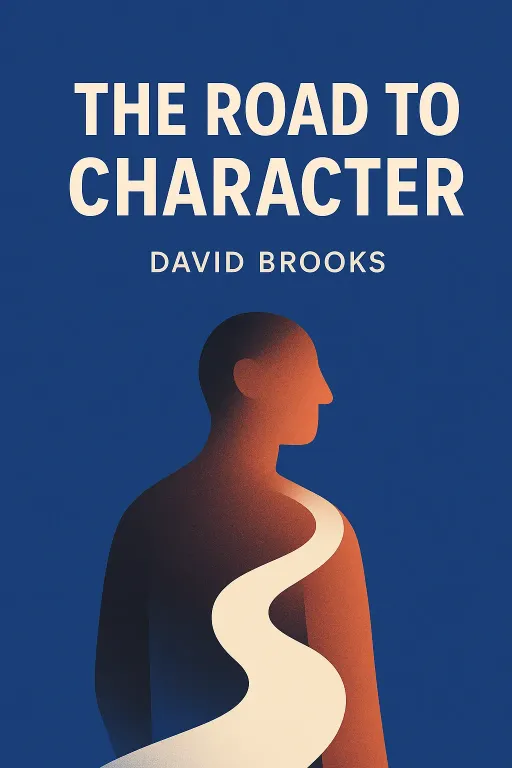
Nova: Exactly! And it brings us to a profound dichotomy explored by David Brooks in his seminal work,. Brooks, a renowned journalist and political commentator, actually wrote this book after a period of intense personal reflection, grappling with what truly constitutes a good life amidst the noise of modern success.
Atlas: So, it's not just another self-help book, then, but a deeper dive into something more fundamental. I’m curious, what's at the heart of this 'good life' he's talking about? What's the core distinction he makes?
Resume Virtues vs. Eulogy Virtues
SECTION
Nova: He introduces this brilliant concept: the difference between 'resume virtues' and 'eulogy virtues.' Resume virtues are all about external success – the skills you acquire, the achievements you list, the promotions you earn. They’re about building your career, your public image.
Atlas: Right, like that impressive project lead, the groundbreaking research paper, or the massive quarterly sales figures. The things that get you hired, essentially.
Nova: Precisely. But then there are 'eulogy virtues.' These are the deeper qualities that are talked about at your funeral, the ones that define your character. Are you kind? Courageous? Honest? Compassionate? Were you a loving parent, a devoted friend, a person of integrity?
Atlas: Wow. That’s actually really inspiring. It’s a stark reminder that what we chase day-to-day might not be what truly defines us in the end. For leaders, especially, it’s easy to get caught up in the resume virtues – the metrics, the growth, the team performance.
Nova: Absolutely. Brooks argues that our society, particularly in the West, has become overly focused on cultivating resume virtues, often at the expense of eulogy virtues. We're taught to market ourselves, to optimize for efficiency, to climb the ladder. But true fulfillment, he suggests, comes from building the inner character, through what he calls 'self-conquest' and moral growth.
Atlas: Self-conquest. That sounds almost monastic. What does that look like in practice for someone juggling a demanding career and personal responsibilities? Is it about sacrificing professional ambition for personal character?
Nova: Not at all. It’s about reorienting your ambition. It’s recognizing that the journey to build character often involves confronting your own weaknesses, facing your flaws, and choosing the harder right over the easier wrong. He gives examples of historical figures who, despite immense public success, dedicated themselves to daily internal battles for humility, patience, and love. It’s not about being perfect, but about the lifelong striving towards moral excellence.
Atlas: I can see how that would be a transformative shift. Instead of asking, 'How can I be more successful?' it becomes, 'How can I be a better person?' It makes me wonder about the decisions we make. Are they driven by a desire for more accolades, or by a deeper sense of what's right?
Nova: It's a continuous calibration, isn't it? Brooks really pushes us to reflect on those moments where we choose instant gratification or external validation over the quiet, often difficult work of building internal strength. It's about recognizing that true freedom comes not from having more options, but from having a stronger inner core that guides your choices.
Atlas: That’s a great way to put it. It’s about building an internal compass that points towards a more meaningful north, rather than just following the loudest external signal. It resonates with anyone trying to lead with integrity, especially when facing tough decisions that might not be popular.
Design Thinking for Life Planning
SECTION
Nova: And that naturally leads us to a second profound approach to intentionally shaping our lives, one that offers practical tools for this internal architecture. This comes from Bill Burnett and Dave Evans, two Stanford professors, in their incredibly popular book,.
Atlas: Oh, I’ve heard whispers about that one! Applying design thinking to life, right? That sounds like a fascinating blend of creativity and practicality. What exactly is 'design thinking' in this context?
Nova: It’s brilliant, really. Burnett and Evans come from the world of product design – thinking about how to create things that actually work for people. They realized that the same principles used to design an iPhone or a chair can be applied to designing your own life. This isn't about having a five-year plan set in stone; it's about adopting a mindset.
Atlas: So it’s not about finding perfect life, but about building good life?
Nova: Exactly! They challenge what they call 'dysfunctional beliefs,' like the idea that you must know your one true passion before you can start, or that you should just 'find' your perfect job. Instead, they encourage a 'bias to action' and 'prototyping.'
Atlas: Prototyping a life? That’s intriguing. Can you give an example of what that looks like?
Nova: Of course. Let's say you're a leader who feels a pull towards greater advocacy but isn't sure if it's the right path. Instead of quitting your job and going back to school, design thinking suggests you 'prototype' it. This might mean having informational interviews with people in advocacy roles, volunteering for a few hours a week, or taking a short online course.
Atlas: So, it’s about testing the waters, gathering data, and seeing if it actually feels right, without making huge, irreversible commitments. I can see how that would be incredibly valuable for someone considering a pivot or trying to expand their impact without burning out. It lowers the stakes.
Nova: Precisely. It turns life choices into a series of small, low-risk experiments. You observe, you reflect, you iterate. They also emphasize 'reframing' dysfunctional beliefs. For instance, many people believe if they fail at something, they've failed definitively. Design thinking reframes failure as simply data – information you gain to adjust your next prototype.
Atlas: That’s empowering. Instead of seeing a setback as a personal failing, it's just a data point to inform the next iteration. It really shifts the mindset from perfectionism to continuous learning. And for someone trying to balance work and personal well-being, this iterative approach seems much more sustainable than a rigid, all-or-nothing plan.
Nova: It truly is. They also talk about 'wayfinding,' which means figuring out your direction as you go, rather than needing a fixed map from the start. It’s about building a life that truly works for you, aligning your values, interests, and energy. It’s about moving past the idea that there's one perfect path and embracing the idea that you are the primary architect, capable of designing multiple fulfilling lives.
Atlas: That gives me chills, in a good way. The idea that you’re not just passively living, but actively designing your own narrative, making intentional choices, and course-correcting along the way. It’s liberating.
Synthesis & Takeaways
SECTION
Nova: So, when you bring these two powerful perspectives together, you see a holistic path to purpose. Brooks gives us the 'why' – the crucial importance of cultivating eulogy virtues for a truly meaningful life. Burnett and Evans provide the 'how' – the practical, iterative design tools to build that character and that life, one prototype at a time.
Atlas: It’s a beautiful synergy. It’s about understanding that our internal character is the foundation, and design thinking is the blueprint and the process for continually building and refining that life. It allows us to be both deeply reflective and practically action-oriented, which is essential for anyone wanting to make a real impact without sacrificing themselves.
Nova: Exactly. It's about embracing your influence, recognizing that your voice and your actions can shape the future, whether it's in leadership, advocacy, or simply through the example you set. And by applying design thinking, you can explore new approaches to leadership and advocacy without the paralyzing fear of a single, wrong choice.
Atlas: And it’s an incredible burnout prevention strategy too, isn’t it? Knowing that you can prototype and adjust, rather than being locked into a rigid, unsustainable path. It nurtures your own well-being while still driving towards impact.
Nova: Absolutely. It’s about building a life that is both deeply character-rich and intentionally designed for joy and sustainability. It’s a powerful invitation to become the architect of your own story.
Atlas: That's a profound thought to sit with. This is Aibrary. Congratulations on your growth!