The Enduring Path: Deepening Your Spiritual Walk
Golden Hook & Introduction
SECTION
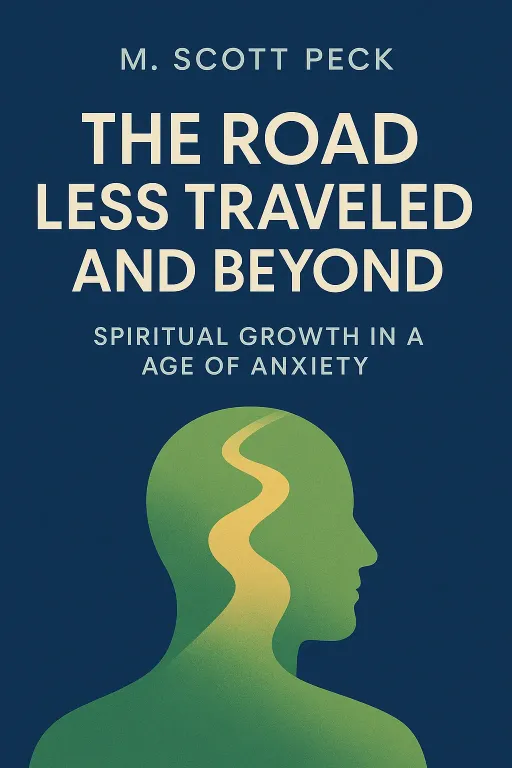
Nova: Atlas, if I asked you for five words to describe M. Scott Peck's "The Road Less Traveled," what would they be? Go!
Atlas: Oh, that's a good one! Hmm. Life. Is. Hard. So. Grow.
Nova: Perfect. And now, for Julia Cameron's "Talking to God," your five words?
Atlas: Divine. Chat. Unlocks. Your. Soul.
Nova: You've nailed the essence of two books that, on the surface, might seem quite different, but are profoundly interconnected in their quest to deepen our spiritual walk. Today, we're diving into this fascinating intersection.
Atlas: Absolutely. We're talking about M. Scott Peck, whose groundbreaking book, "The Road Less Traveled," spent an unprecedented decade on the New York Times bestseller list. That's not just a book; that's a cultural phenomenon, resonating with millions seeking meaning beyond conventional psychology.
Nova: It truly is. And then we have Julia Cameron, widely celebrated for "The Artist's Way," a book that has guided countless individuals through creative blocks. With "Talking to God," she extends her profound understanding of inner life into the realm of spiritual dialogue, bridging artistic inspiration with a deeply personal divine connection.
Atlas: So, we have Peck, telling us life is hard, but that's where the growth is. And Cameron, inviting us to chat with the divine. How do these two seemingly disparate paths converge into one enduring journey for profound personal growth?
Nova: That's precisely the deep question we're exploring today. How embracing life's inherent difficulties, through responsibility and discipline, intertwines with cultivating a continuous, informal dialogue with the divine to transform our daily spiritual practice. It's about finding wisdom in the struggle and guidance in the quiet conversation.
The Discipline of Difficulty
SECTION
Nova: Let's start with Peck, and that powerful opening statement: "Life is difficult." It sounds almost pessimistic, doesn't it? But Peck's genius isn't in lamenting this fact; it's in stating it as a fundamental truth that, once accepted, becomes the very wellspring of spiritual growth.
Atlas: Wait, that sounds almost counterintuitive. Most of us are conditioned to difficulty, to seek comfort, to smooth over the rough edges. For our listeners who are constantly striving for growth and clarity, but often feel overwhelmed by daily challenges, how does embracing difficulty actually like a path to growth, not just a perpetual grind?
Nova: That's the core distinction, Atlas. Peck isn't advocating for seeking out pain, but for acknowledging that pain and difficulty are inherent to life. The spiritual growth comes not from the difficulty itself, but from our to it. It's about taking responsibility, making conscious choices, and committing to discipline.
Atlas: So, it's less about the obstacle, and more about the muscle you build trying to get over it?
Nova: Exactly! Think of it like a marathon runner. The training is grueling, physically demanding, often painful. But through that disciplined effort – showing up every day, pushing past limits, enduring discomfort – they not only build physical stamina but also mental resilience, character, and a profound sense of accomplishment. The spiritual growth, in Peck's view, is that internal transformation. It's the willingness to delay gratification, to face truth, to engage with reality, even when it's unpleasant.
Atlas: Okay, I can see that. For someone driven by purpose, it sounds like this discipline helps clarify that purpose, almost like stripping away the non-essentials. But what about Peck's definition of love? He says it's not a feeling, but "the will to extend oneself for the purpose of nurturing one's own or another's spiritual growth." How does that connect to embracing difficulty?
Nova: That's a critical piece! Peck argues that true love is an, a choice, and it often requires discipline. It means actively engaging with the world, and with others, in a way that fosters development, even if that means confronting uncomfortable truths or setting difficult boundaries. It's extending yourself your comfort zone.
Atlas: So, it’s not just cuddling on the couch, it’s actively helping someone through a tough phase, or even going through a tough phase yourself with the intention of growing from it. That's a much more active, almost strenuous, definition of love.
Nova: Precisely. And this is where Peck beautifully bridges psychology and spirituality. He suggests that genuine mental health and spiritual development are deeply intertwined. You can't have one without the other. Self-reflection, personal transformation, taking responsibility for your choices – these are all disciplined acts of self-extension, acts of love towards yourself and your own spiritual journey.
Atlas: That makes a lot of sense. It sounds like a constant, conscious effort to engage with life, rather than just letting it happen to you. It's about leaning into the friction, not away from it.
Love, Dialogue, and Divine Connection
SECTION
Nova: And this idea of active engagement, of extending oneself through choice and discipline, leads us directly to Julia Cameron's radical yet profoundly accessible idea of "Talking to God." If Peck teaches us the discipline of the spiritual path, Cameron offers us the intimate companionship for that journey.
Atlas: Conversational partner? That sounds very intimate, and maybe a bit daunting for some. Is it like a therapist, a friend, or something else entirely? For those driven by purpose and connection, how does this conversational approach deepen that?
Nova: Cameron invites us to view God not as a distant, abstract entity, but as an intimate, accessible partner in daily conversation. It's less about formal, ritualized prayer and more about a continuous, informal dialogue. It's about bringing your whole self – your joys, your fears, your questions, your mundane observations – into an ongoing conversation.
Atlas: So, it’s not a grand, ceremonial address, but more like checking in throughout the day, maybe even a quiet internal monologue with a divine presence.
Nova: Exactly! She offers practical methods like "God Walks" and "God Journals." A "God Walk" might be simply taking a walk with the intention of listening, of being open to insights, or even just sharing your thoughts with the divine presence you perceive around you. A "God Journal" is a dedicated space for writing down your questions, your feelings, and then, crucially, listening for the responses, for the guidance, for the quiet wisdom that emerges.
Atlas: I like that! It ties into the "15 minutes daily to quiet reflection" recommendation for our listeners. Instead of just quiet reflection, it's quiet. But you also mentioned Cameron linking this to creativity. How does this "divine conversation" actually inner wisdom and creative expression? Is it just inspiration, or something more tangible?
Nova: It’s definitely more tangible than just waiting for a bolt of lightning. Cameron, through her work with artists, observed that creative blocks often stem from a sense of isolation, self-doubt, or a feeling of being disconnected from a larger source of inspiration. By engaging in this continuous dialogue, you tap into an inner wisdom, a flow of insights that can feel divine. It’s like having a constant muse, a gentle guide that helps you navigate creative challenges, overcome fear, and access new ideas.
Atlas: So, an artist struggling with a painting might journal about their frustration, ask for guidance, and then suddenly see a new color palette or a different compositional approach emerge. It's not magic, but a structured way to access intuition and guidance.
Nova: Precisely. It's a practice of opening yourself up, making yourself receptive. And this loops back to Peck's idea of love as extending oneself for spiritual growth. Cameron's dialogue is an act of extending yourself to the divine, actively seeking that nurturing relationship, which in turn fosters your own wisdom and creative spirit. It requires discipline to show up for these conversations, just as Peck's path requires discipline to face life's difficulties.
Atlas: That’s a fascinating connection. So, embracing the difficulty of life and engaging in this informal dialogue both require a conscious, disciplined choice to extend yourself, to actively participate in your own growth and connection.
Synthesis & Takeaways
SECTION
Nova: That's the profound synthesis, Atlas. The connection between embracing difficulty and engaging in divine dialogue is about active, intentional participation in one's spiritual journey. Both require effort, intention, and a willingness to step beyond comfort zones. Peck gives us the framework for understanding that growth comes through engagement with reality, while Cameron provides a profound method for engaging with the spiritual dimension of that reality.
Atlas: So, ultimately, it's about actively building that connection, even through the hard stuff, to find purpose and inner peace. For our listeners who value clarity, growth, and divine connection, it sounds like these aren't just abstract ideas, but practical, albeit challenging, pathways.
Nova: Absolutely. The profound personal growth comes not from avoiding pain or passively waiting for answers, but from the disciplined, loving act of engaging with both life's inherent challenges and the divine presence within and around us. It's about finding wisdom in the struggle and guidance in the quiet, continuous conversation. It transforms your daily spiritual practice from something you into something you.
Atlas: I love that. It makes spirituality feel less like a checklist and more like a living, breathing relationship. So, your challenge for our listeners this week: dedicate that 15 minutes daily, not just to quiet reflection, but maybe try a "God Journal" entry, or a "God Walk" where you actively listen for inner guidance.
Nova: Exactly. It's about making that intentional space, embracing the journey, and trusting that every step is progress.
Atlas: This is Aibrary. Congratulations on your growth!