

The Rational Animal: Understanding the Paradox of Human Behavior
Golden Hook & Introduction
SECTION
Nova: We often think of ourselves as purely rational beings, making logical choices based on evidence and data. But what if that's a comforting fiction, and our decisions are actually driven by something far more ancient, intuitive, and, frankly, a little messy?
Atlas: Oh man, you're stepping on some seriously sacred ground there, Nova. The idea that we're logical decision-makers is practically gospel in so many fields. Are you saying we're not the super-calculating machines we like to imagine?
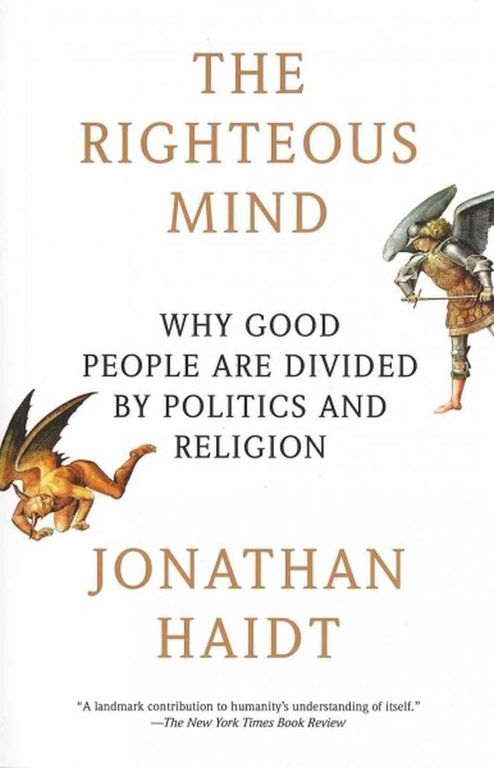
Nova: Absolutely, Atlas. And that's precisely what we're dissecting today, drawing heavily from two incredibly insightful books: Jonathan Haidt's, and Sheena Iyengar's. Haidt, a moral psychologist, has profoundly shifted our understanding of why we believe what we believe, often showing that our gut feelings come first. And Iyengar, a social psychologist renowned for her research on choice, has revealed the hidden complexities and even burdens of having too many options. Both authors, through their extensively researched and widely acclaimed work, have challenged the very foundation of how we understand human decision-making, earning widespread recognition for their counter-intuitive insights.
Atlas: That's a huge claim. So, we're going to pull back the curtain on this "rational animal" we think we are, and then figure out how to actually design things for the messy, intuitive humans we really are? That sounds like a journey from understanding the 'why' to figuring out the 'how.'
Nova: Precisely. Today, we'll dive deep into this from two perspectives. First, we'll explore the surprising truth about how our minds actually make decisions, often bypassing pure logic. Then, we'll discuss how understanding this 'rational animal' can help us design better, more impactful systems and strategies.
The Myth of Pure Rationality: How Intuition and Morality Shape Our Choices
SECTION
Nova: So, let's start with a provocative question, Atlas. Can you recall a time when your gut feeling, that immediate sense of "rightness" or "wrongness," completely overruled what your logical mind was telling you?
Atlas: Oh, I know that feeling. It's like when all the data points to one decision, but something deep down just screams, "No, don't do it!" Or the opposite, when you just something is right, even if you can't articulate why. It's frustrating when you have to explain it to someone who only operates on spreadsheets.
Nova: Exactly. And that's where Jonathan Haidt's work becomes so illuminating. He introduces this brilliant metaphor: our mind is like a tiny rider, our conscious reasoning, atop a giant elephant, our intuition and emotions. The rider it's in charge, steering the elephant, but in reality, the elephant often goes where it wants, and the rider's main job is to rationalize where the elephant has already decided to go.
Atlas: Hold on, so you're saying our logical arguments are often just sophisticated justifications for decisions our emotional elephant has already made? That sounds a bit out there, but also… strangely relatable. Like, I’ve definitely seen people, myself included, do mental gymnastics to defend an emotional choice.
Nova: It's a powerful insight. Haidt illustrates this with fascinating case studies. One famous example involves a scenario where people are asked about consensual, victimless incest between adult siblings. Most people immediately feel a strong moral revulsion, a visceral "that's wrong." But then, when pressed to explain, they struggle. They might say, "It's harmful," but when informed there's no harm, they still insist it's wrong, often resorting to, "I just know it is!" The intuition, the elephant, has already spoken, and the rider is scrambling for an explanation.
Atlas: Wow, that’s kind of heartbreaking, realizing how much of our "reason" is just post-hoc justification. For strategic analysts, who are trained to look for logical cause and effect, this must be a massive paradigm shift. How can you model human behavior if the "rational actor" is often just a rationalizer?
Nova: It calls for a deeper understanding, doesn't it? It means that to truly influence or understand, you need to appeal to the elephant first, to those moral intuitions and emotions, before you present your rider-friendly data. And this brings us to Sheena Iyengar's work on choice, which further complicates our idea of rational decision-making. We often assume more choice is always better, right?
Atlas: Definitely! It's practically a mantra in consumer culture: freedom of choice, endless options. That makes sense, doesn't it? More options mean a better chance of finding exactly what you want.
Nova: That's the common wisdom, but Iyengar's research, most famously her "jam study," tells a different story. In one experiment, shoppers at a gourmet food store were presented with either a display of 24 different jams or just 6. When there were 24 jams, more people stopped to look, but far fewer actually bought jam. With only 6 options, fewer people stopped, but significantly more made a purchase. This is the "paradox of choice." Too many options lead to decision paralysis, anxiety, and even dissatisfaction with the choice made, because you're constantly wondering if you picked the absolute best one.
Atlas: That’s a perfect example! I've been there, staring at a streaming service for an hour, scrolling through hundreds of movies, and then just giving up and watching nothing. So, we're not only irrational in our moral judgments, but we're also overwhelmed by the very thing we think we want – unlimited choice. How does this manifest in the real world for, say, consumers trying to pick a new phone plan or even employees trying to select benefits?
Nova: It's everywhere. Think about complex financial products, healthcare plans, or even software features. Instead of empowering users, an overwhelming array of choices can lead to poorer decisions or no decisions at all. This is crucial for anyone trying to design systems, products, or even policies, because if you assume more options are always good, you're actually setting people up for failure.
Designing for the 'Rational Animal': Bridging Psychology and Practical Impact
SECTION
Nova: So, if our minds are more like elephants with rationalizing riders, and we're easily overwhelmed by too much choice, how do we actually design systems or strategies that work for these real, complex humans, Atlas? Where do we even begin if we're moving beyond the purely rational agent?
Atlas: That makes me wonder, how do we identify those "deep currents" in a diverse user base? Because if you're trying to design a system for millions of people, you can't just assume everyone shares the same moral intuitions. That sounds like a minefield for ethical marketing.
Nova: It's a fantastic question, and it's where Haidt's work on "moral matrices" becomes invaluable. He identifies several universal moral foundations, like care/harm, fairness/cheating, loyalty/betrayal, authority/subversion, and sanctity/degradation. While cultures prioritize them differently, these foundations are present in all of us. When you design, you need to understand which moral foundations you're appealing to, or inadvertently violating. For instance, a successful public health campaign might frame vaccination not just as personal safety, but as a civic duty or protection for the vulnerable.
Atlas: That’s a great way to put it. So, if we’re designing a new product, or even a new internal policy, we should be asking: "Which moral elephant are we speaking to here?" And more importantly, are we speaking to it ethically? Because there's a fine line between understanding human psychology to guide beneficial outcomes and manipulating people.
Nova: Absolutely. The goal is to design with intent for beneficial outcomes, not to trick or coerce. And that's where Iyengar's concept of "choice architecture" comes in. It's about how the environment in which choices are presented influences the decisions we make. It’s not about removing choice, but about structuring it intelligently. A classic example is organ donation. In some countries, you have to "opt-in" – actively tick a box to become a donor. Rates are low. In others, you're automatically a donor unless you "opt-out." Rates are dramatically higher. The underlying choice is the same, but the architecture around it profoundly changes behavior.
Atlas: Oh, I see. So, instead of just dumping a hundred options on someone and saying "choose wisely," we're subtly guiding them towards the most beneficial path, often by making the desired choice the default. That’s powerful. How would a strategic analyst, looking at AI and automation for competitive advantage, apply this? Because that's a whole new layer of complexity.
Nova: Exactly. Imagine designing AI interfaces where the default settings nudge users towards responsible data privacy practices, or automation systems that present choices in a way that reduces cognitive load and promotes ethical decision-making in complex situations. It's about designing intelligence that understands human psychology, anticipating where the "elephant" might wander, and gently guiding the "rider" towards better outcomes. It's taking the burden of choice off the user by making the optimal or ethical path the easiest one to take. This isn't just about efficiency; it’s about shaping human-AI interaction for positive impact.
Synthesis & Takeaways
SECTION
Nova: What emerges from both Haidt and Iyengar's work is a profound redefinition of what it means to be human in a decision-making context. We are indeed rational, but our rationality is often in service of deeper, intuitive, and moral currents. The true impact, the real competitive advantage, comes not from treating people as purely logical actors, but from understanding and designing for these complex, intuitive, "rational animals."
Atlas: That’s actually really inspiring. It means that the most effective strategies aren't just about optimizing for efficiency or raw data; they're about deeply understanding human nature and crafting experiences that resonate with our core values and psychological realities. It’s a call to move from just analyzing systems to truly understanding the humans within them. It makes me wonder, how many of our daily struggles or disagreements could be traced back to these underlying moral intuitions or the paradox of choice?
Nova: It’s a powerful lens, isn't it? And it encourages us to be more empathetic, more insightful, and ultimately, more effective in our efforts to lead, influence, and create. So, we invite all our listeners to reflect: where have you seen your own "elephant" leading the way, or where has the "paradox of choice" made a simple decision surprisingly difficult? Share your insights with us.
Atlas: That’s a great challenge. It’s all about connecting theory to practice in our own lives.
Nova: This is Aibrary. Congratulations on your growth!