

The Rational Animal: Understanding the Nuances of Human Behavior
Golden Hook & Introduction
SECTION
Nova: Okay, Atlas, quick game. I’ll say a common belief about human nature, and you tell me the first, slightly controversial, thought that pops into your head. Ready?
Atlas: Oh, I like this. Hit me.
Nova: Humans are inherently rational beings.
Atlas: That’s a good one. My thought: “Sure, and I can fly if I just flap hard enough.”
Nova: Exactly! It’s a lovely thought, isn't it? This idea that we’re all Spock-like decision-makers, coolly assessing pros and cons. But our guest today, or rather, the books we’re diving into today, suggest a far more fascinating, and frankly, messier truth.
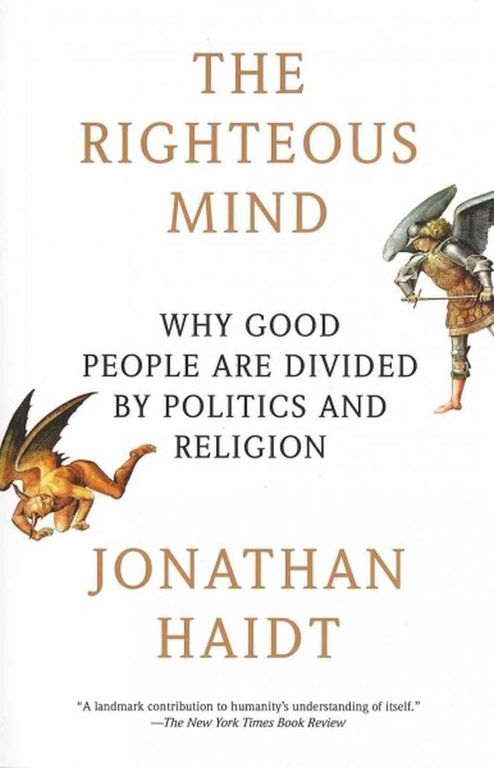
Atlas: Absolutely. We’re peeling back the veneer of pure logic to reveal the beautiful, chaotic machinery underneath. Today, we’re venturing into the intricate landscape of human behavior, guided by two incredibly insightful works: Jonathan Haidt’s The Righteous Mind: Why Good People Are Divided by Politics and Religion, and Sheena Iyengar’s The Art of Choosing.
Nova: And what’s particularly striking about Haidt, Atlas, is his background. He started as a culture psychologist, steeped in the work of people like Richard Shweder, who emphasized the diversity of moral cultures. This isn't just a political scientist's take; it's a deep dive into the very fabric of how we construct our sense of right and wrong, shaped by years of studying diverse societies. It really gives his arguments an incredible depth.
Atlas: That’s a great point. It frames his work not as a critique, but as an exploration of fundamental human wiring that manifests differently across cultures. It’s not about judging, but understanding. And that immediately pulls us into our first big idea: the flawed logic of human choice, particularly when it comes to our moral compass.
The Intuitive Foundation of Moral Judgments
SECTION
Nova: So, Haidt’s central thesis in The Righteous Mind is revolutionary for many. He argues that our moral judgments are not primarily products of careful reasoning. Instead, he posits that “intuition comes first, strategic reasoning second.” Think of it like this: our gut feeling, that immediate sense of right or wrong, is the elephant. Our conscious reasoning is the tiny rider, desperately trying to steer the elephant, but mostly just rationalizing where the elephant wants to go anyway.
Atlas: Wait, so he’s saying our 'logic' is mostly just PR for our gut feelings? That sounds a bit out there for someone who prides themselves on being analytical.
Nova: It sound counterintuitive, especially for those of us who value rational discourse. But Haidt presents compelling evidence. He talks about moral dumbfounding, where people know something feels wrong but can’t articulate. Like the classic example of consensual sibling incest with no negative consequences – people are repulsed, but struggle to logically explain their condemnation. Their intuition screams 'wrong,' and their reasoning scrambles to catch up.
Atlas: That’s a perfect example. I can see how that would be frustrating for someone trying to argue a point purely on logic. It’s like hitting a wall of 'just because.' So, if intuition is the primary driver, how does this 'strategic reasoning' part come in? Is it completely useless?
Nova: Not at all! It’s incredibly powerful, but its primary function, Haidt suggests, isn't to the truth, but to our existing intuitions and to persuade others. We become lawyers for our own moral preferences, not objective judges. We use reason to construct a plausible narrative that supports our initial gut reaction, and to poke holes in arguments that challenge it.
Atlas: So, basically you’re saying that when I’m in a heated debate, I’m not actually trying to understand the other person’s point of view; I’m just reloading my rhetorical cannon?
Nova: Precisely! And what’s even more interesting is how this plays out in politics and religion. Haidt identifies six moral foundations – Care/Harm, Fairness/Cheating, Loyalty/Betrayal, Authority/Subversion, Sanctity/Degradation, and Liberty/Oppression. Different political ideologies, he argues, prioritize different sets of these foundations. Liberals might lean heavily on Care and Fairness, while conservatives often draw equally from all six, including Loyalty, Authority, and Sanctity.
Atlas: That makes sense, but it also sounds a bit disheartening for anyone hoping for more consensus. If we're operating from fundamentally different moral operating systems, how can we ever truly connect?
Nova: That's the profound challenge, isn't it? Haidt isn't saying we connect, but that we need to understand the game. He emphasizes that if you want to change someone's mind, you don't attack their logic; you appeal to their intuitions. You tell stories, you evoke emotions, you find common ground on shared moral foundations. It’s a very different approach to persuasion than we’re typically taught. It’s about speaking to the elephant, not just the rider.
Atlas: That’s actually really inspiring in a way. It shifts the entire method of engagement. Instead of seeing someone as 'wrong,' you see them as operating from a different moral grammar. For our listeners who are strategic analysts trying to bridge divides or influence decisions, this is gold. It means understanding the landscape of a stakeholder, not just the bullet points of their proposal.
Nova: Exactly. It’s about empathy for the elephant in the room, so to speak. And this understanding of our intuitive, often biased, decision-making leads us perfectly into our next big idea, which builds on this concept of the 'irrational' human.
The Complexities and Biases of Human Choice
SECTION
Nova: So, if Haidt shows us our moral judgments are driven by intuition, Sheena Iyengar, in The Art of Choosing, takes us deeper into the everyday complexities of choice itself. She reveals how deeply cultural context, cognitive biases, and even the sheer number of options available profoundly impact our decisions, often leading to unexpected outcomes.
Atlas: I’ve been thinking about this. We’re often told that more choice is always better, that it equates to freedom. But that sounds almost too simple. Is Iyengar challenging that?
Nova: Absolutely. She’s famous for her "jam study." Researchers set up a tasting booth at a gourmet food store. One day, they offered 24 varieties of jam. Another day, only 6. While the table with 24 jams attracted more initial interest, people were ten times more likely to jam when only 6 options were presented.
Atlas: Whoa. That’s counterintuitive. So, more choice paralyzed them? It’s kind of like staring at Netflix for an hour and then just giving up and watching an old rerun.
Nova: Exactly! It’s called the paradox of choice. While we desire options, too many can lead to decision paralysis, anxiety, and even regret. We worry about making the 'wrong' choice, and the cognitive load of evaluating all those options becomes overwhelming. Iyengar’s work really highlights that the optimal number of choices isn't infinite; there’s a sweet spot.
Atlas: That gives me chills. I totally know that feeling – whether it's choosing a new software platform or even just what to order for dinner. It feels like every additional option adds a layer of stress. But Iyengar also talks about cultural context, right? How does that play into our choices?
Nova: That’s a crucial dimension. She explores how individualistic cultures, like in the West, often emphasize personal choice as a fundamental right and a marker of identity. We see choice as empowering. But in collectivistic cultures, like many in Asia, choices are often made with the group’s well-being and harmony in mind. Individual preference might take a back seat to familial or societal expectations.
Atlas: So, the very of choice changes depending on where you are in the world. It’s not just we choose, but and we choose, that’s culturally coded. That’s profound. For someone designing global marketing campaigns, understanding this could be the difference between success and a complete cultural misfire.
Nova: Precisely. And it's not just culture. Iyengar delves into cognitive biases that skew our choices. For instance, the framing effect: how a choice is presented significantly impacts our decision. Presenting a medical treatment as having a "90% survival rate" is far more appealing than "10% mortality rate," even though the outcomes are identical. We’re not always assessing objective facts; we’re responding to the narrative around them.
Atlas: That’s a bit like how a product is packaged. The exact same item can feel completely different just based on the story you tell about it. It’s not just the product; it’s the perception. So, if our choices are so easily influenced, what responsibility do we have as strategic analysts to design systems that guide users towards their long-term well-being, even when their short-term preferences might differ?
Nova: This is where Nova’s Take comes in, which is really our synthesis of these ideas. Understanding the 'irrational' side of human decision-making is not about judgment; it's about gaining a more accurate model of reality. If we know people are prone to choice overload or are swayed by intuitive moral foundations, we can design systems – whether it's a marketing campaign, a product interface, or even a public policy – that are more effective and more empathetic.
Atlas: I totally know that feeling. It’s about building guardrails, or nudges, that respect human nature instead of fighting against it. It’s not about manipulating people, but about helping them make choices that align with their deeper, long-term goals.
Nova: Exactly. It’s designing for real humans, not for hypothetical rational agents. It means moving beyond a simplistic view of conscious choice and embracing the complexities of our intuitive, emotional, and culturally conditioned selves. It’s about recognizing that sometimes, the most rational thing we can do is acknowledge our own irrationality.
Synthesis & Takeaways
SECTION
Nova: So, Atlas, what’s your biggest takeaway from this journey into the 'rational animal'?
Atlas: Honestly, it’s a massive reframing of how I approach problem-solving. Knowing that intuition often comes first in moral judgments, and that choice itself is so easily influenced by external factors, means that I need to look beyond the surface-level data. It’s not just about what people they want, but what their underlying drivers are, what their 'elephant' is leaning towards. It’s about understanding the 'why,' not just the 'what.'
Nova: That’s a great way to put it. For me, it’s the profound implication that if we want to create meaningful impact, if we want to foster positive change, we have to connect with people on a deeper, more human level. We need to tell better stories, appeal to shared values, and design choices that genuinely serve well-being, rather than just overwhelming people with options.
Atlas: Absolutely. It’s about building bridges between intuition and reason, between short-term desire and long-term well-being. It’s a call to greater empathy and more thoughtful design in every area of life. It challenges us to look past the logical façade and really see the human operating system for what it is—complex, beautiful, and deeply intuitive.
Nova: What a journey! This has been such an insightful dive into the nuances of human behavior. To all our listeners, we hope this conversation sparks your own critical thinking and encourages you to look for the elephants and the choices in your own lives.
Atlas: And we’d love to hear your thoughts. How do these ideas resonate with your experiences? What predictable irrationalities have you observed, or even fallen prey to, in marketing or product design? Share your insights with the Aibrary community.
Nova: This is Aibrary. Congratulations on your growth!