Babylon's Blueprint: Ancient Financial Wisdom for a Modern Future
Golden Hook & Introduction
SECTION
Dr. Warren Reed: What if the most powerful financial advice for your future wasn't created on Wall Street, but was etched onto clay tablets 4,000 years ago in ancient Babylon?
Aliu Aliu Olawale: That's a powerful opening, Warren. It sounds almost like science fiction.
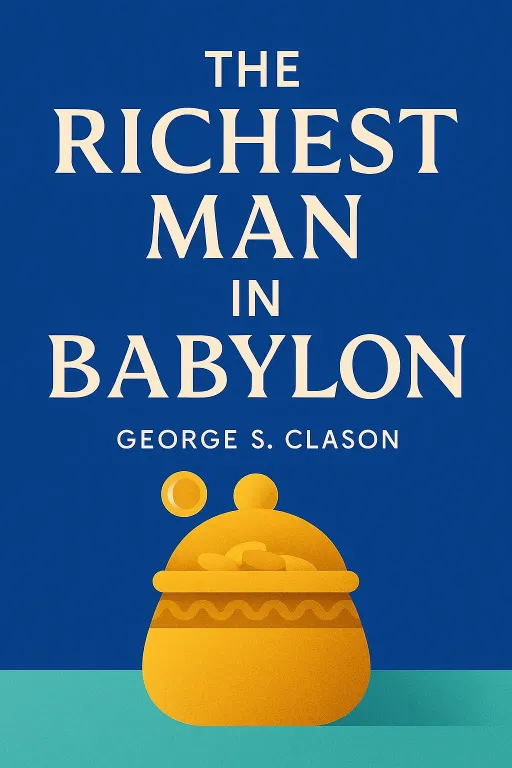
Dr. Warren Reed: It sounds like a movie plot, but it's the core of one of the most timeless books on wealth ever written, George S. Clason’s. And today, we're going to prove why this ancient wisdom is more relevant than ever. Welcome to the show, everyone. I'm here with Aliu Aliu Olawale, a curious and analytical thinker who is passionate about learning from the past to build a strong future. Aliu, this book feels like it was written for you.
Aliu Aliu Olawale: Thanks for having me, Warren. It really does. It's incredible to think that we're still wrestling with the same fundamental problems of earning, saving, and growing money. It suggests the answers are less about complex financial instruments and more about human nature and discipline.
Dr. Warren Reed: That's the perfect way to frame it. The book argues that the principles of wealth are fixed and unchanging. So today, we'll dive deep into this from two perspectives. First, we'll explore the unbreakable 'source code' of wealth building—the first three Cures for a Lean Purse. Then, we'll see this code in action through the incredible comeback story of Dabasir, the Camel Trader of Babylon, and his powerful financial plan. By the end, you'll have a blueprint that's simple, powerful, and thousands of years old.
Deep Dive into Core Topic 1: The Unbreakable Laws of Wealth
SECTION
Dr. Warren Reed: Alright, Aliu, you said it's about human nature, and the Babylonians boiled it down to a clear system. Let's start with the foundation, what the book calls the 'Seven Cures for a Lean Purse.' We'll focus on the first three, which are really the engine for everything else. Cure number one is: 'Start thy purse to fattening.'
Aliu Aliu Olawale: Which sounds wonderfully old-fashioned. What does it mean in practical terms?
Dr. Warren Reed: It's brutally simple. The book states, "For each ten coins thou placest in thy purse, take out for use but nine." In modern terms: save ten percent of everything you earn. Period. This isn't a suggestion. It's the first law. That first ten percent is yours to keep. It's not for your rent, not for your food, not for your entertainment. It is a non-negotiable tax you pay to your future self.
Aliu Aliu Olawale: You know, that reframing is so powerful. Most people think of saving as what's 'left over' at the end of the month, which is often nothing. But framing it as 'paying yourself first' changes it from an act of sacrifice to an act of self-respect. It's the first and most important bill you pay.
Dr. Warren Reed: Exactly. It prioritizes your own wealth. Then comes Cure Number Two: 'Control thy expenditures.' The book puts it beautifully: "Budget thy expenses that thou mayest have coins to pay for thy necessities, to pay for thy enjoyments and to gratify thy worthwhile desires without spending more than nine-tenths of thy earnings."
Aliu Aliu Olawale: So it's not about living like a monk. It's about being intentional. The book acknowledges enjoyments and desires, but it puts them inside a container—that ninety percent. As a student with a sometimes fluctuating income, that percentage model is so much more practical and less intimidating than a fixed dollar-amount budget. It scales with you.
Dr. Warren Reed: It's a system, not a rigid number. It adapts. Which brings us to the third part of the engine, Cure Number Three: 'Make thy gold multiply.' The quote is, "Put each coin to laboring that it may reproduce its kind." So, you save the ten percent, you live on the ninety percent, and then you put that saved ten percent to work. It's a three-step machine for wealth creation.
Aliu Aliu Olawale: And that's the step that truly builds wealth, right? The first two cures stop you from getting poorer, but the third one is what makes you richer. In Babylon, it was lending gold for interest or buying flocks of sheep. Today, it's investing in stocks, real estate, or a business.
Dr. Warren Reed: Correct. Your money has to become an employee that works for you 24/7.
Aliu Aliu Olawale: It's the only way to eventually break the cycle of only trading your time for money. But I think what holds a lot of people back—myself included—is the fear of that step. The risk of losing the money you worked so hard to save. I know the book has the 'Five Laws of Gold' which talk about investing wisely and avoiding schemes.
Dr. Warren Reed: It does, and that's a crucial point. The system has checks and balances. But the core idea is you must take that step. Having a system is one thing. Having the will to execute it, especially when you're in a deep hole, is something else entirely. And that's the perfect lead-in to our next point.
Deep Dive into Core Topic 2: Dabasir's Blueprint of Determination
SECTION
Dr. Warren Reed: Let's talk about a man who was in the deepest hole imaginable. This isn't just a principle anymore; this is a case study. This is the story of Dabasir, the Camel Trader of Babylon.
Aliu Aliu Olawale: The story that was found on the clay tablets, right?
Dr. Warren Reed: The very same. So, picture this: Dabasir has just returned to Babylon. He was captured, sold into slavery in Syria, and has finally made his way back home. But he's a broken man, crushed by the debts he left behind. He's lost his wife, his self-respect, everything. He feels like a failure.
Aliu Aliu Olawale: A situation that many people can probably relate to, feeling completely overwhelmed by their financial situation.
Dr. Warren Reed: Absolutely. So he goes to his old friend Mathon, a wise gold lender. But he doesn't go for another loan. He goes for a plan. And Mathon gives him one, a simple but powerful blueprint, which Dabasir then carves onto a clay tablet so he can never forget it. The plan is this: one-tenth of all I earn is mine to keep. That's Cure Number One.
Aliu Aliu Olawale: So even in debt, the first rule still applies. Pay yourself first.
Dr. Warren Reed: Non-negotiable. Then, with the nine-tenths that are left, he divides it. Seven-tenths for him and his wife to live on. That's Cure Number Two, controlling expenditures. And the final two-tenths, or twenty percent of his total earnings, would be divided faithfully and honestly among his creditors until every debt is paid.
Aliu Aliu Olawale: So it's a 10/20/70 plan. Ten percent for the future, twenty percent to clean up the past, and seventy percent for the present. That is such a clear and balanced psychological framework. It’s not just about paying off debt; it's about building a life at the same time.
Dr. Warren Reed: And this is where the story gets powerful. He takes this plan and goes to his creditors. Imagine the courage that took. He tells them, "I have a plan to repay you, but it will be in small, consistent payments over time." Some of them laugh at him. One creditor, a man named Birejik, demands his money immediately and threatens him.
Aliu Aliu Olawale: That must have been incredibly difficult. To face that hostility when you're trying to do the right thing.
Dr. Warren Reed: It was. But Dabasir sticks to the plan. The book says he would show up with just a few copper coins—whatever his twenty percent was for that period—and hand them over. They'd scoff, but he kept showing up. Month after month. His consistency, his unwavering adherence to the plan, slowly began to change their minds. They started to see his honor returning.
Aliu Aliu Olawale: That's the key, isn't it? The book has that amazing quote: "Where the Determination Is, the Way Can be Found." The plan itself, the 10/20/70 split, was the 'way.' It was the map. But his determination was the magic ingredient. It was the force that moved him along that path.
Dr. Warren Reed: You've nailed it. The plan is nothing without the will to execute it. And the transformation is incredible. There's a moment near the end when another creditor, Alkahad, who was initially very stern, comes to Dabasir after the debt is paid. He says, "Thou wert once a piece of soft clay to be pressed and molded by any hand that touched thee, but now thou art a piece of bronze capable of holding an edge. If thou needst silver or gold at any time come to me."
Aliu Aliu Olawale: Wow. So he didn't just pay his debt. He rebuilt his reputation and his character. He went from being seen as unreliable to being a pillar of strength. It's a testament to the power of a system. The plan removed the daily emotional burden of 'what should I do with this money?' He just executed the code. It freed up his mental energy to focus on earning more and being consistent. It's a blueprint for escaping financial anxiety, not just debt.
Synthesis & Takeaways
SECTION
Dr. Warren Reed: So, let's tie this all together. On one hand, we have the simple, logical Babylonian system: Pay yourself 10%, budget the rest, and put your savings to work.
Aliu Aliu Olawale: And on the other hand, we have the human element, which is perfectly demonstrated by Dabasir: the unwavering determination to stick to that system, no matter how small you start or how much resistance you face.
Dr. Warren Reed: And they create a feedback loop.
Aliu Aliu Olawale: Exactly. The system gives your determination a clear path to follow, so you're not just spinning your wheels. And your determination makes the system produce results, which then strengthens your belief in the system. It's a virtuous cycle that builds on itself.
Dr. Warren Reed: The book ends Dabasir's story with one final, powerful Babylonian tenet. It says: "Men of Action are Favored by The Goddess of Good Luck." Luck isn't passive. It doesn't just fall from the sky. It finds people who are already moving, who are already taking steps.
Aliu Aliu Olawale: I love that. So the ultimate takeaway for me, and for anyone listening, isn't just to admire Dabasir's plan. It's to. It's to take that first step. Even if it's just saving the first ten percent of the next dollar you earn. That single action, no matter how small, is what invites 'good luck' into your life. It's about starting the journey, just like Dabasir did, with that first small, determined step.
Dr. Warren Reed: Well said, Aliu. Start building your own clay tablet. Thank you so much for joining me today.
Aliu Aliu Olawale: It was a pleasure, Warren. A great reminder that the best plans are often the most timeless.