Unlocking Your Financial Growth: Beyond the Basics of Wealth Accumulation.
Golden Hook & Introduction
SECTION
Nova: Quick, Atlas, I'm going to give you three words: Gold, Clay, and Mortgages. What's the connection?
Atlas: Oh, man. Gold, Clay, and Mortgages. Uh… is this a trick question about the housing market? Maybe a very expensive, very old house? Or, honestly, it sounds like a really inefficient way to pay off debt, like you're literally digging for gold to make your payments.
Nova: Close, but not quite the inefficient part! What if I told you these disparate elements actually hold the key to unlocking profound financial wisdom, wisdom that's literally thousands of years old, yet more relevant than ever for navigating modern challenges like, say, that mortgage?
Atlas: Okay, I’m intrigued. You’ve got my attention. Because "ancient wisdom" and "mortgage payoff" aren't usually in the same sentence, unless it's a history lesson about ancient debt slavery. Which, let's be honest, sometimes feels like modern homeownership.
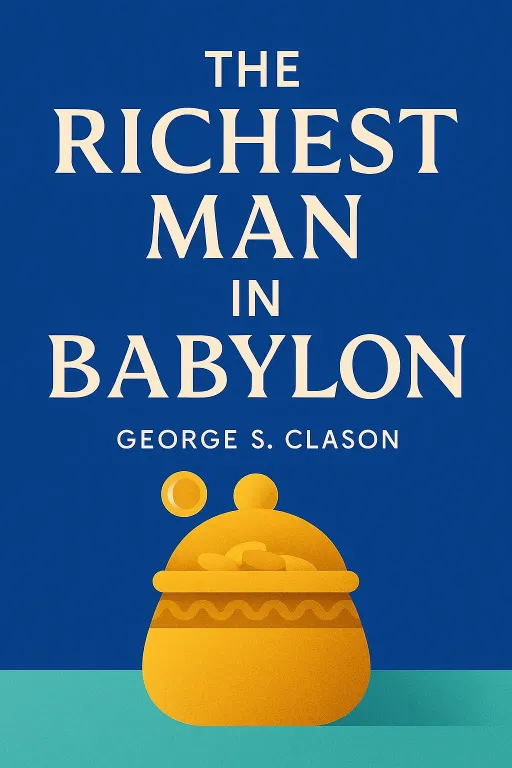
Nova: Exactly! And that's precisely why today we're diving into two absolute titans of financial literature that bridge that gap: George S. Clason's timeless parables in "The Richest Man in Babylon," and Napoleon Hill's groundbreaking exploration of the mind in "Think and Grow Rich."
Atlas: Ah, Clason! I remember hearing about him. He was a successful businessman in the early 20th century who decided to distill all these complex financial truths into simple stories, right? Like, making it digestible for everyone, not just the Wall Street types.
Nova: Precisely. Clason had this incredible knack for taking what could be dry economic principles and weaving them into captivating narratives set in ancient Babylon. It's why his work has endured for nearly a century, resonating with generation after generation, proving that the fundamentals of wealth haven't really changed, even if the tools have.
Atlas: So we're talking about foundations then. Not just quick fixes, but something deeper.
Nova: Absolutely. And that naturally leads us to our first core idea: the immutable laws of financial accumulation, directly from those ancient Babylonian secrets.
Ancient Principles, Modern Riches
SECTION
Nova: So, let's talk about the bedrock. "The Richest Man in Babylon" introduces us to Arkad, a humble scribe who becomes the richest man in the city. His journey isn't about some secret gold mine or lucky break; it’s about simple, consistent habits. The most famous one? "Pay yourself first."
Atlas: Pay yourself first. I mean, we hear that phrase all the time now, but what does it really mean in Clason's context, and why is it so revolutionary coming from ancient Babylon? Isn’t it just… saving money?
Nova: It’s so much more than just saving, Atlas. In Arkad’s world, people were paid in coin, often just enough to survive. The idea of setting aside a tenth of everything you earn, before you pay anyone else—before rent, before food, before clothes—was genuinely radical. It transforms your relationship with your labor. It's not about what's left over; it's about claiming your portion of the fruits of your own labor.
Atlas: Wow. So it’s a mindset shift as much as a practical rule. It’s saying, "My future self is a priority, not an afterthought."
Nova: Exactly. Arkad's master, Algamish, taught him that a part of all you earn is yours to keep. If you save that tenth, you're building your "golden slave" – your money starts working for you. Arkad made mistakes, of course. He initially invested his savings in a jewel merchant who bought glass beads, thinking they were jewels. He lost everything he’d saved.
Atlas: Oh, man, that’s a tough lesson. A lot of us can relate to that first bad investment! It shows even the richest man started somewhere.
Nova: Absolutely. But he learned. He sought advice from Algamish, who taught him to invest only where the principal is safe and where wise men show the way. This led to his second big principle: "Make your gold multiply." He bought bricks of clay, then invested in a shield maker, and eventually his money began to generate income, which he then reinvested.
Atlas: So it's not just about hoarding, but about making that saved portion productive. For someone today, with a mortgage, this sounds like it directly applies. Instead of just making minimum payments, how could this "pay yourself first" and "make your gold multiply" philosophy be channeled into, say, aggressively paying down a mortgage?
Nova: That’s a brilliant question, Atlas. It means looking at your mortgage not just as a debt, but as an opportunity. "Paying yourself first" might translate into consciously allocating an extra portion of your income to your mortgage principal each month, even if it's a small amount. And "making your gold multiply" could be about strategically deploying any bonuses or unexpected windfalls directly to that principal, essentially making your future self richer by reducing interest and accelerating ownership.
Atlas: I like that. It reframes a daunting obligation into a powerful personal investment. It's about intentionality, not just reaction. But I imagine even with the best intentions, the "pay yourself first" part can feel incredibly difficult when every dollar seems to have five jobs already. That’s where the internal game comes in, right? The psychology of it all.
Mindset as Currency: The Psychology of Wealth Creation
SECTION
Nova: You've hit the nail on the head, Atlas. Because even the best practical strategies will falter if the mental framework isn't there to support them. And that's where Napoleon Hill's "Think and Grow Rich" steps in, often seen as the psychological counterpart to Clason's practical guide.
Atlas: Think and Grow Rich. That title itself sounds almost too good to be true, like a magic spell. How does Hill move beyond just wishing for wealth and into actionable psychological principles?
Nova: That’s a common misconception, that it's just about positive thinking. Hill spent over two decades, at Andrew Carnegie's behest, interviewing over 500 of the most successful people of his time – figures like Henry Ford, Thomas Edison, and Theodore Roosevelt. He wasn't just observing their habits; he was codifying their. He wanted to understand some people accumulated vast wealth and influence, while others, equally talented, didn't.
Atlas: Wow, that’s an incredible research project. So he was essentially reverse-engineering success. What did he find was the primary driver that wasn't just practical action?
Nova: He distilled it down to several principles, but "Definiteness of Purpose" and "Burning Desire" are paramount. It’s not enough to money; you need an intense, unwavering desire for a amount of money, by a date, and a for how you intend to acquire it. And crucially, a willingness to give something in return.
Atlas: That makes me wonder. How do you a "burning desire" that's strong enough to overcome the daily grind and setbacks? It sounds a bit like, "just wish for it harder," which usually doesn't pay the bills when you're facing a stack of them.
Nova: That's a great challenge, and it's where Hill goes deeper. He talks about auto-suggestion and faith. It's about consistently feeding your subconscious mind with your definite purpose, visualizing yourself already possessing that wealth, and believing implicitly in your ability to achieve it. It’s a form of mental training, not just passive wishing. For example, Hill shares stories of individuals who, despite massive obstacles, held such an unshakeable belief in their objective that they found ways where others saw none.
Atlas: Okay, so it’s like an inner architect, building the blueprint for your financial future in your mind before you even lay the first brick. Because I imagine a lot of our listeners, especially those driven by building a better future, can relate to needing that mental fortitude when the external circumstances feel overwhelming.
Nova: Exactly! And Hill also emphasizes "Persistence." He observed that successful people didn't just have desire; they had an almost fanatical persistence in the face of temporary defeat. They understood that setbacks weren't failures, but simply feedback. Like Arkad losing his initial investment, these individuals didn't give up; they adjusted and pressed on.
Atlas: That’s a powerful connection. So, the practical principles from Clason give you the map, but Hill's insights provide the compass and the sheer willpower to keep moving forward, even when you hit a dead end, or a very large mortgage payment.
Synthesis & Takeaways
SECTION
Nova: Absolutely. When you combine Clason’s ancient wisdom of consistent saving and wise investing with Hill’s psychological mastery of definite purpose, desire, and persistence, you create an unstoppable force. True wealth isn't just about accumulating money; it's about cultivating the mindset and practical habits that ensure your resources grow and serve your deepest aspirations.
Atlas: It really is a powerful synthesis. It's the engine and the fuel, working in tandem. And I think for anyone listening, especially those who are trying to build something significant, whether it's a business, a career, or financial security, this integrated approach is key. It's about trusting your ability to learn, embracing the journey, and protecting those specific blocks of time you dedicate to your goals.
Nova: Indeed. The beauty is that these principles aren't new, they're simply timeless. They remind us that the path to financial freedom is less about complexity and more about consistency and conviction.
Atlas: So, for our listeners who are ready to take one of these ancient principles and apply it to their very modern lives, particularly something like a mortgage payoff strategy, here’s our deep question for the week: How can you apply one ancient financial principle from today's discussion to your modern mortgage payoff strategy this week? Think about it, act on it.
Nova: This is Aibrary. Congratulations on your growth!