The Evolution of Power: From Ancient Wisdom to Modern Statecraft
Golden Hook & Introduction
SECTION
Nova: Atlas, imagine a world where the best political leaders aren't just elected, but are from childhood to be philosophers, rulers, and guardians of justice. Sounds a bit utopian, doesn't it?
Atlas: Whoa, trained from childhood? That sounds less like a democracy and more like, well, a very intense, very exclusive boarding school for world leaders. Are we talking about a power fantasy or a practical blueprint here? My gut says fantasy.
Nova: Exactly! And that's the genius of Plato's "The Republic." Today, we're diving deep into "The Evolution of Power: From Ancient Wisdom to Modern Statecraft," a journey inspired by the foundational ideas of Plato and Aristotle. What’s fascinating is that Plato, a student of Socrates, wrote "The Republic" as a philosophical dialogue, imagining an ideal state after witnessing the turbulent politics of Athens. It wasn't just a political treatise; it was an exploration of justice itself, and it has profoundly shaped Western thought for millennia.
Atlas: So, we're talking about texts that are literally thousands of years old, written by guys who probably wore togas and debated in courtyards. What could they possibly tell us about, say, navigating global power shifts or the latest ethical dilemma in AI governance? I mean, the world is a tad more complex now than a Greek city-state, right?
Nova: That's the million-dollar question, Atlas. These ancient Greek texts, particularly "Politics" by Aristotle and "The Republic" by Plato, form the bedrock of much of Western political theory. They offer timeless insights into governance, justice, and the ideal society that continue to influence modern political discourse and structures, often in ways we don't even realize. They're not just historical relics; they're living, breathing frameworks that underpin our deepest debates about how we should live together.
Atlas: Okay, so it’s not just dusty old scrolls. You’re saying these ancient thinkers are still whispering in the ears of modern politicians and activists. I'm intrigued. How do we even begin to unpack that?
The Roots of Political Thought: Plato's Ideal State
SECTION
Nova: Well, let's start with Plato, because his vision in "The Republic" is perhaps the most provocative. He essentially lays out a blueprint for an ideal state, governed not by elected officials, but by "philosopher-kings." These aren't just wise old men; they are individuals who have undergone rigorous education in philosophy, mathematics, and even military training, all aimed at cultivating wisdom and a deep understanding of justice.
Atlas: Philosopher-kings. So, basically, a meritocracy where the smartest, most contemplative people are in charge. On the surface, that sounds appealing. No more popularity contests, no more politicians swayed by public opinion. But how do you even find these philosopher-kings? And who decides who's "philosophical" enough to rule? That sounds like a fast track to an intellectual elite, possibly disconnected from everyday people.
Nova: That's a critical point, and one that critics have often raised. Plato believed that through a very specific, lifelong education, certain individuals would naturally emerge with the capacity for true wisdom and a selfless commitment to the common good. His whole argument for the philosopher-king rests on the idea that ruling is a skill, a science, not something everyone is naturally equipped for. He observed the instability and corruption of Athenian democracy, where rhetoric often trumped reason, and saw the need for rulers guided by absolute truth and justice.
Atlas: So, for Plato, the problem wasn't just ruled, but they ruled. It was about the foundation of their decision-making. He saw democracy as potentially leading to mob rule, where emotions and self-interest could easily override rational deliberation.
Nova: Precisely. His concern was the pursuit of superficial desires over the common good. He imagined a society divided into three classes: the philosopher-kings who rule, the guardians who protect the state, and the producers who provide for its needs. Each class, he argued, performs its natural function, leading to a harmonious and just society. It's a highly structured system, almost like a human body, where each part plays its role for the health of the whole.
Atlas: It's like an ancient, philosophical version of a highly optimized, hierarchical organization. Everyone knows their place, everyone contributes, and the wisest minds are at the top, making the decisions. I can see the appeal for someone who values order and efficiency. But what about individual freedom? What about the messy, vibrant, unpredictable nature of human beings that doesn't fit neatly into a "class" or a "function"? That sounds a bit stifling, honestly.
Nova: That's the tension, isn't it? Plato was more concerned with the stability and justice of the as a whole, believing that individual flourishing would follow from a well-ordered society. He argued that true freedom isn't doing whatever you want, but living virtuously within a just system. He was deeply skeptical of unchecked individualism, seeing it as a potential source of societal decay. He believed that a just state was one where everyone performed their designated role, and that the philosopher-kings, having seen the "Form of the Good," would always act in the best interest of everyone.
The Roots of Political Thought: Aristotle's Practical Politics
SECTION
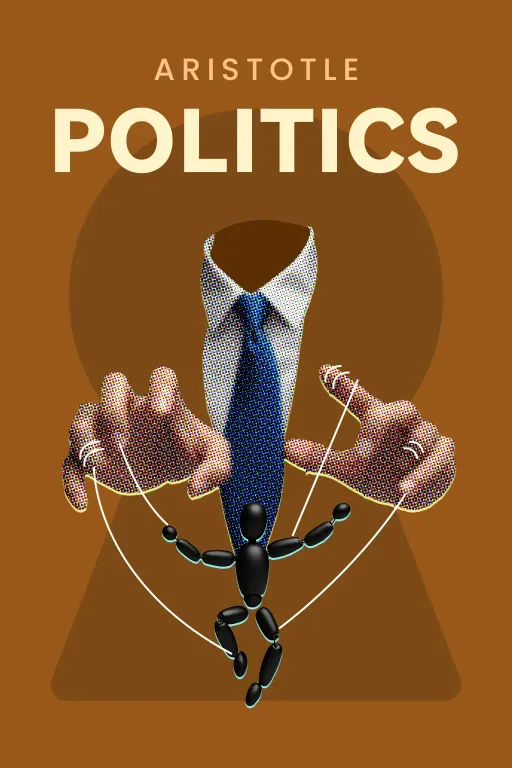
Nova: Now, if Plato gave us the ideal, his most famous student, Aristotle, brought us back to earth. His work, "Politics," is less about an imagined utopia and more about observing existing city-states to understand how governments actually function, and which ones work best for human flourishing.
Atlas: Okay, so Plato was the visionary architect, designing a perfect city in the clouds. And Aristotle was the urban planner, walking through the streets of existing cities, taking notes on what worked and what didn't. I like that grounded approach. What did he find?
Nova: He found that there isn't one single "best" form of government for all places and times. Aristotle was a pragmatist. He observed different constitutions—monarchies, aristocracies, democracies—and categorized them not just by ruled, but by. A monarchy, rule by one, could be good if the king was benevolent, but tyrannical if he was selfish. An aristocracy, rule by the few, could be good if they were virtuous, but an oligarchy if they were rich and self-serving. And democracy, rule by the many, could be good if it served the common good, but a mob rule if it devolved into demagoguery.
Atlas: So, it's less about the label of the government and more about the behind the governance. That's a pretty insightful distinction. It means a "democracy" isn't inherently good if its leaders are corrupt, and a "monarchy" isn't inherently bad if its ruler is truly dedicated to the people.
Nova: Exactly! Aristotle's preferred form of government was what he called a "polity," a mixed constitution that combined elements of democracy and oligarchy, aiming for a large, virtuous middle class that would balance the extremes of the rich and the poor. He believed that the middle class, being less prone to the excesses of either wealth or poverty, would be more likely to rule wisely and moderately. His focus was on the practical attainment of "eudaimonia," or human flourishing, within a community.
Atlas: That makes so much sense when you look at modern political rhetoric. We often hear calls for "common sense" or "reaching across the aisle," which echoes that Aristotelian idea of balance and moderation. It's not about one extreme winning, but about finding a stable, functional middle ground for the benefit of the whole. So, when we talk about a "virtuous middle class," is that about their economic status or their moral character?
Nova: For Aristotle, it was a blend of both. He believed that a certain level of material comfort allowed for the development of virtue, as people weren't constantly struggling for survival. But it was primarily about their moral character, their capacity for rational thought and civic participation. He saw politics as an ethical activity, where the goal was to create citizens who could live a good life. He famously said that "man is by nature a political animal," meaning we are meant to live in communities and participate in their governance.
Atlas: That's a powerful idea. It's not just about what the government does us, but what it enables us to become. And I can see how these two ancient titans, Plato and Aristotle, set the stage for all political thought that followed. Plato, the idealist, pushing us to imagine the perfect. Aristotle, the pragmatist, helping us build the best possible within reality.
Modern Manifestations and Timeless Debates
SECTION
Nova: And this is where their ancient wisdom becomes incredibly relevant to modern challenges. When you look at the foundational ideas of Aristotle and Plato regarding governance and justice, they continue to manifest in contemporary political systems and debates about societal organization.
Atlas: So, how do we spot these ancient echoes in our noisy, complicated modern world? Give me a "tiny step" to look for.
Nova: When you're observing modern political rhetoric, try to identify arguments that echo the classical concerns of justice, virtue, or the common good as discussed by these ancient philosophers. For example, any debate about the role of experts in governance—think about the role of scientists in public health crises, or economists in fiscal policy—has a Platonic undertone. It's the idea that some people, due to their specialized knowledge, are better equipped to make certain decisions.
Atlas: Oh, I see it! So, when there's a debate about whether elected officials should defer to scientific consensus, or if a judge should rule based on pure legal precedent versus societal impact, that's Plato's philosopher-king versus the democratic ideal playing out. It's the tension between specialized knowledge and popular will.
Nova: Exactly. Or consider the constant struggle to balance individual rights with the common good. That's a direct lineage from Plato's emphasis on the state's harmony versus the individual's role within it. And on the flip side, whenever politicians talk about "common sense" solutions, or the need for a strong "middle class" to stabilize society, or the importance of civic participation and virtue, you're hearing Aristotle. He believed that a well-functioning state required engaged, ethical citizens.
Atlas: So, when I hear someone advocating for policies that promote social cohesion and shared community values, that's Aristotle's polity at work, trying to find that balanced, virtuous middle ground. And when someone argues that certain decisions are too complex for the average person and require highly specialized, even detached, expertise, that's the ghost of Plato's philosopher-king lingering in the halls of power. It's amazing how these ancient ideas are not just present, but still actively shaping our current debates.
Nova: It's why these texts are still studied. They give us the vocabulary and the frameworks to understand the enduring questions of power, justice, and governance. They teach us that while the specific challenges change, the fundamental human dilemmas about how we organize ourselves remain remarkably consistent. The names and faces change, but the core philosophical questions, the "why" behind the "what," are timeless.
Atlas: It's like they gave us the operating system for political thought, and we're still running different applications on it today. That's a profoundly insightful way to look at it. It makes you realize that understanding these ancient roots isn't just for historians; it's essential for anyone who wants to make sense of the modern world.
Synthesis & Takeaways
SECTION
Nova: So, what we've really explored today is how the very foundations of our political thinking, from Plato's ideal state to Aristotle's practical observations, continue to resonate. These aren't just academic curiosities; they're the intellectual DNA of our debates about leadership, justice, and the common good.
Atlas: And it drives home that point: you can't truly understand modern statecraft or geopolitical dynamics without digging into these ancient roots. Every time we argue about who should lead, or how decisions should be made, or what constitutes a just society, we're essentially participating in a conversation that started thousands of years ago. It's a testament to the enduring power of these ideas.
Nova: Absolutely. And for anyone who seeks depth, who approaches the world analytically, and who is driven by a desire for a better world, embracing the nuance of these foundational philosophies is key. It helps us see that not all answers are simple, and that staying open to complexity is a strength.
Atlas: It's a powerful reminder that our current political landscape isn't some brand-new phenomenon, but a constant reimagining of very old questions. And that, I think, gives us a deeper appreciation for the ongoing struggle to build a more just and flourishing society.
Nova: Indeed. This is Aibrary. Congratulations on your growth!