Navigating the Tech Tsunami: Power, Peril, and Perception
Golden Hook & Introduction
SECTION
Nova: Every line of code, every scientific breakthrough, every innovation we celebrate, comes with an invisible price tag. A hidden peril, often unspoken, that we haven't been forced to confront... yet.
Atlas: That’s a bold statement, Nova. And it makes me wonder, are we building our own digital cages even as we reach for the stars? Because for someone constantly innovating, constantly pushing boundaries, the idea of an 'invisible price tag' is both intriguing and unsettling.
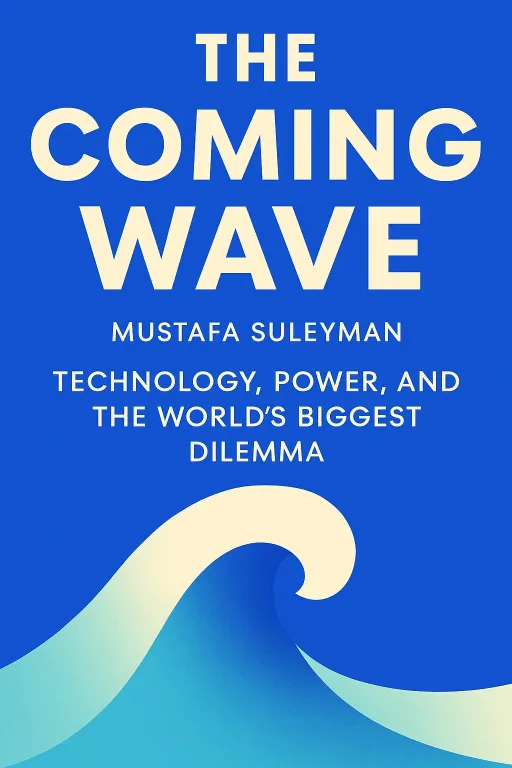
Nova: Exactly. And that's precisely the tension at the heart of our discussion today, drawing insights from two incredibly prescient books. We’re talking about Mustafa Suleyman’s and Samuel Woolley’s.
Atlas: Ah, Suleyman, the co-founder of DeepMind. That immediately lends incredible weight to his warnings about AI. He's not just an observer; he's been at the epicenter of this coming wave.
Nova: Absolutely. His unique position, having helped build some of the world's most advanced AI, gives him an unparalleled perspective on both its transformative power and its potential for catastrophic misuse. And Woolley, a researcher focused on computational propaganda and digital manipulation, is perfectly positioned to dissect how these technologies are already being weaponized to distort our very perception of truth.
Atlas: That makes sense. It’s not just about what these tools can do, but what people these tools. So, for engineers, for innovators, for those of us building the future, how do we navigate this? How do we ensure our work actively contributes to ethical containment and responsible deployment, rather than inadvertently enabling the very misuse these authors warn about? That’s the real question, isn’t it?
The Dual-Edged Sword: Power, Peril, and Containment
SECTION
Nova: It is the ultimate question, Atlas. And it brings us directly to Suleyman’s central thesis in: the inherent dual-use nature of emerging technologies like AI and synthetic biology. Think about it: the same AI that can accelerate drug discovery, curing diseases, can also design novel bioweapons. The same advancements in robotics that revolutionize manufacturing can create autonomous weapons systems.
Atlas: Oh, I see. It's not just a theoretical concern, is it? We’ve seen glimpses of this already. The speed at which these technologies evolve feels almost impossible to keep up with.
Nova: Precisely. Suleyman argues that these technologies are not just powerful, they are in ways we can barely comprehend, and they create profound societal vulnerabilities if left unchecked. He calls for an urgent need for global governance and 'containment.'
Atlas: Containment. That sounds like trying to put the genie back in the bottle after it’s already granted a few wishes. For someone in the trenches, building these systems, what does "containment" actually look like? Is it regulation? Is it a moral code? How do you contain something that’s inherently designed to spread and iterate?
Nova: That’s the challenge. Containment isn't about halting progress, but about building guardrails. Imagine a self-driving car: the technology is powerful, but it needs speed limits, traffic laws, and safety protocols to operate responsibly. For AI and synthetic biology, it means establishing international norms, robust regulatory bodies, and ethical frameworks these technologies spiral out of control. It’s about anticipating the risks and building in safeguards from the very beginning, something engineers often overlook in the race for functionality.
Atlas: So, it’s about foresight. Not just "can we build it?" but "should we build it, and if so, how do we ensure it doesn't become a nightmare?" That’s a tough ask when the incentives are often geared towards speed and market dominance. It takes a different kind of strategic thinking.
Nova: It absolutely does. Suleyman highlights that these technologies are fundamentally different from previous revolutions because of their accelerating pace and their inherent accessibility. The barriers to entry for developing powerful AI models or synthetic biological agents are rapidly decreasing. This isn't just about nation-states anymore; it's about individuals and small groups having access to capabilities that were once unimaginable.
Atlas: Whoa. That’s a game-changer. So, the potential for a lone actor or a rogue group to wield immense power, for good or ill, increases dramatically. That’s why the containment aspect becomes so critical, not just for governments, but for every single person who designs, develops, or deploys these tools. It’s a collective responsibility, then.
The Reality Game: Manipulation and Ethical Responsibility
SECTION
Nova: It’s a profound collective responsibility, and that leads us to the second critical piece of this puzzle, which Samuel Woolley explores in. If Suleyman warns us about the raw power and the need for containment, Woolley shows us what happens when that power contained, especially in the realm of information and perception.
Atlas: That makes me wonder, given the rise of deepfakes and increasingly convincing AI-generated content, how much of what we perceive as reality is actually being subtly, or not-so-subtly, manipulated right now? It feels like we're constantly on guard.
Nova: You're hitting on the core of it. Woolley dissects how emerging technologies, from AI to virtual reality, are exploited to manipulate public perception and spread disinformation. Think about the sophisticated bot networks that can amplify narratives, or the use of AI to generate hyper-realistic fake videos and audio. These aren't just annoying; they can fundamentally alter our understanding of events, people, and truth itself.
Atlas: That’s terrifying. I mean, we're building these incredible tools, and then someone else is using them to erode trust and create chaos. If I'm an engineer, working on, say, a new graphics engine or a language model, how do I ensure my creation isn't just a powerful tool for manipulation? What's my personal responsibility here?
Nova: That's the ethical burden Woolley highlights. He argues that engineers and creators have an ethical responsibility that goes far beyond technical functionality. It's not enough to build a powerful tool; you must also consider its potential for misuse. For example, if you're developing a new AI that can generate highly realistic images, do you build in watermarks or metadata that identifies it as AI-generated? Do you limit its capabilities to prevent the creation of harmful content?
Atlas: So, it's about building in the 'disinformation immune system' from the ground up, rather than trying to patch it up later. That means thinking like an adversary, anticipating the worst-case scenarios, and proactively designing against them. That takes a whole different mindset, doesn't it? It's not just about optimizing for efficiency or user experience anymore.
Nova: Exactly. It's about cultivating a "socio-technical imagination," as some call it. It's about understanding that every piece of technology you create exists within a complex human and social ecosystem. A great example of this is the development of virtual reality. While it promises immersive experiences for education or entertainment, it also opens avenues for creating hyper-realistic, fabricated scenarios that could be used to radicalize, deceive, or psychologically manipulate. Woolley pushes us to ask: what are the of our innovations? And how do we design to mitigate those, not just after the fact, but as part of the initial design process?
Atlas: That’s a huge shift in perspective. It means engineers aren't just problem-solvers for technical challenges; they become guardians of societal well-being. It requires a deep dive, not just into the code, but into sociology, psychology, even philosophy, to truly understand the impact.
Synthesis & Takeaways
SECTION
Nova: Precisely. Bringing Suleyman and Woolley together, we see a clear picture: the sheer, accelerating power of emerging technologies create vulnerabilities, and these vulnerabilities be exploited for manipulation and disinformation. This makes the engineer's role more critical than ever. It's no longer enough to just build; we must build with a profound sense of purpose and responsibility.
Atlas: So, the deep question we started with—how can an engineer's work actively contribute to ethical containment and responsible deployment—isn't just theoretical. It’s an urgent, practical call to action. It’s about building with a conscience.
Nova: Absolutely. For the architect, the strategist, the innovator, it means integrating ethical considerations from the very first line of code, from the initial design blueprint. It means advocating for responsible use, understanding the broader societal context, and not just focusing on technical functionality. It means embracing the unknown, but with a flexible and ethical mindset.
Atlas: That’s a powerful takeaway. It’s about seeing the bigger picture, beyond the immediate technical challenge, and understanding the profound impact our creations have on the global good. It’s about realizing that every choice we make in development carries a weight far beyond the project itself.
Nova: It truly is. And that's why we encourage you, our listeners, to dedicate time each week to explore a completely new, non-engineering field. Whether it's philosophy, history, or even art, broadening your perspective can unlock new pathways for complex problem-solving and deepen your understanding of the human element in technology.
Atlas: That’s a fantastic recommendation. It’s a way to bridge technical brilliance with market success, to unlock new pathways for complex problem-solving, and ultimately, to amplify your impact through others, for global good.
Nova: This is Aibrary. Congratulations on your growth!