

The Power of Small Wins: How Tiny Progress Fuels Big Vision
Golden Hook & Introduction
SECTION
Nova: What if I told you the secret to achieving your biggest, most audacious vision isn't about grand gestures or monumental breakthroughs, but something far smaller, far more overlooked, and happening every single day?
Atlas: Oh, I like that. I imagine a lot of our visionary listeners are currently staring at some Everest-sized goal, feeling that familiar tug of overwhelm. We're strategists and builders, Nova, we're always looking for the next big leap. So what's this counter-intuitive wisdom you're hinting at?
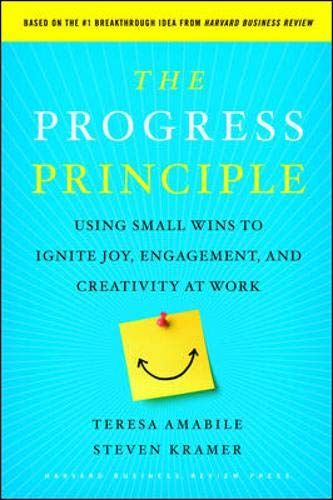
Nova: Well, we're diving deep into the profound insights from a truly groundbreaking book today: "The Progress Principle" by Teresa Amabile and Steven Kramer. What's absolutely fascinating is that this book didn't just offer theories; it emerged from a decade-long study where the authors meticulously analyzed nearly 12,000 daily diary entries from knowledge workers. That's twelve thousand days of real people, real work. It completely redefined our understanding of what truly fuels motivation and positive emotions at work.
Atlas: Wow, that gives me chills. Twelve thousand diary entries, that’s serious data. So you’re saying, all that meticulous research boiled down to this hidden power of small wins? I’m curious, for our listeners who are managing high-pressure teams, who are building ventures from the ground up, why are these "small wins" so incredibly powerful, especially when that finish line feels miles away?
The Psychological Mechanism of Small Wins & The Inner Work Life
SECTION
Nova: Exactly, Atlas. The "Progress Principle" reveals that making progress in meaningful work is the single most important factor for boosting motivation and positive emotions. It's not about the size of the win, but the of progress, no matter how tiny. Amabile and Kramer coined the term "Inner Work Life" to describe this dynamic interplay of perceptions, emotions, and motivations that people experience as they react to their daily work events.
Atlas: So basically you’re saying, it's less about the external reward and more about how we internally our daily efforts?
Nova: Precisely. Think of it like a self-reinforcing flywheel. A small win, even something seemingly insignificant, triggers a positive emotional response. That positive emotion boosts your motivation, which in turn leads to better performance, making another small win more likely. It’s a compounding effect for your drive and engagement. For our builders out there, who understand compounding interest, this is compounding motivation.
Atlas: That’s a great analogy. Compounding motivation. I can see how that would be...
Nova: Let me give you a quick, illustrative example. Imagine a software development team. They're months into building a new product, it's complex, the deadlines are looming, and frankly, morale is in the basement. The finish line feels impossibly far, and the initial excitement has long worn off. The team lead notices the drag.
Atlas: Oh, I know that feeling. That's going to resonate with anyone who's ever been part of a long-term project. The silence in the room as everyone just stares at their screens, the collective sigh when another bug is found...
Nova: Exactly. So, inspired by this very principle, the team lead decides to try something radical. Before everyone logs off each day, they hold a quick, five-minute stand-up. The only rule? Each person has to share one they accomplished that day. It could be fixing a tiny, obscure bug, clarifying a single ambiguous requirement, or even just having a productive conversation with a user for feedback.
Atlas: That sounds incredibly simple, almost too simple for a high-stakes tech environment.
Nova: And that's the beauty of it. Initially, there's some eye-rolling, some awkward silences. But within a few weeks, something shifts. People start actively looking for their "small win" during the day. They're reframing their tasks. That overwhelming, monolithic project starts to feel like a series of manageable, rewarding steps. Morale improves, communication becomes more proactive, and surprisingly, overall productivity sees an uptick. The silent drag is replaced by a low hum of consistent, acknowledged progress. The overwhelming project now feels like a series of manageable, rewarding steps.
Atlas: That’s actually really inspiring. But what about the temptation to dismiss these small wins? For builders and leaders, isn't there a risk that focusing on these tiny steps distracts from the massive strategic objective, making it feel less 'serious'? We're told to keep our eye on the prize, the big vision.
Practical Application – Identifying & Leveraging Your Daily Progress
SECTION
Nova: That’s an excellent point, Atlas, and it touches on a common misconception. The key isn't to over tiny wins, it's to them. The book isn't advocating for a shift in your strategic objective; it's about shifting your of progress towards that objective. The work our listeners are doing—strategizing, building, leading—is inherently meaningful. The missing piece is often the conscious celebration of the small forward movements within that meaningful work.
Atlas: So, it's not about making the big vision small, but making the small steps?
Nova: Precisely. Let's talk practical application for our builders and visionaries. How do you identify these small wins? First, it's about Break down those larger, daunting tasks into smaller, achievable components. If your big task is "launch new product," a micro-goal could be "finalize marketing copy for landing page" or "test user login flow."
Atlas: I see. So it's about creating more opportunities for those "flywheel" moments you mentioned.
Nova: Exactly. And then there's the This is directly from the book's healing moment: take five minutes at the end of your day. List three concrete achievements from your last week, or even just from today. It doesn't have to be groundbreaking. It could be "I sent that difficult email," or "I clarified the scope with a team member." The act of writing it down, of acknowledging it fully, is the psychological lever.
Atlas: So, it's kind of like... when you're building a massive structure, you don't just stare at the blueprint for years. You're also celebrating when the foundation is poured, then the first wall goes up, then the roof truss is in place. Each one feels like a tangible step forward, even if the skyscraper isn't finished.
Nova: That’s a perfect example, Atlas! It gives you that sense of momentum. And you can also use Simple methods like crossing off items on a to-do list, moving a card to a "done" column on a Kanban board, or even just a simple digital tally. These visual cues reinforce the progress.
Atlas: Okay, but what about the times when progress impossible? When you're stuck, or things go backward, which inevitably happens in any ambitious venture. How do you find a small win then? It’s not always sunshine and completed tasks.
Synthesis & Takeaways
SECTION
Nova: That's a crucial question, and it speaks to the resilience needed for big visions. Even in those moments, a small win can be reframed. Did you learn you were stuck? That's a win in clarity. Did you identify a new blocker? That's a win in knowledge, preventing future issues. Did you reach out for help? That's a win in leveraging resources. The power isn't in the of the win, but in its as a step forward, however small, however indirect.
Atlas: Ah, so it’s about shifting our perception from "failure" to "learning" or "identifying the next step," even when it feels like a setback.
Nova: Exactly. The deep insight here is that the pursuit of a big vision is often derailed not by a lack of ability or ambition, but by a slow, insidious erosion of motivation that happens when we fail to acknowledge our consistent, incremental progress. The "Progress Principle" shows us that consistent acknowledgement of these small wins is the fundamental psychological fuel that sustains long-term engagement, combats overwhelm, and ultimately allows visionaries to build impactful legacies. It's the daily dose of dopamine that keeps the engine humming.
Atlas: That makes me wonder, for our listeners who are building, leading, and strategizing, what's thing they can do to start integrating this into their demanding lives?
Nova: For the next week, before you log off for the day, consciously pause for five minutes. It’s just five minutes. Write down just one specific, tiny thing you moved forward on. Don't judge it, don't overthink it; just acknowledge it. It could be an email sent, a conversation had, a small problem solved. Make it a non-negotiable ritual.
Atlas: That sounds incredibly simple, but I imagine its impact on sustaining that long game, that vision, is profound. It’s about building a habit of self-recognition, which is often the first thing to go when you’re pushing for something massive.
Nova: It truly is. It's about feeding that inner work life, one small win at a time.
Nova: This is Aibrary. Congratulations on your growth!