

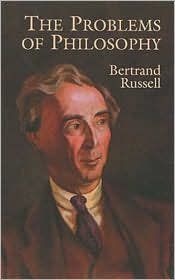
The Problems of Philosophy
Introduction
Nova: Imagine you are sitting at your desk, looking at your coffee mug. You see its color, its shape, you feel its warmth. You are absolutely certain it exists. But are you? What if I told you that one of the greatest philosophical minds of the twentieth century wrote an entire book that begins by shaking your confidence in something as simple as that coffee mug?
Nova: : A coffee mug? Really? What could possibly be doubtful about a coffee mug?
Nova: That is exactly the question Bertrand Russell opens with in his 1912 classic, The Problems of Philosophy. Except instead of a coffee mug, he uses a table. And by the end of that first chapter, you are no longer sure what the table really is, what color it truly has, or even whether it exists when you leave the room.
Nova: : Okay, that sounds slightly terrifying. But also fascinating. What was Russell trying to do with this book?
Nova: He called it his "shilling shocker" — a short, cheap book for a general audience. A shilling was basically pocket change in 1912. Russell wanted to take the deepest questions in philosophy and make them accessible to anyone willing to think. And it worked. For over a century, it has been his most widely read book, often assigned as the first text for philosophy students.
Nova: : So it is like a philosophy starter kit.
Nova: Exactly. Russell focuses on what we can know and how we can know it — the theory of knowledge. He deliberately avoids the grand metaphysical systems that might scare off a newcomer. Instead, he asks questions like: Can we prove there is an external world? Can we justify cause and effect? Why should we believe the sun will rise tomorrow?
Nova: : Questions that sound almost absurdly simple until you try to answer them.
Nova: Precisely. And here is Russell's provocative move: he does not necessarily answer them. He argues that the very value of philosophy lies not in definitive answers, but in the questions themselves. But we will get to that. First, let us start where Russell starts — with that table.
The Table That Isn't There
Appearance and Reality
Nova: So Russell walks into his room and looks at his desk. He describes it: oblong, brown, shiny to the eye, smooth, cool, hard to the touch, a wooden sound when tapped. Simple enough, right?
Nova: : Sounds like a perfectly normal table.
Nova: Until Russell starts asking questions. He notices that the parts of the table that reflect light look much brighter than others. Some parts even look white from reflected light. If he moves his head, the apparent distribution of colors changes. If two people look at the table from different angles, no two of them see exactly the same distribution of colors.
Nova: : So the color of the table depends on where you are standing. And the lighting. And whether you are color-blind or wearing glasses.
Nova: And in the dark, the table has no color at all. So Russell asks: which color is the real color of the table? And his answer is devastating. There is no single real color. We are compelled to deny that, in itself, the table has any one particular color.
Nova: : What about the texture? If I run my hand across it, it feels smooth.
Nova: Until you look at it under a microscope. Then you see hills and valleys and roughness that the naked eye misses. Which is the real table — the smooth one or the rough one? And if you say the microscope reveals the real table, what about a more powerful microscope?
Nova: : So the senses are not giving us the truth about the table at all.
Nova: They are giving us what Russell calls "sense-data" — the colors, textures, sounds that are immediately known in sensation. The sense-data are what we experience directly. The real table, the physical object, is something we infer. It is not immediately known to us. And that distinction — between the sense-data and the physical object — is the foundation of Russell's entire epistemology.
Nova: : This reminds me of the painter versus the philosopher distinction.
Nova: You are right — Russell brings that up. The painter has to unlearn the habit of thinking things have the color that common sense says they really have. The painter learns to see things as they appear. The practical person and the philosopher want to know what they are. But the philosopher is more troubled by the difficulties of answering that question.
Nova: : So after all that, does Russell conclude the real table even exists?
Nova: He argues that we cannot prove it does. He acknowledges Descartes' radical doubt — the possibility that we might be dreaming, that a deceitful demon might be feeding us all our sense-data. Russell admits it is a logical possibility that the whole outer world is a dream and that we alone exist.
Nova: : That is the solipsism nightmare.
Nova: Exactly. But here is Russell's pragmatic move. He says there is no logical absurdity in the dream hypothesis, but there is also no reason to believe it. It is simpler and more coherent to believe that physical objects exist independently of us and cause our sense-data. He calls this the "instinctive belief" view: we accept the hypothesis of an independent external world because it organizes our experience better than any alternative.
Nova: : So we cannot prove the table exists, but it is reasonable to act as if it does.
Nova: That is Russell in a nutshell. Certainty is rare. Reasonable belief is the best we can do most of the time. And this leads perfectly into his next big distinction.
Bismarck and the Limits of Direct Knowing
Knowledge by Acquaintance and Description
Nova: Russell makes a distinction that became one of his most famous contributions to philosophy: knowledge by acquaintance versus knowledge by description.
Nova: : Break those down for me.
Nova: Knowledge by acquaintance is direct, immediate awareness of something. When you see a patch of brown color, you are acquainted with that sense-datum. No inference, no reasoning — just direct experience. Knowledge by description, on the other hand, is indirect. It involves knowing that something is "the so-and-so" — the object that fits a certain description.
Nova: : So I have knowledge by acquaintance of the coffee mug I am holding, but knowledge by description of, say, the city of Tokyo, which I have never visited.
Nova: That is the idea. But Russell goes further and makes a genuinely surprising claim. He argues that we have knowledge by acquaintance only of our own sense-data, our own thoughts and feelings, and — probably — our own selves. We are also acquainted with universals, which we will get to. But here is the kicker: we are never directly acquainted with physical objects.
Nova: : Wait. So I am not really acquainted with this coffee mug? I am holding it!
Nova: You are acquainted with the sense-data — the brown color, the smooth texture, the warmth. But the physical mug itself, the thing that exists independently of your perception, you only know by description. You know it as "the physical object that causes these sense-data."
Nova: : That feels counterintuitive. It feels like I know the mug directly.
Nova: Russell would say that is the power of habit. We are so accustomed to inferring physical objects from sense-data that we mistake the inference for direct knowledge. He illustrates this brilliantly with his famous example: Bismarck.
Nova: : The German Chancellor?
Nova: Exactly. Russell says that Bismarck himself had knowledge by acquaintance of his own self. But everyone else only knows Bismarck by description. We might know him as "the first Chancellor of the German Empire." That description picks out a unique person, and we can think about that person, make judgments about him, but we are never directly acquainted with Bismarck himself.
Nova: : And Russell says this applies to everything in the physical world?
Nova: Yes. All our knowledge of the physical world is knowledge by description. We know physical objects only as "the things that cause such-and-such sense-data." This is a profound limitation on human knowledge. We are each trapped, in a sense, within the sphere of our own private experience.
Nova: : That sounds bleak.
Nova: It sounds bleak, but Russell does not see it that way. He sees it as clarifying. Once we understand the limits of our knowledge, we can work within them more effectively. And descriptions are incredibly powerful — they allow us to transcend our immediate experience and think about things we have never encountered. That is what makes science, history, and communication possible.
Nova: : So descriptions are a kind of bridge beyond our private world.
Nova: A bridge built on inference. And that brings us to the next big problem: how do we justify those inferences?
The Chicken, the Sun, and the Limits of Experience
The Problem of Induction
Nova: Russell asks a disarmingly simple question: why do we believe the sun will rise tomorrow?
Nova: : Because it always has.
Nova: And why does the fact that it has always risen in the past give us any reason to believe it will rise in the future?
Nova: : That is just how the world works. The laws of physics.
Nova: Russell anticipates that. He says we might appeal to the laws of motion. The earth is a freely rotating body, and such bodies do not stop unless something interferes. But then we must ask: why will the laws of motion still hold tomorrow? The only evidence we have that they will is that they have held in the past.
Nova: : So we are going in circles.
Nova: Exactly. This is the problem of induction, which Russell borrows from David Hume. Any argument that the future will resemble the past itself depends on the assumption that the future will resemble the past. It is circular. You cannot justify induction without using induction.
Nova: : And Russell has this famous example with a chicken, right?
Nova: The chicken. It is one of the most memorable passages in the book. Russell imagines a chicken that has been fed by the farmer every single day of its life. Each day, the farmer appears, and food follows. The chicken, being a creature of habit, grows more and more confident that the farmer's arrival means dinner. Then one day, the farmer arrives and wrings the chicken's neck.
Nova: : Grim. But the point is clear.
Nova: The chicken had all the evidence any inductive reasoner could want. Every past experience confirmed the pattern. Yet the conclusion was catastrophically wrong. As Russell puts it, more refined views as to the uniformity of nature would have been useful to that chicken.
Nova: : So induction can never give us certainty.
Nova: Russell says we cannot even prove that induction will probably work, because probability itself depends on induction. But — and this is the key — Russell does not think we should abandon induction. We cannot. Our entire practical life depends on it. Every time you eat food, you assume it will nourish you rather than poison you. Every time you step off a curb, you assume the ground will support you.
Nova: : So what is Russell's solution?
Nova: He argues that the inductive principle — the principle that instances of which we have had experience are a guide to instances of which we have had none — is itself a fundamental principle that we simply cannot prove. It is, he says, a piece of a priori knowledge. We know it, but not by experience. It is built into the very structure of rational thought.
Nova: : So we just have to accept that induction is a leap of faith?
Nova: A reasoned leap of faith, perhaps. Russell calls it a principle that has "less self-evidence than some of the other principles of logic," but one we cannot do without. Probability, not certainty, is the best we can hope for when reasoning about the world beyond our immediate experience.
Nova: : And that leads to the question: if we cannot prove induction by experience, what kind of knowledge is it? Where does it come from?
Nova: Which brings us to one of Russell's most provocative claims — the reality of universals and the possibility of a priori knowledge.
Where Does Whiteness Live?
The World of Universals
Nova: Russell asks us to consider the color white. You have seen white paper, white snow, white clouds. You have been acquainted with many particular white things. But what about whiteness itself? Is whiteness something real?
Nova: : That sounds like a word game. Whiteness is just a property that white things have.
Nova: Russell says that is exactly the kind of thinking he wants to challenge. He argues that universals — qualities like whiteness, justice, or relations like "north of" or "to the left of" — are genuinely real. They are not just words. They are not mental inventions. They have a kind of being that is neither physical nor mental.
Nova: : So whiteness exists somewhere? Where exactly does whiteness hang out?
Nova: This is where Russell gets fascinating. He makes a distinction between existence and subsistence. Physical objects and minds exist — they are in time, they occupy a particular place at a particular moment. But universals do not exist in that sense. They subsist. They are timeless, not located anywhere. The relation "north of" does not exist in Edinburgh or in London. It is a fact about the world that Edinburgh is north of London, and that fact is true whether anyone knows it or not.
Nova: : So Russell is basically reviving Plato's theory of Forms.
Nova: He openly acknowledges the debt. He says Plato was the first to raise the problem of universals, and Plato's solution was the theory of an unchanging world of ideas in which the physical world participates. Russell does not go quite that far, but he does argue that universals are real, mind-independent entities. He calls himself a realist about universals.
Nova: : And this matters because?
Nova: Because, Russell argues, all truths involve universals. Every time you say "this rose is red," you are relating a particular — the rose — to a universal — redness. If universals were not real, then truths could not be about anything real. Mathematics, logic, ethics — all of them depend on universals.
Nova: : So without universals, we cannot even have a meaningful sentence.
Nova: That is Russell's point. And he goes further. He says that we can be acquainted with universals. When you think about justice, or the number two, or the relation "greater than," you are directly aware of something — a universal — not a particular sense-datum. This is the foundation of a priori knowledge.
Nova: : How does acquaintance with universals give us a priori knowledge?
Nova: Because some truths about universals can be known without any reference to experience. Consider: "two plus two equals four." You do not need to count apples to know that. You can grasp the truth just by thinking about the universal concepts involved. Russell says this is how pure mathematics is possible — it is knowledge of universals that we grasp directly through rational intuition.
Nova: : So philosophy and mathematics share a kind of knowledge that science cannot provide?
Nova: Exactly. Science gives us knowledge of particular facts, derived from sense-data and induction. But philosophy and mathematics give us knowledge of general truths about universals, derived from a priori reasoning. And this distinction shapes Russell's entire view of what philosophy can and cannot do.
Nova: : Which brings us to the famous final chapter.
Nova: The one that has inspired generations of philosophy students. The value of philosophy itself.
Uncertainty as Liberation
The Value of Philosophy
Nova: After fifteen chapters of painstaking analysis, Russell arrives at the question that anyone reading the book would naturally ask: why bother? What is the point of philosophy if it cannot give us definite answers?
Nova: : The practical person's objection. Philosophy is just hair-splitting distinctions and useless trifling.
Nova: Russell takes this objection seriously. He notes that physical science, through inventions, benefits countless people who never study it. Philosophy does not work that way. Its value, if it has any, must be found primarily in its effect on the lives of those who study it.
Nova: : So philosophy is personally transformative, not practically useful.
Nova: That is part of it. But Russell goes much deeper. He argues that philosophy has not produced a body of definite knowledge the way mathematics or physics has. Ask a mathematician what truths his field has established, and he will talk for hours. Ask a philosopher the same question, and an honest one will confess that philosophy has not achieved positive results like the sciences.
Nova: : That sounds like an admission of failure.
Nova: Russell says it is partly an illusion. Whenever a subject becomes capable of definite knowledge, it stops being called philosophy and becomes a separate science. Astronomy was once philosophy. So was psychology. Newton called his great work "the mathematical principles of natural philosophy." Philosophy is the residue — the questions that we do not yet know how to answer with certainty.
Nova: : So philosophy is like a frontier. Once the territory is mapped, it becomes science.
Nova: Beautifully put. But Russell says there is another, deeper reason for philosophy's uncertainty. Some questions — the most profound ones — may be permanently unanswerable by the human intellect. Does the universe have a purpose? Is consciousness a permanent part of reality or a fleeting accident? Are good and evil of cosmic importance or only human concerns?
Nova: : Those are the questions that keep people up at night.
Nova: And here is Russell's radical turn. He says the value of philosophy lies precisely in its uncertainty. The person who never philosophizes goes through life imprisoned in the prejudices of common sense, the habitual beliefs of their age and nation, convictions formed without the consent of deliberate reason. The world seems definite, finite, obvious. Unfamiliar possibilities are contemptuously rejected.
Nova: : And philosophy breaks those walls down.
Nova: It does. Philosophy, Russell writes, "though unable to tell us with certainty what is the true answer to the doubts which it raises, is able to suggest many possibilities which enlarge our thoughts and free them from the tyranny of custom." It diminishes our false certainty about what things are, but it vastly increases our knowledge of what they may be.
Nova: : So it is not about answers. It is about expanding the imagination.
Nova: That is one part. The other part, which Russell calls perhaps the chief value of philosophy, is the greatness of the objects it contemplates. The instinctive human life is shut up within the circle of private interests — family, friends, career. Russell describes this as living in a besieged fortress, knowing that the outer world will eventually lay our private world in ruins.
Nova: : That is a powerful metaphor.
Nova: And philosophy, Russell says, offers an escape. Through philosophical contemplation, we enlarge the Self. We stop dividing the universe into friends and foes, helpful and hostile. We view the whole impartially. The mind, he writes, by contemplating the greatness of the universe, is itself "rendered great."
Nova: : There is something almost spiritual about that.
Nova: Russell closes with one of the most quoted passages in all of philosophy: "Philosophy is to be studied, not for the sake of any definite answers to its questions, since no definite answers can, as a rule, be known to be true, but rather for the sake of the questions themselves; because these questions enlarge our conception of what is possible, enrich our intellectual imagination, and diminish the dogmatic assurance which closes the mind against speculation."
Nova: : It is a defense of the examined life. Of wonder itself.
Nova: Yes. And after all his rigorous analysis — the sense-data, the problem of induction, the theory of descriptions, the world of universals — Russell arrives at something deeply human. Philosophy will not tell you what to believe. It will not give you comfort or certainty. It will give you something more valuable: a mind capacious enough to hold uncertainty and still find wonder in the world.
Nova: : So where does that leave us? After all these chapters, after the table and the chicken and Bismarck and whiteness — what should we take away?
Nova: Perhaps this: that the most important questions are the ones without settled answers. That the habit of questioning is more valuable than the comfort of certainty. And that a life unexamined is not just not worth living, as Socrates said — it is a life lived in a prison of unexamined prejudice.
Nova: : Thank you for taking us through this remarkable little book, Nova.
Nova: Thank you for the conversation. Russell wrote The Problems of Philosophy as a shilling shocker in 1912. More than a century later, it still does what it set out to do: provoke, unsettle, and enlarge. Not bad for a book about a table.
Nova: : This is Aibrary. Congratulations on your growth!