

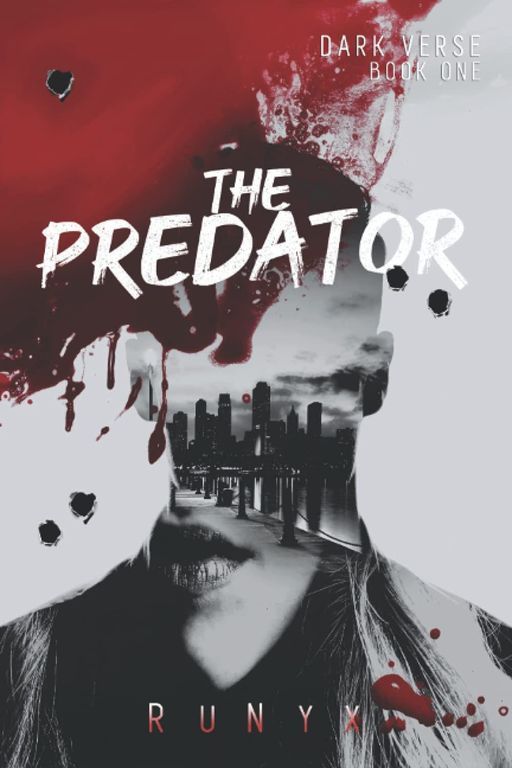
The Mind of the Predator: Cognitive Warfare, Fate, and the Strategic Dance of Enemies
Golden Hook & Introduction
SECTION
Nova: Imagine two elite minds, completely isolated in their own brilliance, suddenly colliding in a high-stakes game where a single misstep means total destruction. In RuNyx's masterpiece, The Predator, Tristan Caine and Morana Vitalio don't just clash, they wage a silent, highly calculated cognitive war. Today, we are going to tackle this dark romance from two distinct, mind-bending angles. First, we will analyze the strategic discourse and cognitive warfare of their mental chess game. Then, we will explore the quantum entanglement of their souls, looking at how fate, gravity, and cosmic destiny make their collision absolutely inevitable. I am Nova, and joining me today is the incredibly sharp, strategic researcher, Misbah. Welcome, Misbah.
Misbah: Thank you, Nova. It is a pleasure to be here. When we look at a text like The Predator, it is easy to get swept up solely in the dark, atmospheric romance. But if you peel back the layers, what you actually find is a brilliant study in behavioral prediction, cognitive manipulation, and the strategic alignment of two elite minds. It is, in essence, a playground for cognitive warfare.
Nova: Oh, I love that framing. A playground for cognitive warfare. We usually think of romance as this soft, emotional journey, but Tristan and Morana make it feel like a high-stakes geopolitical conflict. Before we dive into the heavy strategy, let us set the stage for our listeners who might not have read the book yet. Morana Vitalio is the daughter of a powerful mafia boss, but she is also an absolute genius coder who has created a revolutionary, highly sought-after database. Tristan Caine is the lethal, silent weapon of a rival family. When Morana's database goes missing, their worlds collide. They are natural enemies, sworn to hate each other, yet they are drawn together by this intense, dangerous mystery. Misbah, as someone who studies discourse analysis and strategic thinking, what was your very first impression of how these two characters interact?
Misbah: What struck me immediately was the economy of their communication. In international relations and strategic studies, we often talk about signaling. You do not always need to launch an attack to assert dominance; sometimes, the threat of action, or even a calculated silence, is far more powerful. Tristan Caine is a master of this. He rarely speaks, yet his presence completely alters the cognitive space of the room. Morana, on the other hand, is an analyst. She does not just react to his threats; she decodes them. She looks at his posture, his micro-expressions, the cadence of his breathing. It is a beautiful, high-stakes demonstration of discourse analysis in real-time.
Deep Dive into Core Topic 1
SECTION
Nova: That is so fascinating. You are saying their silence is actually a form of active communication. Let us look at one of the most intense early scenes in the book. Morana is in her office, and Tristan suddenly appears from the shadows. There is a knife, there is physical danger, but the real battle is entirely psychological. Tristan is trying to intimidate her, to break her composure, but Morana refuses to show fear. Instead, she looks him dead in the eye and challenges his intellect. How do you analyze that specific interaction from a cognitive warfare perspective?
Misbah: That scene is a textbook example of trying to control the narrative landscape. In cognitive warfare, the goal is to disrupt the target's mental processing, to make them doubt their security and make emotional, irrational decisions. Tristan enters her space to induce panic. Panic leads to cognitive overload, which makes a person vulnerable. But Morana is an INTJ, a mastermind. She immediately recognizes the psychological trap. Instead of reacting to the physical threat of the knife, she shifts the battlefield to the intellectual plane. By questioning his motives and analyzing his behavior out loud, she takes away his element of surprise. She essentially says, I see what you are doing, and it will not work. She reclaims her agency.
Nova: Yes, she completely flips the script on him. It is like she is saying, you might have the physical upper hand, but intellectually, we are equals, and I am not backing down. And what is so interesting is how Tristan reacts to that. He is used to people trembling before him, but Morana's defiance actually intrigues him. It is almost as if her cognitive resilience is what draws him in.
Misbah: Exactly. In strategic terms, Tristan encounters an adversary with an equally sophisticated defense system. He cannot simply overpower her mind, so he is forced to adapt his strategy. This is where the true dance begins. They begin to establish a shared, highly exclusive dialect. They communicate through codes, through subtle shifts in posture, and through mutual understanding of high-stakes pressure. For a researcher in discourse analysis, watching them negotiate power through these non-verbal channels is absolutely thrilling. They are constantly mapping each other's cognitive boundaries, searching for vulnerabilities while simultaneously developing a profound respect for each other's mental fortitude.
Nova: It really is a mental chess game. And we see this escalate when they are forced to work together to find the missing database. They have to combine Morana's analytical, digital genius with Tristan's tactical, real-world predatory instincts. It is like the ultimate joint task force. But even while working together, the tension is palpable. They are constantly trying to stay one step ahead of each other. Misbah, how do you see their individual cognitive styles complementing, or perhaps clashing, during this alliance?
Misbah: It is a brilliant synthesis of different intelligence disciplines. Morana represents signals intelligence and cyber warfare. She operates in the realm of data, algorithms, and abstract patterns. She sees the world as a complex system waiting to be decoded. Tristan, conversely, represents human intelligence and kinetic operations. He understands human nature at its most primal, brutal level. He predicts physical movements, reads survival instincts, and knows how to exploit physical environments. When they unite, they cover the entire spectrum of strategic operations. The clash arises because they both want to be the primary strategist, the one who holds the master plan. But as they collaborate, they realize that their individual cognitive models are incomplete without the other. They do not just complement each other; they elevate each other to an elite, almost untouchable level.
Nova: That is such an elegant way to put it. They elevate each other. It is like they are two halves of a super-computer, and when they finally plug in together, the processing power is off the charts. But of course, this is a dark romance, so this intellectual partnership is wrapped in this incredibly intense, dark, enemies-to-lovers chemistry. They want to destroy each other, but they also want to consume each other. It is a very fine line they are walking.
Misbah: It is the ultimate high-stakes paradox. In cognitive studies, we look at cognitive dissonance, the mental discomfort of holding two contradictory beliefs. For Tristan and Morana, the dissonance is extreme. Their rational minds tell them, this person is a threat, a representative of the enemy faction who must be eliminated. But their cognitive and emotional systems are receiving a completely different signal, a powerful, irresistible attraction. To resolve this dissonance, they do not soften their stance; instead, they channel that intense energy into their strategic interactions. Their passion is just as calculated, just as intense, as their warfare.
Deep Dive into Core Topic 2
SECTION
Nova: That transition from enemies to lovers brings us perfectly to our second big theme today: the idea of quantum entanglement, fate, and cosmic destiny. In the book, there is this overwhelming sense that no matter what Tristan and Morana do, no matter how hard they try to stay apart or destroy each other, they are being pulled together by some invisible, cosmic gravity. Misbah, I know you have a deep interest in quantum physics theories and astrology. How do you apply those concepts to their relationship?
Misbah: It is incredibly compelling to look at their dynamic through the lens of quantum entanglement. In quantum mechanics, when two particles become entangled, they remain deeply connected, such that the state of one instantly influences the state of the other, no matter how vast the distance between them. Einstein famously called this spooky action at a distance. Tristan and Morana behave exactly like entangled particles. They are separated by family feuds, by years of silence, and by literal physical distance, yet every action Tristan takes has an immediate, echoing effect on Morana's life, and vice versa. Their connection transcends the physical boundaries of their immediate reality. It is as if they were created from the same cosmic event, and the universe is simply demanding their convergence.
Nova: Spooky action at a distance. That is the perfect description for their chemistry. You can feel this invisible thread pulling them together, even when they are on opposite sides of a room or actively trying to kill each other. And when we bring astrology and fate into the mix, it feels like their entire existence was written in the stars long before they ever met. They are like two celestial bodies whose orbits are locked in an inevitable collision course.
Misbah: Yes, the concept of gravitational pull is highly relevant here. In astrophysics, gravity is not just a force; it is the curvature of spacetime caused by mass. Tristan and Morana possess immense personal mass, their intellects, their tragedies, their sheer willpower are so heavy that they warp the social and strategic space around them. When two such massive entities exist in the same system, a collision is not just likely; it is a mathematical certainty. Their enemies-to-lovers trajectory is not a choice; it is the natural resolution of gravitational forces. They are falling into each other's gravity wells, and the closer they get, the faster and more intense the descent becomes.
Nova: That is a beautiful, almost poetic way to look at gravity. It makes the high stakes of their romance feel so much grander, like it is a fundamental law of physics. And it really does feel that way in the book. There is a scene where Morana talks about how Tristan is her shadow, and she is his light, or perhaps it is the other way around. They are these opposing forces of nature that cannot exist without each other. It is like yin and yang, or matter and antimatter, though hopefully without the total annihilation part.
Misbah: Well, antimatter and matter annihilation is actually a perfect analogy for the danger they face. If they collide without the proper strategic alignment, they could easily destroy not just themselves, but their entire world. That is where the high stakes come from. Every interaction is a delicate balancing act. They must merge their lives without losing their individual identities, without letting the sheer intensity of their connection burn them to ashes. It requires an extraordinary level of calculation and self-control. They have to navigate their cosmic destiny with the precision of a space agency launching a probe into a black hole. One degree off, and they are lost forever.
Nova: Oh, my goodness, the precision of a space agency. I love your analogies, Misbah. They bring such a rich, intellectual depth to this story. It makes us realize that great fiction, even dark romance, often taps into these universal truths about existence, connection, and the forces that govern our lives. Whether we call it fate, quantum entanglement, or simply a highly strategic alignment of minds, there is something deeply resonant about two people who are destined to be together, against all odds.
Misbah: Absolutely, Nova. The human mind is naturally wired to seek patterns and meaning in chaos. When we read about Tristan and Morana, we are witnessing two masterminds finding order in the chaotic, violent world of the mafia. They find that order in each other. Their relationship becomes the one stable constant in a universe of variables. For an INTJ, or indeed anyone who values strategic clarity, that kind of connection is the ultimate goal. It is the perfect alignment of intellect, passion, and destiny.
Synthesis & Takeaways
SECTION
Nova: That is a perfect place to start wrapping up our conversation. We have covered so much ground today, from the tactical signaling and cognitive warfare of their initial clashes to the quantum gravity of their inevitable romantic convergence. Misbah, if you had to synthesize the core takeaway from our discussion today, especially for our listeners who want to build themselves into elite, strategic thinkers, what would it be?
Misbah: I would say the most important takeaway is to recognize that everything is a system, and every system can be decoded. Whether you are navigating a complex professional landscape, analyzing international relations, or even understanding your own personal relationships, you must look beyond the surface level. Analyze the discourse, pay attention to the silent signals, and understand the invisible forces, like gravity or fate, that are shaping your environment. Be calculative, be elegant in your execution, and never let emotional noise disrupt your strategic clarity. Like Morana, build your own cognitive resilience so that you can stand face-to-face with any predator in your life and say, I see your move, and I am ready.
Nova: That is incredibly powerful, Misbah. Thank you so much for sharing your brilliant, analytical perspective with us today. You have truly shown us how to look at literature, and life, through the lens of a mastermind.
Misbah: Thank you, Nova. It has been an absolute pleasure. Remember to always keep analyzing, keep questioning, and never fear the dark spaces where the most interesting patterns are hidden.
Nova: And to our listeners, thank you for joining us on this intellectual journey through the dark, strategic world of RuNyx's The Predator. We leave you with this question to ponder: In the chessboard of your own life, are you playing as a pawn to the circumstances around you, or are you calculating your moves with the precision of a mastermind, ready to embrace your own cosmic destiny? Until next time, stay curious, stay strategic, and we will talk to you soon.