

Ancient Wisdom for Modern Self-Discipline
Golden Hook & Introduction
SECTION
Nova: What if discipline wasn't about grinding harder, but about cultivating inner peace? Forget the 'no pain, no gain' mantra. Today, we're talking about finding joy in the journey to your goals.
Atlas: Oh, I love that. Because honestly, the idea of 'discipline' often conjures up images of white-knuckling it, pushing through sheer willpower until you're completely burnt out. And for so many of our listeners, who are constantly seeking growth and trying to build something meaningful, that feeling of overwhelm is incredibly real.
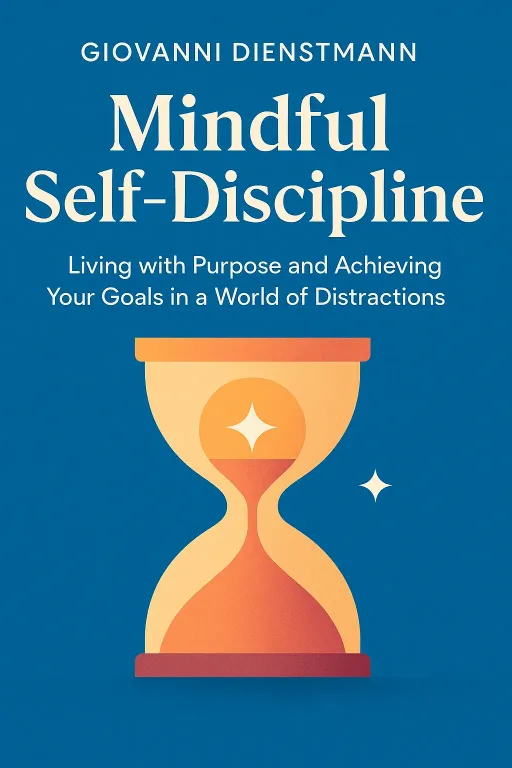
Nova: Absolutely. And that's exactly what we're here to unpack today. We're diving into two brilliant books that offer a radically different approach to self-mastery: Giovanni Dienstmann's "Mindful Self-Discipline" and Thomas M. Sterner's "The Practicing Mind." Dienstmann, for example, brings such a unique perspective, having been a former Buddhist monk before becoming a productivity expert. He really bridges that gap between deep spiritual practice and practical goal achievement.
Atlas: Wow, a former monk turned productivity guru? That's a blend you don't hear every day. It makes me wonder how someone with that kind of background approaches something as seemingly rigid as 'discipline.' It sounds like it could offer a path to balance, which is something many of us are constantly chasing.
Nova: Precisely. He essentially asks us to rethink discipline not as a chore, but as a conscious, mindful choice.
Deep Dive into Mindful Self-Discipline
SECTION
Nova: Dienstmann’s core argument is that true, sustainable self-discipline isn't about brute force. It's about integrating mindfulness into every step of your goal-setting and execution. It's about conscious action, aligning your deepest intentions with consistent, deliberate effort.
Atlas: Okay, so you’re saying it’s not just about 'doing the thing,' but about 'doing the thing mindfully'? What’s the practical difference there? For someone who's already juggling a million tasks and trying to build something significant, how does 'conscious action' alleviate the overwhelm of choice, rather than adding another layer of complexity?
Nova: That’s a great question, and it gets to the heart of it. Think of it this way: imagine a long-distance runner. Traditional discipline might tell them to just push through the pain, ignore the fatigue, and focus solely on the finish line. That often leads to injury, resentment, and ultimately, burnout.
Atlas: I know that feeling. It's like my brain screaming, "Why are we doing this?!"
Nova: Exactly. Now, picture a runner applying Dienstmann's mindful self-discipline. They're still committed to the finish line, but their focus shifts. As they run, they notice the sensation in their legs, the rhythm of their breath, the thoughts that arise—without judgment. They acknowledge the pain, but rather than fighting it, they consciously adjust their pace, hydrate mindfully, or even take a brief, deliberate walking break. Their intention is still to complete the race, but their actions are guided by present-moment awareness, not just a frantic push.
Atlas: I can see how that would prevent burnout. It’s about listening to your body and mind, not just overriding it. But how does that translate to, say, a busy professional trying to meet a deadline? It’s not like you can just stop and meditate in the middle of a project.
Nova: It's about the quality of attention you bring to the task. Instead of frantically rushing through emails, a mindful approach would be to consciously open each one, read it thoroughly, decide on the next action, and then move on. It’s about making choices deliberately rather than reactively, even in small moments. You're not just 'doing'; you're to do, with awareness. It’s like you're consciously steering the ship, rather than being tossed around by the waves of your to-do list.
Atlas: So basically you’re saying it's about being present with the process, which sounds incredibly powerful for someone who values balance and personal peace. It's almost like a form of cognitive flexibility, where you're adapting your mental state to the task at hand, rather than forcing a rigid approach.
Nova: Exactly. It’s about building a sustainable path where your discipline isn't a burden, but a practice that actually nourishes you. And this idea of embracing the process, rather than fixating solely on the outcome, is something Thomas Sterner expands on beautifully.
Deep Dive into The Practicing Mind
SECTION
Nova: That mindful approach really sets the stage for Thomas Sterner's brilliant work in "The Practicing Mind." Sterner takes this idea of presence even further. What’s fascinating is that Sterner himself isn't a guru in the traditional sense; he's a master piano technician and an avid golfer. He wrote this book based on his hands-on experience with the pursuit of mastery, distilling universal principles of learning and engagement that resonated across countless fields.
Atlas: That makes perfect sense. It’s often the people who are deeply immersed in a craft, who actually the work, who have the most profound insights into the process. So, what's his big takeaway?
Nova: His big takeaway is that we often sabotage our own progress and joy by fixating solely on the outcome. He argues that by shifting our attention to the 'practicing mind' – to the process itself – we can overcome frustration and cultivate a deeper, more sustainable engagement with any task.
Atlas: Whoa, that sounds a bit out there for someone used to setting aggressive goals and needing tangible results. How do you reconcile focusing on the 'process' with the very real need for 'results' in a world that demands outcomes? Is this just an excuse for not achieving?
Nova: Not at all. It's a re-prioritization of where your mental energy goes. Think of a musician practicing scales. If they fixate on the perfect performance they'll give next month, their daily practice becomes a frustrating, outcome-driven chore. Every mistake is amplified, every imperfection feels like a failure.
Atlas: I know that feeling. It’s like when I’m trying to learn a new skill, and all I can think about is how good I be, rather than how I doing right now.
Nova: Exactly. Now, imagine that same musician adopting Sterner's practicing mind. They still want to perform well, but during practice, their focus is purely on the feel of their fingers on the keys, the sound of each individual note, the rhythm, the subtle nuances of their technique. They find joy in the itself. The mastery, the perfect performance, becomes a natural byproduct of this deep, joyful engagement with the process.
Atlas: That’s actually really inspiring. So, it’s not about ignoring the goal, it’s about understanding that the path to the goal the practice, and that's where all the growth and satisfaction truly lies. It helps to reduce that outcome-oriented stress that can be so draining for 'harmonizers' seeking peace, and it actually makes the 'building' process more enjoyable.
Nova: Precisely. Sterner argues that the only thing we truly have control over is the present moment of practice. The outcome is often influenced by countless external factors. By giving our full attention and finding satisfaction in the effort itself, we not only reduce frustration but actually enhance our performance and achieve superior results in the long run. It's a profound shift that transforms work from a means to an end into a fulfilling journey.
Atlas: That makes me wonder about the deep question you mentioned: How can you embrace the 'practice' of your daily work, finding satisfaction in the effort itself, rather than solely in the results? It feels like both Dienstmann and Sterner are giving us different angles on the same essential truth.
Synthesis & Takeaways
SECTION
Nova: They are, and that's the beauty of looking at these two together. Dienstmann gives us the to be mindful in our discipline, to consciously choose our actions and align them with our intentions, thereby avoiding burnout. Sterner then gives us the to love the, to find joy and presence in the process itself, detaching from outcome-oriented stress. Together, they offer a holistic path to sustainable self-mastery.
Atlas: So, for our listeners who are navigating busy lives, trying to build, trying to grow, and desperately seeking both productivity and peace, what's the one tiny step they can take today to integrate this ancient wisdom into their modern lives?
Nova: For your very next task, whatever it is—whether it's writing an email, washing dishes, or working on a big project—try to fully immerse yourself in each step of the process. Notice the details, the sensations, the immediate action, rather than rushing to the finish line or fixating on the end result. Consciously choose your actions and observe their immediate impact.
Atlas: And maybe ask yourself: where in your day can you truly embrace the practice, finding that satisfaction in the effort, knowing that the results will follow? That's a powerful shift in perspective. It's about building a life that feels fulfilling in every moment, not just when you hit a major milestone.
Nova: It truly is. It's about transforming the journey from a means to an end, into the profound destination itself. It’s a way to integrate peace and presence into even the most demanding aspects of your life.
Atlas: That's such a hopeful way to look at it. Thank you, Nova.
Nova: My pleasure, Atlas. And thank you to all our listeners for joining us on this journey of mindful self-discovery.
Nova: This is Aibrary. Congratulations on your growth!









