

System Administration Mastery: Automating and Securing Your Infrastructure
Golden Hook & Introduction
SECTION
Nova: You know, when people think of system administrators, they often picture someone hunched over a keyboard in a dark room, fixing things they break. The image is almost always reactive.
Atlas: Oh, absolutely. The IT hero swooping in to save the day when the server crashes, right? It's the classic trope.
Nova: Exactly! But what if I told you that this perception is not just incomplete, but actively misleading, especially when it comes to cybersecurity? That this reactive image actually blinds us to the true, proactive power of system administration?
Atlas: Huh. That's a bold statement. I mean, I can see how it's incomplete – there’s a ton of preventative work – but? You’ve got my attention.
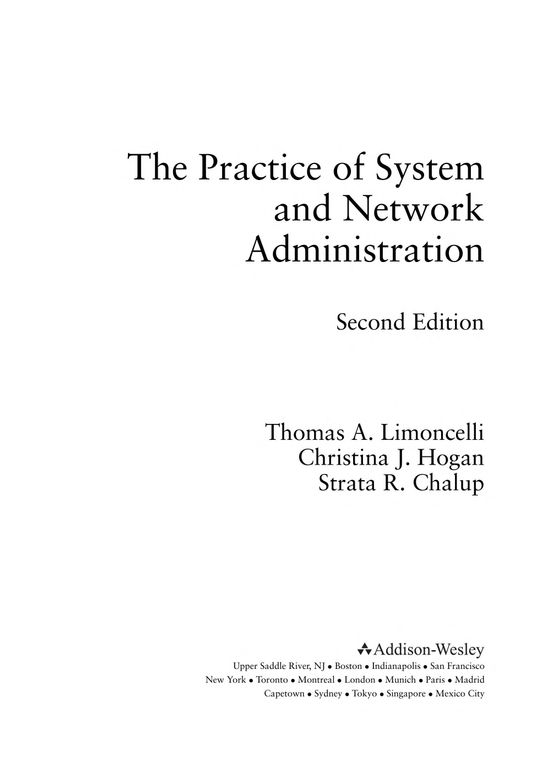
Nova: That's exactly the misconception that "The Practice of System and Network Administration" by Thomas A. Limoncelli, Christine Hogan, and Strata R. Chalup completely shatters. This isn't just a dry manual; it's practically a philosophical guide for managing complex systems.
Atlas: Limoncelli… I've heard that name. He’s a well-known voice in the sysadmin world, right? What makes this book so different?
Nova: He is! What's fascinating is that Limoncelli, along with his co-authors, crafted this book not just as a how-to guide, but as a framework for transforming IT professionals from reactive problem-solvers to proactive architects. It’s lauded for its ability to elevate the conversation around IT operations, giving system administrators a strategic seat at the table.
Atlas: That’s a powerful shift. So, you're saying that understanding the fundamental practices of system administration isn't just about keeping the lights on, but it's actually the bedrock of robust cybersecurity?
System Administration as Cybersecurity's Unsung Hero: The Foundation of Secure Infrastructure
SECTION
Nova: Precisely. The book lays out the day-to-day realities of system management – things like configuration management, patch deployment, access control, and monitoring. These aren't just operational details; they are the literal building blocks of a secure infrastructure.
Atlas: Okay, so give me an example. How does something that seems as fundamental as patch management, which every organization be doing, become a cornerstone of cybersecurity strategy?
Nova: Let's consider a large enterprise. Imagine they have thousands of servers, hundreds of applications. Without a systematic, well-practiced approach to system administration, patch management can quickly devolve into chaos. Teams might be patching different systems at different rates, or worse, ignoring non-critical systems that later become pivot points for attackers.
Atlas: I can definitely see that. A forgotten server in a corner could be the weakest link.
Nova: Exactly. We saw this play out with a major vulnerability a few years back – let's call it 'ShellShock.' It affected a fundamental component of many operating systems. Companies that had robust, systematic patch management, as advocated by Limoncelli's book, were able to deploy fixes rapidly and comprehensively.
Atlas: So, their sysadmins weren't just reacting to a new threat; they had a in place for dealing with new threat.
Nova: That’s the key. Now imagine the flip side: an enterprise with inconsistent patch deployment. They might have hundreds of servers still vulnerable months after the exploit is public. An attacker, knowing this, targets those unpatched systems. They gain initial access, then use that foothold to move laterally, escalating privileges, and eventually compromising critical data.
Atlas: Wow. So, it's not just about knowing the vulnerability is, but understanding the infrastructure's 'immune system' and how well it's maintained.
Nova: Absolutely. A cybersecurity professional who deeply understands the principles of system administration, who knows how configuration drifts, how patches are to be deployed, can look at an infrastructure and immediately pinpoint where the critical security gaps emerge. They can then prescribe solutions that are practical and implementable, because they understand the operational realities.
Atlas: That makes perfect sense. It's about moving beyond just identifying the vulnerability to understanding it exists and to fix it effectively at the operational level. It’s a strategic advantage for someone focused on secure system design.
Automating Defense: From Routine Tasks to Proactive Security Solutions
SECTION
Nova: Once you understand the 'how,' the next logical step, and a major theme of this book, is 'how to do it better, faster, and more securely' through automation. This is where system administration truly shines as a proactive security tool.
Atlas: Okay, but how does automating a simple task like checking disk space actually empower a cybersecurity pro to solutions for complex vulnerabilities? Like, where's the jump from a script to a strategic defense?
Nova: That's the deep question, and it's brilliant. Let's take the "Tiny Step" from our user's profile: identifying a routine task and automating it with scripting, focusing on error handling and logging. Imagine a task like routinely checking for unusual user accounts, or verifying critical service configurations.
Atlas: So, instead of a human manually reviewing logs, a script does it. That's efficiency, but where's the security magic?
Nova: The magic is in the scale and consistency. Humans get tired, they miss things, especially across thousands of logs. An automated script, particularly one designed with error handling and robust logging, is relentless. It can check every critical configuration file across every server, every hour, and immediately flag any deviation from a known secure baseline.
Atlas: Oh, I see! So, it’s not just about the task itself, but the it generates and the of the check.
Nova: Precisely. Let me give you a compelling example. A mid-sized company was struggling with a potential insider threat. There was no clear evidence, just a general feeling of unease. Their security team had implemented automated scripts, not necessarily for this specific threat, but for routine system administration: one script checked for unusual access patterns to sensitive file shares, another verified that no new administrator accounts were created outside of a strict change management process, and a third continuously monitored configuration files for unauthorized modifications.
Atlas: So, these were just standard sysadmin practices, automated.
Nova: Exactly. But because these scripts were designed with meticulous error handling and comprehensive logging, they didn't just run silently. They generated alerts for deviation. One night, an alert fired: a configuration file for a critical database had been modified by an account that have had write access, and then immediately reverted. It was a subtle change, almost invisible to the naked eye in a sea of logs.
Atlas: That's fascinating. A human might have missed that.
Nova: They almost certainly would have. The automated script, however, flagged it. The security team investigated the logs from the script, saw the attempted unauthorized modification, and traced it back to a specific internal IP address. They quickly contained the incident, identified the insider, and prevented a major data exfiltration.
Atlas: Wow, that’s actually really inspiring. So, the automation of routine tasks, when done with a focus on logging and error handling, becomes a powerful early warning system. It's like having thousands of vigilant digital sentinels.
Nova: It is! It empowers cybersecurity professionals to not only identify vulnerabilities – like the fact that a specific account modify that file – but also to practical, implementable solutions. They can then say, "We need to tighten access controls on this specific file, and we need to ensure our automated monitoring catches this type of activity moving forward." It's about moving from reactive patching to strategic, automated protection.
Synthesis & Takeaways
SECTION
Nova: So, what we've really been talking about today is that system administration is not just an operational role, but a strategic discipline that underpins all effective cybersecurity. It's about building resilience from the ground up, not just patching holes after they appear.
Atlas: It's about seeing the infrastructure not just as assets to protect, but as a living system whose health, whose daily management, directly dictates its security posture. The sysadmin's daily grind becomes the cyber professional's strategic advantage.
Nova: Absolutely. This book, "The Practice of System and Network Administration," truly empowers cybersecurity professionals to move beyond reactive defense to proactive, architect-level security. It's the difference between being a firefighter and being the urban planner who designs fire-resistant cities.
Atlas: I love that analogy. It shifts the perspective entirely. This isn't just about fixing broken things; it's about building unbreakable systems from the start.
Nova: Exactly. So, the next time you look at a system, will you see just a machine that needs occasional fixing, or the intricate, living, breathing foundation of your entire security strategy?
Nova: This is Aibrary. Congratulations on your growth!