

The Biology of Belief: Rewiring the Subconscious for Health and Wealth
Golden Hook & Introduction
SECTION
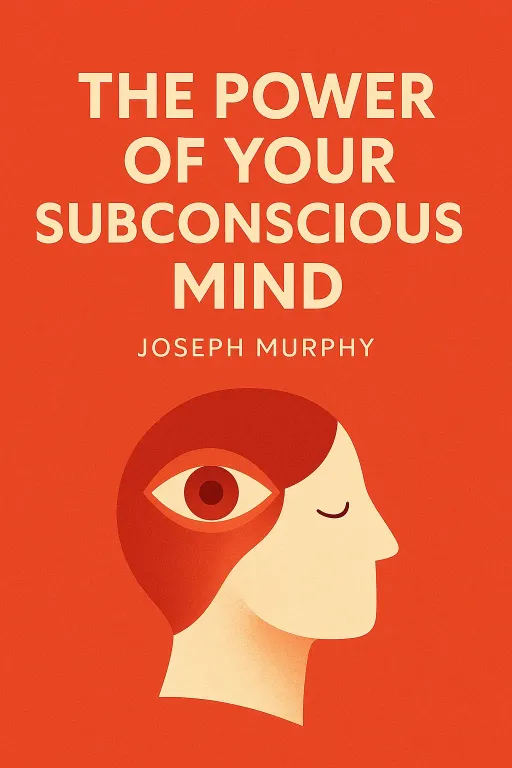
Dr. Celeste Vega: Imagine a surgeon in the 1840s performing hundreds of major operations—amputations, tumor removals, throat surgeries—with zero chemical anesthesia. Yet, his patients feel absolutely no pain, and their post-operative mortality rates are remarkably low. How? Through the sheer, untapped power of hypnotic suggestion. Welcome to another episode of Mind Over Matter. I am Dr. Celeste Vega, and today we are diving into Joseph Murphy's timeless classic, The Power of Your Subconscious Mind. But we aren't just looking at this from a philosophical angle. Joining me today is healthcare professional Tejaswi Choppakatla, whose analytical mind is going to help us bridge the gap between Murphy's extraordinary claims and real-world science. Tejaswi, welcome to the show!
Tejaswi Choppakatla: Thanks, Celeste! It is wonderful to be here. You know, when you mentioned Dr. James Esdaille's work in Bengal back in the 1840s, my clinical brain immediately started firing. Today, we look at that and think, how is that even biologically possible? But it highlights the exact premise of Murphy's book: the subconscious mind isn't just a passive storage unit for memories. It is an active, biological engine that directly influences our physical reality.
Dr. Celeste Vega: Exactly! And today, we are going to tackle this book from two very distinct, powerful angles. First, we will explore the Autonomic Alchemist—how the subconscious governs our biology, controls our healing, and how suggestion can literally alter physical tissue. Then, we will pivot to the Wealth Frequency, looking at financial literacy through a psychological lens, and unpacking the famous Law of Reversed Effort—why trying too hard actually blocks our success, and how we can reprogram our minds for abundance.
Deep Dive into Core Topic 1
SECTION
Dr. Celeste Vega: Let's start with that biological engine. Murphy writes that over ninety percent of our mental life is subconscious. While our conscious mind is busy deciding what to wear or analyzing a spreadsheet, our subconscious is quietly running the show. It is beating our heart, digesting our food, and regulating our breathing.
Tejaswi Choppakatla: Right, and from a healthcare perspective, we are talking about the autonomic nervous system. The conscious mind operates through the cerebrospinal system, which is our voluntary control. But the subconscious operates through the autonomic system, specifically the sympathetic and parasympathetic branches. When Murphy talks about the subconscious mind being 'inherently lifeward and constructive,' he is essentially describing the body's natural state of homeostasis. The body to heal. It is programmed for self-preservation.
Dr. Celeste Vega: Yes! But the problem is, our conscious thoughts can act like a wrench thrown into a highly sophisticated machine. Murphy tells this incredibly dramatic, almost terrifying story about a man whose daughter was suffering from crippling rheumatoid arthritis and psoriasis. The father was so desperate, so consumed by grief, that he repeatedly said to everyone around him, 'I would give my right arm to see my daughter cured.'
Tejaswi Choppakatla: Oh, I remember reading that case in the book. It is a classic, albeit extreme, example of how the subconscious operates without a filter.
Dr. Celeste Vega: It really is. The family was later involved in a horrific car accident. The father's right arm was torn off at the shoulder. And the moment he recovered, his daughter's arthritis and skin condition completely vanished. Now, Murphy uses this to show that the subconscious mind doesn't reason, argue, or understand jokes. It takes our deepest, emotionally charged statements as literal commands.
Tejaswi Choppakatla: It is a profound story, Celeste. If we look at it analytically, the subconscious doesn't have a prefrontal cortex to say, 'Hey, wait a minute, this is just a figure of speech.' It accepts the major premise presented to it by the conscious mind. In healthcare, we see a milder, everyday version of this with the placebo and nocebo effects. If a patient genuinely believes a treatment will heal them, their brain releases endorphins and down-regulates inflammatory pathways. Conversely, if they are convinced they are going to decline, their body responds to that negative expectation by flooding the system with cortisol and adrenaline, which actually suppresses the immune system.
Dr. Celeste Vega: That is such a brilliant connection, Tejaswi! It is like the subconscious is a master chemist. If you feed it fear and worry, it manufactures poison. If you feed it faith and harmony, it manufactures medicine. Murphy actually shares his own personal experience with this. He developed a skin malignancy—a sarcoma—that resisted conventional medical treatments at the time. He decided to apply this exact principle. He realized that the creative intelligence that built his body from a single cell knew exactly how to recreate it.
Tejaswi Choppakatla: And how did he go about impressing that on his subconscious? Because when you are staring at a medical diagnosis, it is very hard to just 'think positive.'
Dr. Celeste Vega: Absolutely. He didn't just wish it away. He used a highly structured, scientific approach. For about five minutes, two or three times a day, he would quiet his mind, relax his physical body to reduce conscious interference, and repeat a simple prayer. He affirmed that the infinite intelligence of his subconscious was transforming every cell of his skin, restoring it to its perfect, divine blueprint. And within three months, his skin was completely healed. The malignancy had entirely vanished.
Tejaswi Choppakatla: What strikes me about his method is the relaxation aspect. In clinical terms, when we quiet the mind and relax the body, we are shifting from a sympathetic 'fight-or-flight' state into a parasympathetic 'rest-and-digest' state. That is the only state in which cellular repair and immune surveillance can function optimally. If you are constantly stressed, your body literally halts healing because it thinks it is running from a predator. Murphy's technique of entering a drowsy, relaxed state essentially lowered the cognitive barrier, allowing the suggestion of wholeness to penetrate the autonomic control centers.
Dr. Celeste Vega: Yes! He calls it the 'passing-over' technique—passing the request from the conscious mind over to the subconscious. But it requires absolute mental acceptance. You can't have a civil war going on inside your head. You can't say 'I am healing' while consciously screaming 'But what if I die?'
Tejaswi Choppakatla: Exactly. The subconscious responds to the dominant belief, not just the words you are saying. It is like trying to write a new line of code on a computer while the old, corrupted program is still running at one hundred percent capacity. You have to pause the old program first.
Deep Dive into Core Topic 2
SECTION
Dr. Celeste Vega: That is the perfect transition to our second topic: wealth and financial literacy. Because if our subconscious can literally orchestrate physical healing—or physical trauma—what does it do to our financial health? Murphy argues that wealth is not a matter of luck, or even purely hard work. He says, 'Wealth is a subconscious conviction.'
Tejaswi Choppakatla: This is where personal development and financial literacy intersect in a really fascinating way. In healthcare, we talk a lot about the social determinants of health, and financial stress is one of the biggest drivers of chronic illness. So, understanding how our mental patterns affect our financial well-being is actually a health issue.
Dr. Celeste Vega: It absolutely is! Murphy points out that many people struggle financially because they harbor deep, subconscious resentments toward money. They say things like, 'Money is the root of all evil,' or they look at wealthy people and feel envy and jealousy.
Tejaswi Choppakatla: And by doing that, they are essentially telling their subconscious mind that money is a bad thing, a threat to their moral integrity. So, what does the subconscious do? It protects them from that 'threat' by making sure they never accumulate wealth! It is a self-sabotaging loop. If you condemn what you want, you will repel it.
Dr. Celeste Vega: Yes! 'You lose what you condemn.' That is a major quote from the book. If you want to attract wealth, you have to change your major premise about money. You have to view it as a symbol of exchange, of beauty, of freedom, and of progress. But here is the catch, and this is where most people fail when they try to use affirmations. They sit there and repeat, 'I am rich, I am prosperous,' but their bank account is empty, and their conscious mind is screaming, 'No, you're not! You're lying!'
Tejaswi Choppakatla: Ah, yes. The cognitive dissonance. The subconscious mind only accepts what we to be true, not just idle words. If there is a conflict between your desire and your actual belief, the belief wins every single time.
Dr. Celeste Vega: Exactly. And this brings us to one of the most important psychological laws in the book: Emil Coué's Law of Reversed Effort. When your desires and your imagination are in conflict, your imagination invariably wins.
Tejaswi Choppakatla: Can you give us a concrete example of how that works? Because 'reversed effort' sounds a bit counterintuitive.
Dr. Celeste Vega: Think of a student who has studied diligently for an exam. They know the material inside and out. But as they sit down, fear takes over. They start imagining failure. They think, 'What if I blank out? What if I fail?' They try to force themselves to remember using sheer willpower. They tense up, they sweat, they strain. But the harder they try, the more elusive the answers become. Their mind goes completely blank.
Tejaswi Choppakatla: Oh, I think we have all been there at some point! It is a terrible feeling.
Dr. Celeste Vega: It is! But the moment they walk out of the exam room, the tension dissipates. They relax. And suddenly, all the answers flow back into their mind effortlessly. That is the Law of Reversed Effort. Mental coercion and willpower actually reinforce the idea of failure because you are focusing on the obstacle rather than the solution. You are tensing up, which signals to your brain that you are in danger, shutting down your creative and memory-retrieval pathways.
Tejaswi Choppakatla: That makes total sense from a neurological perspective. When you are in a high-stress, high-effort state, your prefrontal cortex is essentially hijacked by the amygdala. You lose access to your creative problem-solving abilities. So, how do we bypass this? How did Murphy suggest we communicate our financial desires without triggering that stressful, counterproductive effort?
Dr. Celeste Vega: He suggested utilizing the 'sleepy state'—the hypnagogic state right before you fall asleep and right after you wake up. In this state, the conscious mind is highly passive. The critical, analytical filter is turned down, and the subconscious is wide open to suggestion. He tells the story of an unemployed mother of three who was completely broke, struggling to feed and clothe her children.
Tejaswi Choppakatla: That is a high-stress situation. How did she apply the technique?
Dr. Celeste Vega: She didn't try to visualize a complex scenario or force herself to believe she was a millionaire. Instead, she condensed her desire into a simple, emotionally resonant phrase: 'Thank you, Father, for my wealth.' Every night, she would get into a deeply relaxed, drowsy state, and repeat those words like a lullaby, over and over, until she fell asleep. She wasn't arguing with her current reality; she was simply cultivating the of gratitude.
Tejaswi Choppakatla: That is incredibly smart. Gratitude is a powerful emotional state because it implies that the good thing has happened. You don't say 'thank you' for something you don't have. By focusing on the feeling of thankfulness, she bypassed the conscious mind's skepticism.
Dr. Celeste Vega: Exactly! She aligned her imagination with her desire. And the outcome? Within three weeks, she ran into a former employer on the street who not only offered her a highly paid position but also gave her a temporary interest-free loan to get her back on her feet. Her subconscious mind coordinated the circumstances to bring her mental state into physical reality.
Tejaswi Choppakatla: It is like she deposited the feeling of wealth into her subconscious, and it paid compound interest. It really shows that financial literacy isn't just about spreadsheets and budgeting—though those are important tools. It starts with your psychological relationship with abundance. If you are constantly operating from a mindset of scarcity, you will make decisions based on fear, which often leads to poor financial choices. But if you operate from a state of calm resourcefulness, you see opportunities you would have otherwise missed.
Dr. Celeste Vega: Yes! The subconscious mind is like a GPS. If you program in 'scarcity and fear,' it will navigate you to dead ends and roadblocks. But if you program in 'abundance and opportunity,' it will find the route, even if the conscious mind has no idea how to get there.
Synthesis & Takeaways
SECTION
Tejaswi Choppakatla: This has been such an eye-opening conversation, Celeste. We have looked at how the subconscious mind acts as a biological healer, regulating our autonomic nervous system and responding to positive suggestion. And we have seen how those same principles apply to our financial well-being—how shifting from a state of forced willpower to relaxed, grateful imagination can break the self-sabotaging loops of scarcity.
Dr. Celeste Vega: It really comes down to harmony. When the conscious and subconscious minds are in alignment, that is when the 'miracles' happen. Sickness and poverty are abnormal states; health, harmony, and abundance are our natural blueprints.
Tejaswi Choppakatla: So, if our listeners want to start applying this tonight, what is the one actionable step they can take?
Dr. Celeste Vega: I would highly recommend Murphy's nightly ritual. Before you go to sleep tonight, when you are lying in bed and feeling drowsy, do not dwell on the worries of the day or play mental movies of what could go wrong tomorrow. Instead, quiet your mind. Condense your deepest desire—whether it is health, peace of mind, or financial security—into a short phrase. Repeat it slowly, quietly, and feelingly, like a lullaby. Let yourself drift off to sleep in that state of quiet confidence.
Tejaswi Choppakatla: 'Sleep in peace and wake in joy.' I love that. It is a simple, scientifically sound way to start rewiring your brain for a better life.
Dr. Celeste Vega: It truly is. Thank you so much, Tejaswi, for bringing your incredible analytical and healthcare perspective to this discussion. And thank you to all our listeners. Remember, the treasure house is within you. Until next time, keep monitoring your thoughts, and let your subconscious work its miracles.









