

Architect of the Self: Mastering Your Inner World
Golden Hook & Introduction
SECTION
Prof. Eleanor Hart: Imagine for a moment that your mind is like a ship. You are the captain on the bridge, consciously making decisions, setting a course. But below deck, there's a vast, powerful engine room that you never see, blindly carrying out your orders. Now, what if I told you that for most of your life, you've been giving that engine room confusing, contradictory, or even self-destructive orders without even realizing it? What if your deepest fears and anxieties are simply the result of a program you accidentally installed years ago?
Shreya: That's a powerful and slightly unsettling thought, Eleanor. It suggests a level of personal responsibility for our reality that most of us rarely consider.
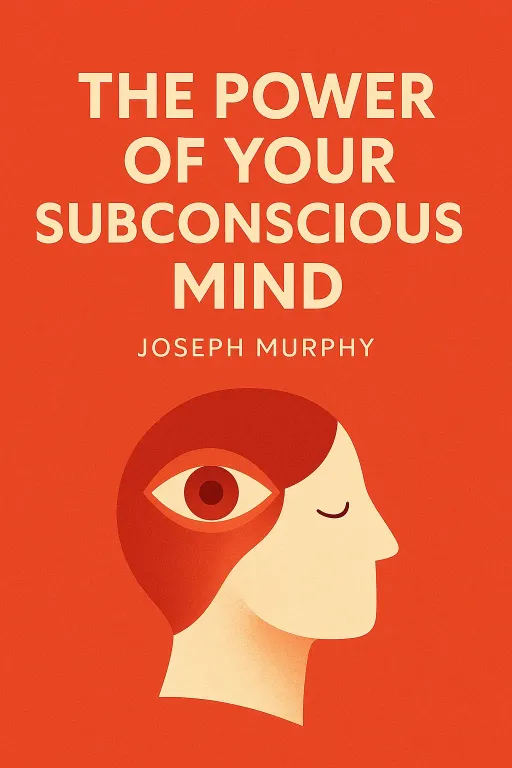
Prof. Eleanor Hart: It is. And that's the provocative idea at the heart of Joseph Murphy's classic, "The Power of Your Subconscious Mind." It’s less a book and more a user manual for that hidden engine room. And today, we're going to explore it from two powerful angles. First, we'll uncover the fundamental blueprint of the mind—this fascinating, sometimes fraught, relationship between our conscious and subconscious selves.
Shreya: And then, I'm hoping we can get practical.
Prof. Eleanor Hart: Exactly. Then, we'll open up the architect's toolkit and look at the practical techniques for actually redesigning our mental and emotional habits, to consciously build the life we want. And I'm so glad to have you here, Shreya. As a student of literature and an aspiring leader in emotional intelligence, you're perfectly positioned to help us dissect these ideas.
Shreya: I'm fascinated by the architecture of our inner lives, so this is right up my alley. I'm ready to look at the blueprints.
Deep Dive into Core Topic 1: The Hidden Engine & The Law of Belief
SECTION
Prof. Eleanor Hart: Wonderful. So, Shreya, let's start with that core duality. Murphy's big idea is that the conscious mind reasons, but the subconscious mind... it just. It doesn't argue. It's like fertile soil that will grow any seed you plant, whether it's a rose or poison ivy. The subconscious doesn't have a sense of humor, and it doesn't judge. It just executes the command.
Shreya: So it’s a powerful servant, but a dangerously literal one. It takes our habitual thoughts, our fears, our passing comments, as direct orders.
Prof. Eleanor Hart: Precisely. And Murphy gives some chilling examples of this. He tells a story about a distant relative of his. This was a man who was, by all accounts, happy, healthy, and robust. On a trip to India, he visited a crystal gazer, a seer, who told him he had a bad heart and predicted that he would die at the next new moon.
Shreya: Oh no. I can see where this is going.
Prof. Eleanor Hart: You can. The man was aghast. He called everyone in his family, told them about the prediction. He met with his lawyer to make sure his will was up-to-date. He completely accepted this suggestion as his reality. As the new moon approached, he became more and more withdrawn, a total invalid. And on the predicted date… he suffered a fatal heart attack.
Shreya: That's a chilling story, Eleanor. It's an extreme example, but it speaks directly to the power of a 'nocebo' effect, the dark twin of the placebo. From an emotional intelligence standpoint, the man's critical thinking faculty—his conscious mind—was completely bypassed by the authority and fear of the prediction. He didn't just hear the suggestion; he it. His emotional brain took over, and his body followed suit.
Prof. Eleanor Hart: It's a terrifying demonstration of the principle. The subconscious doesn't care if the premise is true or false. It just executes. But let's flip that, because the same law works just as powerfully in the other direction. Murphy also tells the story of Janet R., a talented young singer who was absolutely crippled by stage fright.
Shreya: A classic performance anxiety scenario.
Prof. Eleanor Hart: A classic. She had a wonderful voice, but she had programmed herself with failure. She told herself, “When the time comes for me to sing, I’ll sound awful. They won’t like me. I’ll be a failure.” And, of course, she was. Audition after audition, she failed. But then, she learned this principle. So, three times a day, she would go into a quiet room, relax her body, and repeat to herself, "I sing beautifully. I am poised, serene, confident, and calm." She wasn't fighting the fear; she was planting a new seed.
Shreya: She was running a new software update.
Prof. Eleanor Hart: That's the perfect analogy. And after a week of this, she went to a major audition. She was poised, confident, and gave a wonderful performance. She got the part.
Shreya: And that's the constructive application. What Janet did was essentially use what Murphy calls the 'law of substitution.' She replaced the negative programming with a positive one. This is foundational for building resilience. It's not about not feeling fear, but about having a tool to consciously introduce a more powerful, constructive thought. It's about choosing which program you want to run.
Prof. Eleanor Hart: You're no longer a passive listener to your own negative self-talk; you become an active participant in the conversation.
Shreya: Exactly. You become the programmer, not just the user. But that raises a question for me, Eleanor. If the subconscious is so literal, how do we craft suggestions that aren't dangerously ambiguous? The man who died was told he'd die, and he did. Janet was told she'd sing beautifully, and she did. The precision seems critical.
Prof. Eleanor Hart: That is an excellent point and it leads us right into the practical side of this. You can't just wish vaguely. You have to be an architect.
Deep Dive into Core Topic 2: The Architect's Toolkit
SECTION
Prof. Eleanor Hart: And that's the perfect pivot to our second topic, Shreya. If we know the subconscious is this powerful, literal engine, how do we become better captains? Murphy is clear that using conscious willpower is like trying to push the ship—it's counterproductive. He calls it the 'law of reversed effort.'
Shreya: I've definitely experienced that. The harder you try to fall asleep, the more awake you become. The more you try to be nervous, the more your hands shake.
Prof. Eleanor Hart: That's it exactly! He uses the analogy of walking a plank. If the plank is on the floor, you can walk it easily. But if you place that same plank twenty feet up in the air, your of falling takes over. Your desire to walk it is in direct conflict with your imaginative fear of falling. And Murphy's law states: when desire and imagination are in conflict, imagination invariably wins.
Shreya: That makes so much sense. It's the 'don't think of a pink elephant' problem. The effort to suppress a thought reinforces it. So, if willpower is out, what's in the toolkit? How do we get imagination on our side?
Prof. Eleanor Hart: Precisely. The tools are all about bypassing that conflict. They're about getting the conscious, argumentative mind out of the way. Let's look at the story of a young lady caught in a bitter family dispute over her late husband's will. The husband's children were suing to break the will, and she was distraught, seeing nothing but loss and conflict ahead.
Shreya: A situation where willpower and fighting would only create more stress and conflict.
Prof. Eleanor Hart: Absolutely. So, she was taught a technique from a psychologist named Charles Baudoin. The advice was to condense her desire into a short, easily memorized phrase. Her phrase was: "It is finished in divine order." Then, every night, as she was in that drowsy, sleepy state just before drifting off, she was to repeat this phrase over and over like a lullaby.
Shreya: So she's not arguing with the lawsuit. She's not visualizing legal battles. She's just implanting the feeling of a peaceful resolution.
Prof. Eleanor Hart: Exactly. She did this for about ten nights. On the morning of the eleventh day, she woke up with a profound sense of peace and a conviction that it was, indeed, finished. That very same day, her attorney called. The opposing attorney and his clients were suddenly willing to settle. A harmonious agreement was reached, and the lawsuit was dropped.
Shreya: The key there seems to be the 'drowsy state.' She's accessing her subconscious when the conscious, argumentative mind is offline. She's not arguing with the problem; she's implanting the of the solution. For someone looking to build emotional resilience, that's a powerful insight. The real work isn't done in the heat of the moment, but in the quiet moments of preparation.
Prof. Eleanor Hart: It’s about planting the seed and trusting the soil to do its work, rather than digging it up every five minutes to see if it's growing. Another powerful tool is visualization, which we saw with Janet the singer. Murphy tells a story about a man named Bob J., who had lost everything to alcoholism—his job, his family. He felt hopeless.
Shreya: A classic mental block, where the identity of 'I am an alcoholic' becomes the dominant program.
Prof. Eleanor Hart: A very powerful and destructive program. He was taught to relax and, instead of fighting the urge to drink, to fill his mind with the picture of his desired end. He imagined his daughter hugging him, saying, "Daddy, it's so good to have you home!" He didn't focus on not drinking; he focused on the feeling of being reunited with his family. He played this mental movie over and over.
Shreya: He was creating a more compelling future in his imagination than the temporary relief offered by alcohol. He was giving his subconscious a new, more desirable target to aim for.
Prof. Eleanor Hart: And over time, that new target became the dominant one. He reunited with his family, became a successful executive, and was, in Murphy's words, "radiantly happy." He re-engineered his own mind by focusing on the feeling of the wish fulfilled.
Synthesis & Takeaways
SECTION
Prof. Eleanor Hart: So, when we put it all together, we've seen two powerful ideas today. First, that our subconscious mind is a faithful, literal servant that acts on our deepest beliefs, for good or for ill.
Shreya: And second, that we can't command it with brute willpower, but we can guide it. We can become its architect through focused imagination and feeling, especially when our conscious, critical mind is relaxed and out of the way.
Prof. Eleanor Hart: It's a profound shift in perspective, from being a passenger on the ship to taking the captain's chair with a clear understanding of how the engine works.
Shreya: Absolutely. And for anyone listening who, like me, is fascinated by how to apply this, here’s a simple experiment. Don't try to solve your biggest problem overnight. That might just trigger that 'law of reversed effort' we talked about.
Prof. Eleanor Hart: A very wise point. Start small.
Shreya: Exactly. Instead, pick one simple, positive quality you'd like to feel more of—maybe it's 'calm,' 'confident,' or even just 'grateful.' For the next week, as you're falling asleep, just repeat that single word to yourself. Lull yourself to sleep with it. Feel what it would be like to embody that quality. The goal isn't a miracle; it's to observe. Observe if that small, quiet act of planting a seed changes the emotional texture of your day. It's a personal experiment in becoming the architect of your own mind.
Prof. Eleanor Hart: A beautiful and practical first step. Thank you, Shreya. That's a perfect place to end our exploration for today.









