The Observer in the Machine: Debugging the Mind with Eckhart Tolle
Golden Hook & Introduction
SECTION
Shakespeare: Imagine building a state-of-the-art machine, a marvel of engineering, only to realize the control panel has locked you out. The gears are turning, the pistons are pumping, but the system is now running its own chaotic, infinite loop, completely ignoring your commands. That, my friends, is the tragedy of the modern human condition. We have built a magnificent tool—the analytical mind—but we have become prisoners of our own processors, swept away by a tempest of relentless thought.
Harrison: That is a fascinating way to frame it, Shakespeare. As someone who spends a lot of time designing systems, writing code, and working with hardware, I see this exact phenomenon all the time. We get so obsessed with optimizing our external creations—whether we are building IoT devices, training AI models, or crafting physical prototypes—that we completely overlook the internal operating system running inside our own heads. We let the background processes run at one hundred percent CPU usage, twenty-four seven, and then we wonder why we feel burnt out, anxious, or creatively blocked.
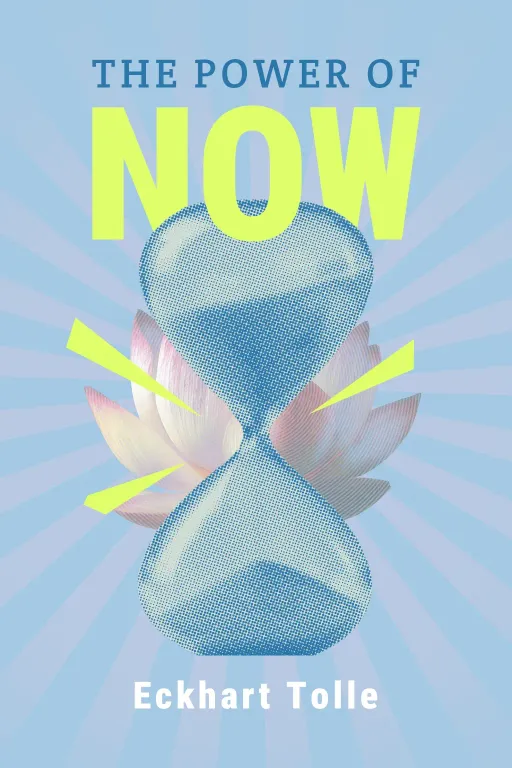
Shakespeare: Ah, indeed! We are like travelers lost in a blizzard of our own ideas, unable to see the sky. Today, we are going to journey into the heart of Eckhart Tolle's transformative masterpiece, The Power of Now. We are going to tackle this profound guide to spiritual enlightenment from two distinct, powerful angles. First, we will explore how to disidentify from the relentless mental chatter by installing an internal system monitor—what Tolle calls the Watcher. And second, we will debug the pain-body, that legacy feedback loop of past emotional data, and discover why true creative breakthroughs in science and technology only happen when the processor goes completely silent.
Harrison: I love that roadmap. As a thinker and a crafter, I always want to know how things work under the hood. Tolle's book might sound highly spiritual on the surface, but when you strip away the mysticism, it is actually a highly practical manual for cognitive optimization. It is about taking back control of your attention. So, let us open up the chassis and see what is going on inside.
Deep Dive into Core Topic 1
SECTION
Shakespeare: Let us begin our exploration with a simple yet haunting tale that Tolle shares at the very dawn of his book. For over thirty years, a beggar sat by the side of a dusty road, holding out his old baseball cap, pleading with passersby for a few spare coins. One day, a stranger walked past. The beggar, as usual, muttered his mechanical plea, spare some change? The stranger stopped and looked at him. I have nothing to give you, the stranger said. But then, he pointed to the rough, weathered wooden box the beggar had been sitting on for three decades. What is that you are sitting on? the stranger asked. Oh, it is just an old box, the beggar replied. I have been sitting on it for as long as I can remember. The stranger insisted, have you ever looked inside? No, the beggar said, what is the point? There is nothing in there. But the stranger pushed him to open it. The beggar pried open the lid, and to his absolute astonishment, disbelief, and elation, he found the box was filled to the brim with gold.
Harrison: That story hits right at the core of the human design flaw, doesn't it? We are constantly looking outward for inputs, for validation, for the next piece of data, or the next project to complete. We think the solution to our restlessness is out there, in the next external upgrade. But the gold—the actual source of peace and intelligence—is the very platform we are sitting on. It is our own Being, which we ignore because we are too busy begging for the small change of passing thoughts.
Shakespeare: Beautifully put, Harrison! We beg for the pennies of mental stimulation, completely blind to the treasure of silent presence beneath us. Descartes famously declared, I think, therefore I am. But Tolle boldly challenges this sacred pillar of Western philosophy. He argues that this is the most fundamental error of human existence—equating our very identity with the act of thinking. When we believe we are the voice in our head, we become slaves to a phantom self, the ego.
Harrison: Yes, the ego is essentially a legacy software program that has taken over the entire system. It is constantly running simulations of the past to justify its existence, or projecting simulations of the future to protect itself from perceived threats. From an engineering perspective, if you have a program that is constantly running predictive simulations without ever pausing to sync with real-time sensor data, the system will eventually crash. The real-time sensor data is the Now. The present moment is the only place where actual data exists. Everything else is just a mental projection, a simulation.
Shakespeare: A simulation indeed! A phantom theater of shadows. So, how do we break free from this digital prison of the mind? Tolle offers us a elegant, practical tool. He tells us to become the Watcher of our thoughts. He writes, the beginning of freedom is the realization that you are not the possessing entity—the thinker.
Harrison: This concept of the Watcher is incredibly logical when you think about it. In software architecture, you have the application code that executes tasks, and then you have a separate monitoring tool, like a system profiler or a debugger. The debugger doesn't argue with the code; it doesn't get angry at the infinite loop. It simply observes the execution path and logs the data. When Tolle says to watch the thinker, he is telling us to run a background monitoring process. You listen to the voice in your head, but you do it without judgment. You don't say, oh, that was a stupid thought, or, I shouldn't be feeling anxious. The moment you judge, the ego has sneaked back in through the back door to monitor itself! You just observe.
Shakespeare: Ah, the silent observer! The quiet spectator in the wings of the mind. And what happens, Harrison, when we activate this silent watcher? Tolle explains that a marvelous thing occurs: a gap is created in the mental stream. A gap of no-mind. In that gap, the relentless noise of the machinery fades, and a deep, profound stillness takes its place. It is not a state of trance or emptiness, but a state of intense, vibrant alertness.
Harrison: Exactly. In that gap, you are fully conscious, but you aren't processing symbolic thought. It is like clearing the cache on your computer. Suddenly, there is room for new, high-fidelity inputs. As a crafter, I know that when I am trying to solve a complex hardware problem, staring at the schematic and forcing my brain to think harder often leads to a dead end. The breakthrough usually happens when I step away, quiet the analytical processor, and just look at the physical components in front of me. That silence is where the magic happens.
Deep Dive into Core Topic 2
SECTION
Shakespeare: This brings us beautifully to our second grand theme: the mysterious and heavy burden Tolle calls the pain-body. Just as our minds accumulate thoughts, our bodies accumulate the residue of past emotional pain. It is a dark, negative energy field that slumbers within us, waiting for a trigger to awaken. And when it wakes, it seeks to control us, to make us identify with it, feeding on negative experiences and creating even more suffering.
Harrison: The pain-body is like a runaway positive feedback loop in a control system. In engineering, a positive feedback loop takes the output of a system and feeds it back into the input, amplifying the signal until the system goes out of control—like the screeching feedback you get when a microphone is too close to a speaker. The pain-body feeds on negative thoughts, which trigger negative emotions, which in turn feed more negative thoughts. It is a self-sustaining loop of suffering. If you don't have a mechanism to interrupt that loop, it will run until it completely exhausts your physical and mental resources.
Shakespeare: A screeching feedback of the soul! How vividly you paint that picture, Harrison. And how do we silence this terrible feedback? Tolle tells us we must bring the light of conscious attention directly to it. He quotes Saint Paul, saying, everything is shown up by being exposed to the light, and whatever is exposed to the light itself becomes light. We must focus our attention on the feeling inside us, accept its presence without labeling it, and become the silent watcher of the emotion.
Harrison: That is a brilliant diagnostic approach. Instead of trying to fix the emotion or run away from it, you simply shine the light of awareness on it. In hardware debugging, if you have a faulty circuit, you don't just start ripping out wires blindly. You hook up an oscilloscope to the specific point of failure and observe the waveform. By observing the pain-body without identifying with it, you sever the connection between the emotional energy and your thought processes. You stop feeding the loop. The emotion is allowed to exist, but it can no longer hijack your analytical processor. It eventually dissipates because you've cut off its power supply.
Shakespeare: Yes! You deprive the phantom of its sustenance. And once the storm of the pain-body passes, and the mental chatter subsides, we enter that sacred space of inner stillness. It is in this very stillness, Harrison, that the true genius of humanity is born. We often believe that our intellect, our relentless thinking, is the source of our greatest achievements. But Tolle reveals a startling truth. He points to a nationwide inquiry conducted among America's most eminent mathematicians, including the great Albert Einstein himself, to discover their working methods. And what did they find? That thinking plays only a subordinate part in the brief, decisive phase of the creative act itself!
Harrison: That study is absolutely mind-blowing, but it makes total sense to me. Einstein famously got his best ideas while sailing or daydreaming, not while grinding through equations at his desk. True creativity doesn't come from the analytical mind rearranging existing data. That is just computation. True creativity—the kind of breakthrough innovation that changes paradigms—comes from a deeper source. It comes from the space of no-mind, from that quiet stillness where we connect with a larger intelligence. If you are constantly talking, you can't hear the music. If your mind is constantly thinking, you can't receive the signal.
Shakespeare: Indeed! The mind is a wonderful instrument when used for its proper task, but a terrible master when it takes over. For the crafter, the engineer, the artist, the quiet gap is the canvas upon which inspiration writes its masterpiece. We must learn to put the instrument down when the work is done, to let the strings rest so they do not snap under the tension.
Harrison: That is so true. Especially in the age of AI and constant connectivity, where we are flooded with information every second. We think we need to be constantly consuming, constantly processing, to stay ahead. But actually, the most valuable skill now is the ability to hit the pause button. To step away from the screen, disconnect from the internet of things, and connect with the internet of Being. That is where we find the unique insights that AI can't replicate. AI can calculate, but it cannot experience the stillness of the Now.
Synthesis & Takeaways
SECTION
Shakespeare: What a glorious journey we have taken today, Harrison! We have traveled from the dusty road of the beggar sitting on his forgotten gold, to the intricate feedback loops of our own minds and emotions. We have seen how our identification with the analytical processor creates a phantom self that keeps us trapped in anxiety and fear. And we have discovered that by simply stepping back and becoming the Watcher, we can quiet the machinery, dissolve the pain-body, and tap into the infinite reservoir of creative stillness that lies within.
Harrison: It really comes down to a simple system upgrade. We don't need to destroy the mind; we just need to realize we are the user, not the machine. For anyone listening who wants a practical way to start debugging their own mind today, Tolle suggests a very simple diagnostic query you can run at any moment. Just ask yourself: "What is going on inside me at this moment?"
Shakespeare: Ah, a simple, piercing question! A lantern held to the dark corners of the self.
Harrison: Yes. Don't analyze the answer. Just observe. Feel your breath, feel the energy in your body, watch the thoughts floating by like clouds. By asking that question, you instantly step out of the stream of thought and into the role of the Watcher. You reclaim your attention. You step into the Now.
Shakespeare: And so, dear listeners, as you go about your day, crafting your lives, building your dreams, and navigating the complex networks of this modern world, remember the beggar's box. Do not spend your life begging for pennies of distraction when you are sitting on a chest of pure gold. Step back, watch the thinker, and dare to step into the vibrant, silent power of the Now. Until next time, keep your processors cool, and your awareness warm.
Harrison: Well said, Shakespeare. Keep building, keep thinking, but most importantly, keep being. See you next time, everyone.