Unlocking Intuition: Leading with Inner Wisdom
Golden Hook & Introduction
SECTION
Nova: Alright, Atlas, quick game. I'll give you a scenario, you tell me the first thing that comes to mind. Ready?
Atlas: Oh, I like that. Always ready for a mental workout, Nova. Hit me.
Nova: You're leading a critical project, massive budget, high stakes. Suddenly, an unforeseen problem erupts – data's corrupted, a key team member is out, the market just pivoted. Your carefully crafted plan is now… useless. What's your immediate, gut-level response?
Atlas: Oh, man. My immediate, gut-level response? Probably a primal scream into a pillow, followed by a frantic search for the nearest caffeine IV drip. Honestly, it’s usually a mix of panic, trying to recall every protocol, and then just… that feeling of being completely overwhelmed.
Nova: Exactly! That overwhelm, that scramble to find a logical solution when logic just got thrown out the window. But what if there was another way? What if, in that exact moment, your calmest, most insightful answer was already there, just waiting for you to access it?
Atlas: I mean, that sounds rough, but isn't that just wishful thinking? In those high-pressure scenarios, it feels like it's all about quick, rational problem-solving, not some mystical 'inner voice.'
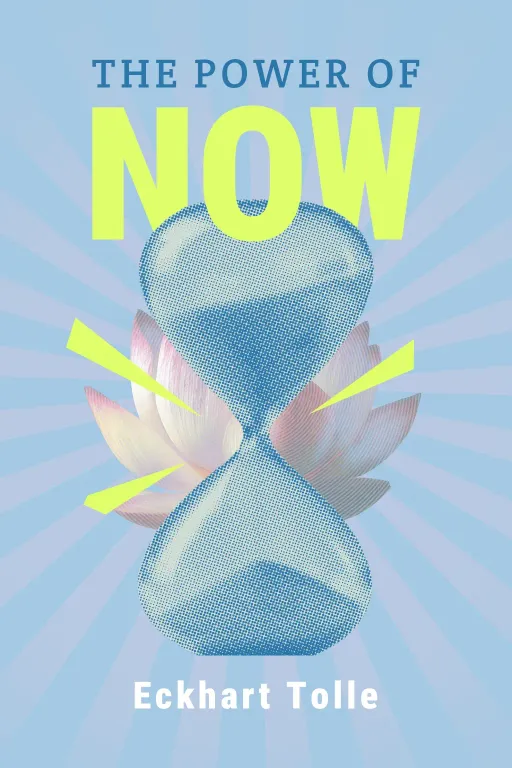
Nova: Well, that's exactly what we're challenging today. We're diving into how to unlock that 'inner voice,' that intuitive wisdom, with insights from two absolute titans: Eckhart Tolle's "The Power of Now" and Mihaly Csikszentmihalyi's "Flow: The Psychology of Optimal Experience." What’s fascinating about these works is that Tolle, a spiritual teacher, and Csikszentmihalyi, a psychologist, both arrive at similar conclusions about the power of present-moment awareness, just from wildly different angles. Tolle, for instance, had a profound spiritual awakening that fundamentally reshaped his view on consciousness, leading him to write a book that has resonated with millions globally, though it has also sparked debate among those who find its spiritual focus too abstract for practical application.
Atlas: Hold on, so we're talking about a spiritual guru and a psychologist, both informing leadership? That sounds a bit out there for strategic leaders who are all about data and metrics. What connects them, and how does it help someone trying to build a legacy, not just find inner peace?
The Inner Compass: Cultivating Presence and Flow for Intuitive Leadership
SECTION
Nova: That's the beautiful paradox, Atlas. What connects them is the profound impact of presence and engagement on our ability to access deeper insight. Tolle, in "The Power of Now," isn't just about meditating under a tree. He’s asserting that true power, true insight, arises from being fully in the present moment. He argues that most of our mental energy is spent either rehashing the past or anticipating the future, creating a constant hum of mental noise that drowns out our innate wisdom.
Atlas: So basically, our brains are just glorified time machines, constantly zipping back and forth, and that's blocking our intuition? But leaders need to plan for the future, right? They need to learn from the past. How do you reconcile that with 'living in the now'?
Nova: That's a great question, and it speaks to a common misconception. Tolle isn't advocating for a lack of planning or reflection. He's talking about the behind those activities. When you're planning, are you doing it from a place of calm, focused presence, or from a place of anxiety about what happen? When you're reflecting, are you learning from the past, or are you dwelling in regret? The former sharpens intuition; the latter dulls it. He points out that the 'pain-body' – the accumulation of past emotional pain – can hijack our present, making our responses reactive rather than insightful.
Atlas: Okay, so it’s about the of our attention, not necessarily avoiding planning altogether. I can see that. For leaders building a legacy, you can't be constantly caught in the emotional drama of what went wrong last quarter, or what might go wrong next quarter. But what about Csikszentmihalyi’s 'Flow'? How does that tie into this present-moment intuition?
Nova: Ah, 'Flow' is the experiential twin to Tolle's presence. Csikszentmihalyi, a pioneer in positive psychology, observed that people achieve peak performance and profound satisfaction when they are completely immersed in an activity. This state, which he termed 'flow,' is characterized by intense focus, a sense of timelessness, and a feeling of being at one with the task. It's when the challenge perfectly matches your skill level, and you're receiving immediate feedback. Think of a surgeon in a complex operation, an athlete in the zone, or a musician lost in their performance. They aren't thinking about dinner or their mortgage; they are utterly present.
Atlas: Right, like when you're so engrossed in something that hours fly by, and you feel incredibly alive. I get that feeling when I'm really digging into a complex problem, and the solution just… emerges. It’s like the answer was always there, I just needed to get out of my own way.
Nova: Exactly! That 'getting out of your own way' is the intuitive understanding and immediate feedback Csikszentmihalyi talks about. When you're in flow, your conscious mind, with its endless analysis and self-doubt, takes a backseat. Your subconscious, your intuition, takes the wheel, guiding you with an efficiency and creativity that logical thought often can't match. For a strategic leader in a complex environment, needing swift, insightful decisions, cultivating these flow states isn't just a nice-to-have for personal well-being; it's a strategic imperative. It’s about being so deeply engaged that you intuitively sense the next right move, even when the data isn't complete.
Atlas: That’s actually really inspiring. I imagine a lot of our listeners, especially those managing high-pressure teams, probably experience moments of flow without even realizing it – they call it 'being in the zone' or 'getting things done.' But how do you create more of those moments? It feels like flow just… happens.
Your Intuitive Edge: Practical Application for Leaders
SECTION
Nova: That's the million-dollar question, and it's where the practical application for leaders comes in. Csikszentmihalyi's research suggests that flow isn't purely accidental. It has specific triggers. We achieve flow when there's a clear goal, immediate feedback, and a balance between perceived challenges and our own skills. For leaders, this means designing their work, and their team's work, with these elements in mind.
Atlas: So basically, leaders need to become architects of flow? How does that work in a chaotic business environment where goals are shifting and feedback isn't always immediate?
Nova: It requires a shift in mindset. First, it’s about clarity. A leader needs to ensure their team has clear, understandable goals, not just vague objectives. Second, it’s about feedback loops. Build in regular, constructive feedback – not just annual reviews, but real-time check-ins, even automated data dashboards, that show progress. Third, it's about skill-challenge balance. Are you giving your team members tasks that are too easy, leading to boredom, or too hard, leading to anxiety? The sweet spot is where the challenge stretches their abilities just enough to engage them fully. This also applies to the leader themselves.
Atlas: Okay, so if I'm a leader striving for collective success and building resilient teams, how does my intuitive edge benefit from this? How do I create more moments of flow in my leadership role to better tap into insights? Because frankly, sometimes I feel like I'm just putting out fires, not orchestrating flow.
Nova: That’s a critical point, Atlas. For the leader, it starts with mindset. Trusting your intuition more is paramount. Your insights powerful, but they get buried under analysis paralysis or fear of being wrong. Leading from a place of calm, as Tolle suggests, means creating space for those insights to surface. This could be as simple as scheduling 'thinking time' without distractions, taking short mindful breaks, or even starting meetings with a moment of silence. These aren't just wellness practices; they're intuition-honing practices.
Atlas: So, it's not about abandoning data, but about creating the mental space to actually that data with deeper insight, rather than just reacting to it. And I suppose 'practicing active listening' ties into this, too? Truly hearing your team?
Nova: Absolutely. Active listening is a flow state in itself. When you're truly present with another person, not formulating your response, not checking your phone, not distracted by your own thoughts, you're in a mini-flow state. You're receiving immediate feedback – their tone, their body language, the nuances of their words. This builds deeper trust, yes, but it also allows you to intuitively grasp unspoken concerns, opportunities, or team dynamics that purely logical analysis might miss. It’s about sensing the emotional current beneath the words. That’s your intuitive edge at play.
Atlas: That's a great way to put it. It’s like when you’re really listening, you don’t just hear the words, you hear the music behind the words. And for leaders trying to see beyond the horizon, to develop strategic foresight, that kind of intuitive understanding of people and situations seems invaluable.
Synthesis & Takeaways
SECTION
Nova: Precisely. We often think of intuition as this vague, unreliable 'gut feeling,' but what Tolle and Csikszentmihalyi show us is that it's a highly refined, deeply informed process that emerges from presence and deep engagement. For the strategic leader, the empathic influencer, the visionary builder, unlocking intuition means cultivating a mindset where you are fully present, allowing yourself to enter 'flow' states, and trusting that inner wisdom. It’s about understanding that the calm, insightful decisions you need to make in complex environments aren't found by frantically searching outside, but by mastering your inner compass. It's about leading from a place of calm, seeing beyond the immediate, and inspiring lasting change by tapping into a profound, often overlooked, source of wisdom.
Atlas: So basically, you're saying that the path to transformational leadership, to building that legacy, isn't just about external strategy and metrics, but also about the internal landscape – our ability to be present, to find flow, and then to trust that deep knowing. It's equipping yourself with an internal GPS that works even when all the external maps are outdated.
Nova: Exactly. It's about giving yourself permission to slow down enough, paradoxically, to speed up your insight. It’s a powerful invitation for leaders to reclaim their inner wisdom as their most valuable asset.
Atlas: That’s actually really inspiring. I think a lot of leaders will find that incredibly liberating, to know that their 'gut' isn't just random, it's a sophisticated instrument waiting to be tuned.
Nova: Indeed. And it’s a journey, not a destination. The more you practice presence and seek flow, the sharper your intuitive edge becomes. What a profound way to lead.
Atlas: It really is. Thank you, Nova, for shedding light on these powerful ideas.
Nova: My pleasure, Atlas. This is Aibrary. Congratulations on your growth!