The Pressure Cooker: Navigating Stress with Strategic Calm.
Golden Hook & Introduction
SECTION
Nova: Atlas, quick, first word that comes to mind when I say 'stress'?
Atlas: Badge.
Nova: Interesting. How about 'achievement'?
Atlas: Burnout.
Nova: And 'calm'?
Atlas: Strategic.
Nova: Strategic. I love that. Because today, Atlas, we're unpacking a really thought-provoking concept from a piece of content we've titled 'The Pressure Cooker: Navigating Stress with Strategic Calm.' It's a title that promises to flip our understanding of high performance on its head.
Atlas: And it absolutely delivers. This piece delves into profound insights from two giants in the field: Jon Kabat-Zinn, known for his pioneering work in bringing mindfulness into mainstream medicine at the University of Massachusetts Medical School, and Eckhart Tolle, whose spiritual teachings on present moment awareness have resonated with millions globally, making complex ideas incredibly accessible.
Nova: What's fascinating about both these thinkers is how they bridge the gap between ancient wisdom and modern challenges. Kabat-Zinn, a molecular biologist by training, really grounded mindfulness in a scientific context, making it palatable for a Western audience that often shies away from anything that smells too 'woo-woo.'
Atlas: That makes sense. It’s not about escaping reality, but about fully inhabiting it. And that brings us right to the core of why so many of us find ourselves in such a pressure cooker to begin with.
The Blind Spot: Stress as a Misguided Badge of Honor
SECTION
Nova: Exactly. Because for so many high-achievers, there's this blind spot. We've been conditioned to see stress almost as a badge of honor, haven't we? It's that feeling that if you're not constantly overwhelmed, you're not working hard enough, not pushing enough, not achieving enough.
Atlas: Oh, I know that feeling. I imagine many of our listeners, the ones who are constantly pushing boundaries, driving innovation, juggling complex projects and personal commitments, feel this deeply. It’s almost built into the system, this expectation of constant, almost heroic effort.
Nova: It's a powerful cultural narrative, isn't it? We see leaders bragging about their 80-hour work weeks, skipping meals, running on fumes, and it's celebrated. But what the content highlights is that this often leads to burnout and, crucially, less effective decision-making. You might be missing the power of pausing.
Atlas: That sounds rough, but how do you distinguish between the 'good' stress that sharpens us and the 'bad' stress that breaks us, especially when you're expected to deliver constantly? For someone navigating complexity, that line can feel incredibly blurry.
Nova: Well, the content suggests it’s not stress itself, but our to it and the that's the problem. Think of it like a high-performance engine. It can handle incredible output, but if you never turn it off, never refuel, never do maintenance, it's going to seize up. Fast. This 'badge of honor' can actually be a hidden vulnerability.
Atlas: Wow. So the very thing we think is making us strong, that relentless push, is actually making us fragile. That’s a powerful reframing. It makes me wonder about all those times I've pushed through, thinking I was being resilient, when maybe I was just being… well, self-destructive.
Nova: Right? It’s about moving from reacting impulsively to responding thoughtfully. When you're in that constant state of high-stress, your prefrontal cortex, the part of your brain responsible for rational thought and long-term planning, actually starts to shut down. You become more reactive, more prone to mistakes, less creative.
Atlas: So it's not just about feeling better, it’s about performing better, too. It’s a strategic disadvantage to be constantly stressed, not a sign of dedication.
Nova: Precisely. And that naturally leads us to the second key idea, which often acts as a counterpoint to what we just discussed.
The Strategic Shift: Cultivating Presence for Peak Performance
SECTION
Nova: Many of us, especially those juggling high-stakes professional roles and demanding personal lives, often feel the need for a 'reset button' during a chaotic day. We wish we could just hit pause.
Atlas: Oh, absolutely. Especially when you're balancing complex projects, leading teams, and then trying to be fully present for your family. It feels like you're constantly pulled in a dozen directions at once. It's exhausting.
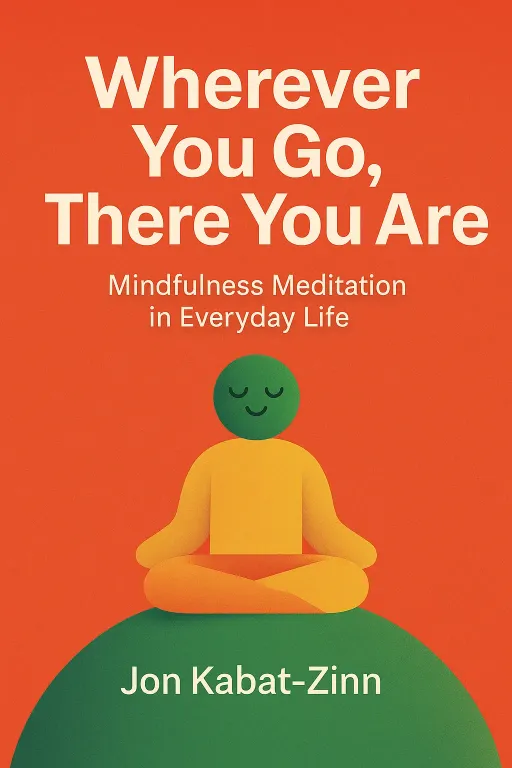
Nova: And that's where Jon Kabat-Zinn's work from "Wherever You Go, There You Are" becomes so potent. He introduces mindfulness not as some esoteric practice, but as a fundamental way of being. It’s about bringing awareness to each moment, reducing stress and enhancing clarity. It's not about escaping reality, but about fully inhabiting it.
Atlas: So it’s not about meditating for an hour a day, then? For someone navigating complexity and a packed schedule, like many of our listeners, that sounds more achievable than a full retreat. Can you give an example of how this 'presence' translates into a tangible advantage in a high-stakes scenario?
Nova: Think of a leader facing a critical, high-pressure negotiation. Instead of rushing in, fueled by caffeine and anxiety, they take three intentional, mindful breaths before stepping into the room. That small pause, that moment of presence, allows them to observe their internal state, to listen more actively, to choose their words more deliberately, rather than reacting from a place of fear or aggression. They're responding thoughtfully, not impulsively.
Atlas: That's a great example. It's like creating a tiny, internal buffer zone. And then we have Eckhart Tolle, whose "The Power of Now" takes this even further, arguing that true peace and effectiveness come from living purely in the present moment.
Nova: Exactly. Tolle provides guidance on how to escape the mental traps of past regrets and future anxieties. Imagine a project manager who, instead of replaying a past mistake from a previous project or catastrophizing about a future presentation, focuses entirely on the current conversation with a team member. They're fully present, truly listening, and as a result, they offer a more empathetic, insightful, and effective solution.
Atlas: That gives me chills. Thinking about those 'mental traps' – I imagine many listeners are nodding right now, recognizing how much mental energy gets drained by regretting yesterday or worrying about tomorrow. How do these insights actually help us respond thoughtfully rather than react impulsively when the pressure is on, especially when the stakes are incredibly high?
Nova: By cultivating presence, you essentially create a 'space' between stimulus and response. Most of us operate on autopilot, reacting instantly. But with presence, you get to choose your response. It's like upgrading your internal operating system from a clunky old model that crashes under pressure to a sleek, efficient one that processes information with calm clarity. It allows you to pause, observe, and then choose the most effective path forward.
Atlas: So, it's not just about managing stress; it's about fundamentally changing the way you operate, the way you engage with the world and your work. It's about being more intentional, more effective, and ultimately, more fulfilled.
Synthesis & Takeaways
SECTION
Nova: Absolutely. It’s about bringing these two powerful ideas together: moving from seeing stress as a badge of honor to embracing calm as a strategic imperative. It's not about avoiding challenges, but about responding to them with greater clarity, creativity, and effectiveness.
Atlas: So, the deep question from the book, 'Where in your day could you intentionally create a small moment of mindful pause?' feels incredibly relevant here. It’s not about grand gestures, but about micro-interventions, isn't it? Small, consistent practices.
Nova: Exactly. It’s about recognizing that true effectiveness, especially for those driven to make a significant impact, comes from embracing the dance between professional ambition and personal presence. Both can thrive, but only when we consciously choose strategic calm.
Atlas: I imagine a lot of our listeners, who are constantly balancing big-picture innovation with the day-to-day demands, are looking for ways to foster that potential, not just in their work, but in their personal lives too. This isn't just about professional output; it's about personal well-being amidst demanding roles, like parenting, which adds another layer of complexity.
Nova: Absolutely. It's about building a future where peak performance and inner peace aren't mutually exclusive. We invite you to find that moment today, even if it's just for 60 seconds. Observe your breath, notice the sounds around you, feel your feet on the floor. Just one small, intentional pause.
Atlas: And share your thoughts with us! How do you create those micro-pauses in your demanding day? We'd love to hear your strategies and how they transform your experience.
Nova: This is Aibrary. Congratulations on your growth!