Stop Rushing, Start Living: Your Guide to Calm Focus
Golden Hook & Introduction
SECTION
Nova: Atlas, I’ve got a challenge for you today. Our guide to calm focus, this book we’re diving into, how would you sum it up in exactly five words?
Atlas: Oh, I love this! Five words… hmm. Okay, here it goes: "Stop. Breathe. Focus. Live. Thrive."
Nova: Wow, "Stop. Breathe. Focus. Live. Thrive." That’s actually incredibly concise and powerful. And you’ve perfectly captured the essence of what we’re exploring today, which is truly a guide to calm focus. We're talking about the core ideas behind a little book called "Stop Rushing, Start Living," which draws heavily from some profound thinkers.
Atlas: So this isn’t just some fluffy self-help book then? Sounds like it’s got some serious intellectual weight behind it.
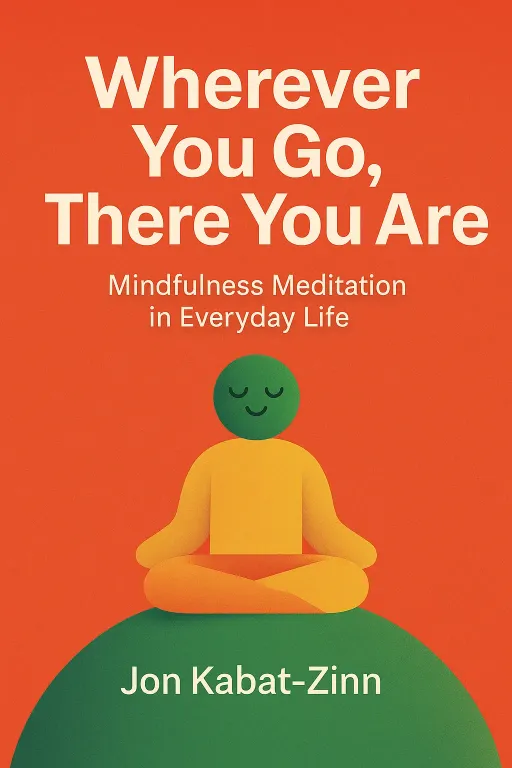
Nova: Absolutely. Today, we're particularly looking at the wisdom from two giants in this space: Jon Kabat-Zinn, with his seminal work "Wherever You Go, There You Are," and Eckhart Tolle, author of "The Power of Now." What's fascinating about Kabat-Zinn, for instance, is his background. He wasn't some spiritual guru from the Himalayas; he was a molecular biologist at MIT who brought mindfulness into mainstream medicine, making it secular and accessible. He really grounded these practices in science, which is a powerful starting point.
Atlas: A molecular biologist teaching mindfulness? That’s unexpected for a mindfulness guru. But it also sounds incredibly practical, which I appreciate.
Nova: Exactly. And that practicality is precisely where we're starting today. It brings us to this first core idea: mindfulness as a trainable skill for present moment awareness.
Mindfulness as a Skill: The Art of Present Moment Awareness
SECTION
Nova: Many of us feel constantly pulled in a million different directions, right? Our brains are always buzzing—future deadlines, past mistakes, what we need to do next, what we forgot to do yesterday. This leads to stress, less effective work, and a feeling of being perpetually overwhelmed.
Atlas: Oh, I know that feeling. It’s like my brain has twenty tabs open, all playing different, slightly annoying music at once. For anyone managing high-pressure teams or trying to hit ambitious growth targets, that mental clutter is a constant battle.
Nova: Precisely. And Kabat-Zinn’s brilliance is in showing us that mindfulness isn't an exotic practice reserved for retreats. It’s about paying attention, on purpose, in the present moment, without judgment. It’s a simple shift, but it can radically reduce stress and dramatically improve focus.
Atlas: But wait, isn’t "not judging" almost impossible when you're trying to perform at a high level? My brain is literally paid to judge, analyze, and strategize. If I suddenly stop judging, am I just… letting things slide?
Nova: That’s a crucial distinction, Atlas. Non-judgment isn't about ignoring problems or becoming passive. It’s about observing your thoughts those problems without getting entangled in the emotional spiral they often create. Imagine you're standing on a riverbank, and your thoughts are like leaves floating by. You can observe them, notice their shape and speed, but you don't have to jump in and swim with every single one.
Atlas: Ah, so it’s about creating a little distance, a little space, between me and the thought itself. That actually makes a lot more sense. It’s not about absence of thought, but absence of to every thought.
Nova: Exactly. It’s cultivating a quiet awareness, a mental clarity that allows you to choose where to place your attention, rather than being dragged along by every passing thought. This simple shift is a skill, and like any skill, it can be developed.
Atlas: Okay, so just breathing, that’s it? How does five minutes of help someone juggle three projects, a presentation next week, and the constant pressure of strategic growth? It feels almost too simple to be effective in such a demanding environment.
Nova: It feels simple, but its power is cumulative. Think of it like a tiny, consistent workout for your attention muscle. For the next five minutes, simply notice your breath. Don't try to change it; just observe it as you go about your day. That seemingly small act, repeated, starts to build your capacity for conscious attention. It’s not about instantly solving all your problems, but about building the foundational resilience and focus that allows you to approach those problems with greater calm and clarity. It’s about training your mind to be present when it truly matters.
Atlas: I can see how that would be beneficial. It’s not a magic bullet, it’s a foundational practice. And that naturally leads us to another profound insight, one that Eckhart Tolle illuminates so powerfully in "The Power of Now." If Kabat-Zinn teaches us to be in the present, Tolle really shows us it's the only place to truly live.
The Power of Now: Escaping the Past-Future Trap
SECTION
Nova: Tolle emphasizes that true power resides in the present moment. He argues that dwelling on the past, whether it's regrets or past successes, or constantly worrying about the future, drains our energy. It prevents us from genuinely engaging with life and work right now.
Atlas: That sounds rough, but for someone driven by future impact, isn't planning and learning from the past absolutely essential? Are you suggesting we just… ignore our strategic plans and lessons learned? That sounds a bit out there for someone trying to strategically grow and make a long-term impact.
Nova: That’s a common misconception about Tolle’s work. He’s not advocating for abandoning planning or learning from experience. The energy drain comes from with the past or the future, from allowing your mind to be perpetually lost in what was or what might be, rather than what.
Atlas: So, the power isn't in ignoring the future, but in bringing our full attention to the we're taking right now towards that future?
Nova: Exactly. Think of it like driving a car. You check your rearview mirror occasionally for the past, and you look at the road ahead for the future, but your hands are on the wheel. Your focus needs to be on the immediate action. If you’re constantly fixated on the destination, you might miss the turns, the hazards, or even the beauty of the journey right in front of you.
Atlas: That’s a great analogy. It’s about being present the planning, present the execution. It’s not about becoming reactive, it’s about becoming fully engaged with the current reality of the work.
Nova: Yes. For the diligent student, the growth-seeker, or the balanced achiever, this means that even when you’re executing a strategic plan, you’re fully present in action. When you’re learning from a past mistake, you’re fully present in reflection. The energy doesn't get siphoned off by anxiety or regret, but channeled into effective engagement. Nova’s Take really sums it up: These insights show that conscious attention is a skill. It can be developed to bring calm and clarity to your daily efforts, whether you're planning, executing, or simply resting.
Synthesis & Takeaways
SECTION
Atlas: I imagine a lot of our listeners, especially those juggling multiple ambitions and trying to make a significant impact, might still feel like these concepts are for monks in a monastery, not for them in their high-stakes, fast-paced lives. But what's the real, tangible benefit for the diligent student or the growth-seeker who's trying to make a long-term impact?
Nova: The tangible benefit is profound, Atlas. It's about sustainable energy and higher quality output. It’s not about slowing down your ambition; it's about fueling that ambition more effectively. When you cultivate present moment awareness, you’re not just reducing stress; you’re building resilience. You’re protecting your energy for the long haul.
Atlas: So, it’s about working smarter, not just harder, by bringing a calm focus to everything we do. That’s actually really inspiring, especially for those of us who constantly feel the pressure to do more, faster.
Nova: Absolutely. It transforms the grind into a focused effort. And that tiny step we mentioned earlier—simply noticing your breath for five minutes—it's not just a breathing exercise. It's an entry point into this profound practice. It's a way to schedule dedicated self-care time, to protect your energy, and to embrace self-compassion, not as a luxury, but as a critical component of high performance and long-term well-being. It helps you sustain your focus and well-being, building resilience for the long haul.
Atlas: That makes so much sense. It connects the dots between mindfulness and actual, practical, sustainable achievement.
Nova: It’s about being fully present in the journey, not just fixated on the destination. And that, truly, is where the power lies.
Atlas: So, for our listeners, I’d say give that tiny step a try. For five minutes, just notice your breath. Don't change it, just observe it. And tell us what you notice. We’d love to hear your experiences as you start to cultivate that calm focus in your own lives.
Nova: This is Aibrary. Congratulations on your growth!