Beyond the Grind: Cultivating Inner Peace in a Hectic World
Golden Hook & Introduction
SECTION
Nova: Atlas, five words. Give me your take on cultivating inner peace in a hectic world.
Atlas: Ugh. Sounds like more work. Impossible, right?
Nova: Impossible? Or just profoundly misunderstood? Today, we’re diving into a fascinating concept that underpins so much of what we discuss here at Aibrary: 'Beyond the Grind: Cultivating Inner Peace in a Hectic World.'
Atlas: Okay, so you’re telling me that the secret to inner peace isn't escaping to a remote island, but… finding it in the midst of the chaos? That’s a bold claim.
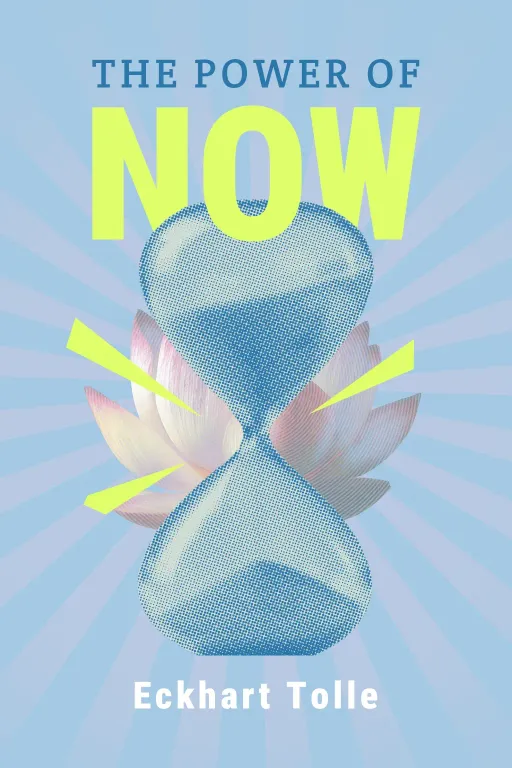
Nova: It is, and what’s even more intriguing is how two figures from radically different worlds arrive at the same conclusion. We’re talking about the spiritual wisdom of Eckhart Tolle, whose work like "The Power of Now" became a global phenomenon, alongside the scientific, secular approach to mindfulness from Jon Kabat-Zinn, who essentially brought meditation into hospitals and boardrooms.
Atlas: That’s interesting. A spiritual teacher and a scientist. It makes me wonder if there’s a universal truth they’re both tapping into. What’s the common thread that binds their insights about peace in a world that never stops?
The Relentless Hum of Anxiety and the Stolen Present
SECTION
Nova: Exactly, Atlas. And that common thread starts with a feeling many of our listeners know all too well: the relentless hum of anxiety. It’s that underlying buzz, that constant undercurrent of unease, even when things are objectively going well.
Atlas: Oh, I know that feeling. It’s like you’re always anticipating the next thing, always planning three steps ahead. It feels productive, but it’s exhausting.
Nova: It absolutely does feel productive. It’s the very engine of the grind culture, isn't it? We’re constantly pursuing goals, optimizing, strategizing for the future. And while that drive for mastery and impact is commendable, it often comes at a hidden cost.
Atlas: What kind of cost are we talking about? Because for many of us who are building, creating, driving towards a vision, that future-focus is essential. How can you be an efficient entrepreneur if you’re not planning?
Nova: It’s not that planning is inherently bad. The issue arises when that constant future-planning becomes the mode of operation. It’s like a high-performance engine constantly redlining without ever shifting gears. It’s running, it’s powerful, but internally, there’s unseen wear and tear. This constant mental projection robs us of our present peace, making us feel overwhelmed or disconnected from our inner selves.
Atlas: So, it’s not about planning, but about we plan, and the mental state we’re in while we do it? Because for someone in a high-stakes environment, being constantly in the future, anticipating challenges, making strategic moves… that’s how you survive, that’s how you thrive.
Nova: Precisely. It’s about recognizing that this constant mental hum, this anxiety, isn't a badge of honor for being busy. It’s a call to cultivate a deeper, more grounded existence. Think of a visionary leader, so caught up in the grand future vision that they miss the subtle, critical signals in the present moment – the changing market, a key team member’s struggle, a fleeting creative insight. That relentless pursuit can actually dull your present awareness, making you less effective, not more.
Atlas: That makes sense. It’s like you’re so focused on the destination, you’re missing the actual road. And if you miss the road, you might not even get to that destination in the first place, or you’ll arrive completely burnt out.
Practical Pathways to Present Moment Awareness
SECTION
Nova: Exactly. And this is where the profound insights from Eckhart Tolle and Jon Kabat-Zinn offer not just philosophy, but a practical counter-strategy. Tolle’s work, "The Power of Now," centers on this radical idea: true happiness and enlightenment can only be found by living fully in the present moment.
Atlas: That sounds… almost too simple. For someone who’s used to optimizing every single second, the idea of just 'being' in the present feels like a luxury I can’t afford. How does that translate to real-world impact?
Nova: It’s not about being passive, Atlas. It's about where your attention resides. Tolle suggests that our minds are often trapped in the past, replaying regrets, or in the future, consumed by worries or anticipation. When we’re fully present, we access a different kind of power. This isn't just spiritual fluff either; Kabat-Zinn, a scientist, introduces mindfulness as a practical, secular approach to stress reduction and self-awareness.
Atlas: Okay, so this isn't just about sitting on a cushion and chanting, right? How does a high-stakes business leader integrate 'the power of now' without losing their edge? Is it a competitive advantage, or a distraction from the real work?
Nova: It's actually a profound competitive advantage. Kabat-Zinn emphasizes that peace isn’t found by escaping, but by fully inhabiting your present experience. Think of a seasoned athlete. They perform their best not when they’re dwelling on a past mistake or worrying about the final score, but when they are completely present in the game, responding to each moment with clarity and focus.
Atlas: I can see that. That’s a great analogy. Being fully present in a negotiation, or a brainstorming session, or even just coding, would definitely lead to better outcomes. No mental noise, just pure focus.
Nova: Exactly. Mindfulness, in this context, becomes a tool for sharpening focus, improving decision-making, and fostering innovation. When your mind isn't constantly scattered between a thousand future scenarios, you have more mental bandwidth for the task at hand. It leads to better problem-solving, reduced reactivity, and a deeper connection to your own instincts.
Atlas: So, it's not about being less ambitious, it's about being more effective and less internally chaotic while pursuing that ambition. It’s about making sure the engine isn't just running, but running optimally, without burning itself out.
Nova: Precisely. It's about leveraging present moment awareness to reduce that mental noise that drains our energy. It's a pathway to inner calm that actually enhances your capacity to meet the demands of a hectic world, rather than retreating from them.
Synthesis & Takeaways
SECTION
Nova: So, what we're really talking about here isn't just a feel-good philosophy. It's a strategic recalibration of our relationship with time and attention. Cultivating inner peace isn't a luxury; it's a foundational strategy for thriving in a complex world.
Atlas: That's actually really inspiring. It reframes the whole idea of peace from something passive to something active and empowering. It makes me wonder, though, for someone who's constantly driven, constantly optimizing, what’s one tiny, actionable step they could take today to start shifting that focus?
Nova: That’s a fantastic question, and it brings us to a simple yet powerful healing moment suggested by these insights. Take just five minutes today. Simply observe your breath without judgment. Just gently bring your attention back whenever your mind wanders. That’s it.
Atlas: Just five minutes. No grand overhaul, no massive time commitment. Just a small, focused act of presence.
Nova: And tell us, how does that shift your focus? How does that feel different than the usual hum? Share your experience with the Aibrary community. We'd love to hear your insights.