The 'Meaning Crisis' Trap: Why Purpose Isn't Just Found, It's Built.
Golden Hook & Introduction
SECTION
Nova: Stop "finding" your purpose. Seriously. If you're waiting for meaning to tap you on the shoulder, you might be waiting forever. Today, we're flipping that script entirely.
Atlas: Oh, I love that. Because honestly, the whole "find your passion" or "find your purpose" advice can feel incredibly paralyzing. Like it's hiding somewhere, and if you just look hard enough, you'll stumble upon it.
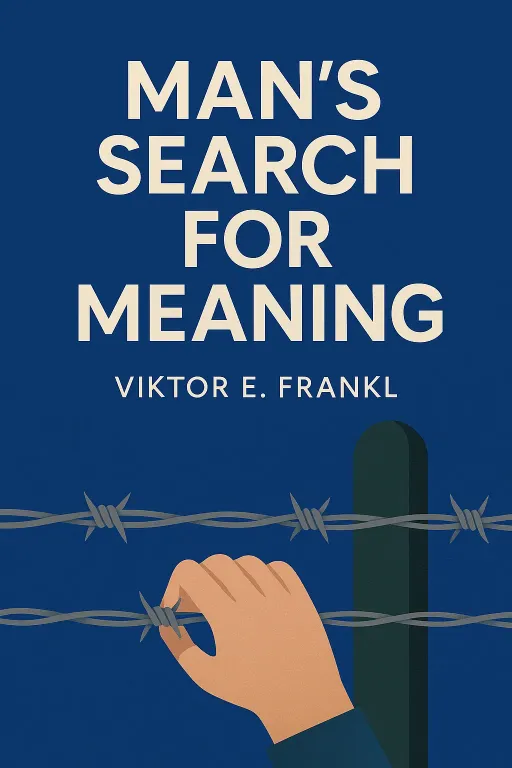
Nova: Exactly. And that's where we bring in two absolute giants. Today, we're diving into the profound idea of meaning, sparked by two incredible thinkers, particularly Viktor Frankl's seminal work, Man's Search for Meaning. What makes Frankl's insights so powerful is that he wrote it not from an academic tower, but as a Holocaust survivor, detailing his experiences in concentration camps and the lessons he drew from them.
Atlas: Wow. That gives his perspective an undeniable weight. So, what did he discover about meaning in such an extreme context?
Nova: He discovered that meaning isn't given; it's chosen. It's a response. And that brings us to our first core idea: meaning as a choice, the Frankl Principle.
Meaning as a Choice: The Frankl Principle
SECTION
Nova: Frankl observed that even in the most dehumanizing conditions, those who survived often did so because they found a "why" to live. It wasn't about escaping suffering, but finding meaning it. He saw people caring for others, holding onto a memory, or even finding beauty in a sunset, and that act of choosing a meaningful response to suffering, that's what preserved their inner freedom.
Atlas: That’s actually really inspiring. So, it's about shifting from "why is this happening to me?" to "what is this asking of me?"
Nova: Precisely. He tells this story about two prisoners, both facing the same brutal conditions. One succumbs to despair, seeing only the futility. The other, however, finds purpose in secretly helping a fellow prisoner, sharing his meager rations, or even just planning how he'll write his book after liberation. The external circumstances were identical, but their internal response, their choice of meaning, was radically different. Frankl argued that we can't always control what happens to us, but we have the freedom to choose our attitude and our response.
Atlas: Hold on, that sounds a bit out there for someone dealing with, say, a crushing workload or a difficult relationship. How does "choosing meaning" apply when you're just trying to get through the day?
Nova: That's a fantastic question, and it's where Frankl's genius lies. He wasn't suggesting naive optimism. He was saying that meaning isn't dependent on external success or comfort. It's about recognizing the unique task life presents to in moment. It could be caring for a loved one, creating something, or even just bearing unavoidable suffering with dignity. It's about transcending self and finding a reason to.
Atlas: I can definitely relate to that. The idea that meaning isn't a pre-built structure you inhabit, but something you actively construct, like an architect designing a building, that resonates deeply with me. It’s about agency. He's saying we are the builders of our own internal compass, even when the storms rage outside.
Nova: Exactly. Think about it: if you're building a skyscraper, you don't just wait for the perfect weather; you adapt, you find solutions, you keep laying bricks. Frankl's message is that our meaning is that internal structure we continue to build, regardless of the external conditions. It's a deeply personal responsibility.
Atlas: That makes me wonder, though, does this mean if I haven't 'found' my purpose, I'm just not trying hard enough? Or that I'm not looking in the right place?
Nova: Not at all. It means you might be looking for something when the power lies. It's about shifting the paradigm from a passive discovery to an active creation. It’s about asking: 'What am I contributing? What value am I bringing to this situation, to these people?' Even if that contribution is simply choosing an attitude of resilience.
Atlas: That's actually really profound. It suggests that even in moments of perceived powerlessness, we still hold the ultimate power of our internal response. And that's a powerful tool for anyone trying to craft a life of intention.
The Mythic Blueprint: Connecting Personal Purpose to Universal Stories
SECTION
Nova: And that naturally leads us to the second key idea, which often acts as a powerful framework for building that personal meaning: the role of myth and universal stories, brought to us by Joseph Campbell in his seminal work, The Power of Myth. If Frankl shows us the to meaning, Campbell shows us the where meaning is often found.
Atlas: Okay, so what do you mean by "mythic blueprint"? Are we talking about ancient gods and heroes here, or something more practical for the modern world?
Nova: It's both, actually. Campbell, through his decades of studying myths from cultures across the globe, realized that beneath the surface differences, all these stories share a common structure, what he called the "monomyth" or the "hero's journey." These aren't just quaint tales; they're psychological maps for life. They show us how to navigate challenges, find our identity, and connect to something larger than ourselves.
Nova: Think of Luke Skywalker in Star Wars, or even Frodo Baggins in Lord of the Rings. They're called to adventure, they face trials, they find mentors, they descend into darkness, and they return transformed. Campbell would argue that these stories resonate so deeply because they mirror the universal human experience of growth, struggle, and transformation that we all go through in our own lives.
Atlas: That’s a great way to put it. So, these myths aren't just old stories, they're like archetypal operating systems for understanding our own journey. For someone who wants to build something lasting, a legacy, this connection to a larger narrative seems crucial. It grounds your personal ambition in something timeless.
Nova: Absolutely. Campbell believed that modern society often suffers from a "meaning crisis" because we've lost touch with these guiding myths. We're adrift without a map. By understanding the hero's journey, for example, we can see our own challenges not as isolated problems, but as part of a grander, universal narrative. It connects our personal struggles to the struggles of humanity across millennia.
Atlas: I see. So, if Frankl gives us the toolkit for to choose meaning, Campbell gives us the epic storyboards and architectural designs for of meaning we can build, and how it connects to everyone else. It's like having a grand master plan for your personal building project.
Nova: Precisely. It helps us contextualize our individual journey. It helps us understand that the challenges we face, the mentors we encounter, the triumphs and failures, they’ve all been part of the human story since time immemorial. This provides a sense of connection, a feeling that we are part of something much larger, which is so crucial for the 'Relationship Seeker' aspect of our inner lives.
Atlas: That’s fascinating. It’s almost like these myths provide a shared language for the ineffable. For those of us who are driven to build, to connect, and to leave a legacy, understanding these mythic structures can actually help us articulate our own narrative and make our contributions more impactful. It's not just about what you build, but the story you tell through it.
Synthesis & Takeaways
SECTION
Nova: Exactly. And when you combine these two, you get a powerful understanding: meaning isn't waiting to be found like a lost sock. It's a structure you build, brick by brick, through conscious choice, informed and inspired by the enduring blueprints of human experience. It’s about taking responsibility for your attitude, even when external circumstances are beyond your control, and then framing that personal journey within the vast, interconnected tapestry of human stories.
Atlas: That really shifts the perspective from passive waiting to active creation. It encourages us to look at our own challenges not as dead ends, but as crucial stages in our unique journey, and to remember that we’re not alone in that journey, but connected to a much larger human story.
Nova: Precisely. The "meaning crisis" isn't a lack of meaning in the world; it’s often a lack of with the meaning that's available or the meaning we can create. It's about showing up, choosing your response, and finding your place within the grand human narrative. It's the ultimate act of creative construction.
Atlas: So, for our listeners, particularly those who are aspiring architects of their own lives, building relationships, and seeking to leave a legacy, the challenge isn't to wander aimlessly until purpose strikes. It's to consciously design, choose, and construct that meaning, drawing strength from both personal resilience and universal truths. It’s a call to action to build, not just to search.
Nova: A powerful call indeed. And we’d love to hear how you're building meaning in your own life. Share your thoughts with us on social media.
Nova: This is Aibrary. Congratulations on your growth!