The Human Equation: Finding Meaning in a Complex World
Golden Hook & Introduction
SECTION
Nova: You know, Atlas, there’s this fascinating cultural phenomenon where people will pay thousands to go to a silent retreat, just to find something they feel is missing. They're searching for... meaning.
Atlas: Oh, I've seen that! Or they meticulously plan "finding themselves" trips to remote mountains or exotic ashrams. It's like we're all on a treasure hunt for this elusive inner peace or purpose.
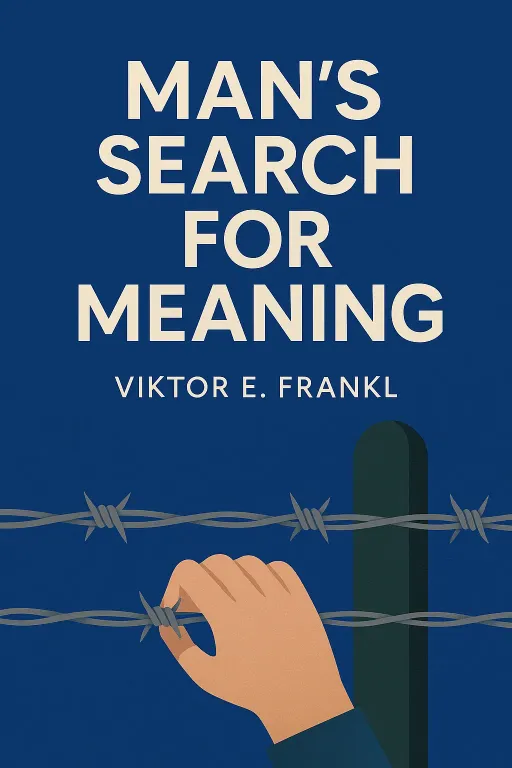
Nova: Exactly! It’s this universal human quest, this profound search for purpose that often feels overwhelming in a complex world. And today, we're unearthing some profound insights on that very hunt, inspired by two monumental works: Viktor Frankl’s "Man’s Search for Meaning" and Joseph Campbell’s "The Power of Myth." What’s striking about Frankl, in particular, is that he penned his groundbreaking work in just nine days, immediately after surviving the Holocaust, pouring his raw, transformative insights onto paper with incredible urgency. A true testament to the power of human spirit.
Atlas: Wow, nine days after such an unimaginable ordeal. That alone speaks volumes about the depth of his experience and the urgency of his message. So, he wasn't just theorizing from an ivory tower, he lived it.
Meaning in Suffering: The Freedom to Choose Attitude
SECTION
Nova: Absolutely. And that lived experience is precisely what makes his work so powerful. Frankl didn't just survive the Holocaust; he emerged with a revolutionary understanding of meaning. He observed that even when every external freedom was stripped away – food, shelter, dignity, family – the one thing that could not be taken was the inner freedom to choose one's attitude.
Atlas: That sounds almost impossible to comprehend for anyone who hasn't faced such extremity. How does one an attitude when facing such immense pain and suffering? When your entire world has been shattered?
Nova: It's not about denying the suffering, Atlas. It's about finding a for it, or rather, a to it. Frankl recounts how some prisoners, despite their starvation and brutal treatment, would share their last crust of bread, or offer an encouraging word. Others would find solace in watching a sunset, or remembering a loved one. These seemingly small acts were profound expressions of meaning. They chose to transform their suffering into a personal triumph, even in the face of certain death.
Atlas: So, it’s not about being stoic and emotionless, but about actively seeking out a purpose or a positive action, no matter how small, within the horror. I imagine for our listeners who are dedicated athletes, this might resonate with pushing through physical pain – finding meaning in the struggle itself, in the growth it promises.
Nova: Precisely! He called his approach 'logotherapy,' derived from the Greek word 'logos,' meaning 'meaning.' It's essentially healing through meaning. He argued that life's primary motivational force is not pleasure, as Freud suggested, or power, as Adler believed, but the search for meaning. And crucially, that meaning can be found even in inevitable suffering. It's about our response.
Atlas: That’s a huge reframing. It means meaning isn't something external we acquire, but something internal we cultivate. But is he suggesting that suffering is for meaning? Because that sounds a bit daunting for people who are already feeling overwhelmed by everyday challenges, not necessarily facing extreme survival situations.
Nova: Not at all. He’s not advocating for suffering, but acknowledging its inevitability in life. His point is that even in those moments, we possess an undeniable freedom. The freedom to decide we will respond. It's a powerful message of resilience, that our humanity isn't defined by what happens to us, but by our final freedom—the freedom to choose our response. It's about finding a "why" to live, even when the "how" feels impossible.
The Power of Myth: Universal Narratives for Life's Journey
SECTION
Nova: And speaking of shaping our reality and finding a "why," if Frankl shows us how we write our individual story of meaning, then Joseph Campbell, through his groundbreaking work like "The Power of Myth," reveals the grand narratives that have shaped humanity for millennia. He shows us the archetypal blueprints for those individual stories.
Atlas: I've always been fascinated by mythology, but sometimes it feels like ancient history or just fantastical stories. How do these old tales actually help us navigate our complex modern world? Are they still relevant?
Nova: Oh, absolutely! Campbell argued that myths are not lies, but rather "public dreams" that reveal universal truths about the human experience. They’re not prescriptive rules, but a spiritual compass, offering guidance on the journey of life. He famously identified what he called "the hero's journey," a universal pattern found in myths, legends, and even modern storytelling across cultures.
Atlas: So, you're saying that the story of Luke Skywalker or Harry Potter is essentially following the same ancient pattern as Gilgamesh or Odysseus?
Nova: Exactly! The hero starts in an ordinary world, receives a call to adventure, crosses a threshold into an unknown world, faces trials and tribulations, often with the help of a mentor, and ultimately returns transformed, bringing a boon back to their community. It’s a map for transformation. This resonates deeply with our user's "Ethical Explorer" spirit, offering a framework for understanding their place in the world and guiding their actions.
Atlas: That’s fascinating. So, these myths aren't just entertainment; they're psychological tools. For someone interested in spiritual ethics, how does understanding these archetypes deepen their purpose or guide their actions today?
Nova: They provide a framework for understanding life's challenges. When you're facing a difficult decision or a personal crisis, rather than feeling completely lost, you can recognize it as a stage in your own hero's journey. It gives context, meaning, and even a sense of inevitability to the struggle, knowing that countless others have walked a similar path and emerged stronger. It connects us to something larger than ourselves. It's about recognizing that our personal struggles are often echoes of universal human experiences, and understanding those patterns can offer profound comfort and direction.
Atlas: That’s a powerful idea. It’s like having a meta-narrative for your own life, understanding that your personal story fits into a much grander, ancient human story. It shifts from feeling isolated in your struggles to feeling connected to a timeless journey.
Meaning as Creation: Responding to Life's Narrative
SECTION
Nova: Precisely. So, if Frankl gives us the profound freedom to choose our narrative, even in the most dire circumstances, and Campbell shows us the archetypal blueprints for that narrative – these universal stories that define the human journey – what does that tell us about how we truly meaning? Because it's not just "found," is it?
Atlas: No, it sounds like it’s an active process. For our listeners who are aspiring sages, wanting to understand human behavior, and dedicated athletes, focused on growth, this is where theory meets application. How do we move from understanding these concepts to actually meaning in our daily lives?
Nova: It’s about recognizing that meaning isn't a static treasure waiting to be discovered, but a dynamic process of response and creation. Our response to circumstances, as Frankl taught, and the narratives we adopt or actively construct about our lives, as Campbell illuminated, are intertwined. Even mundane events can be imbued with profound meaning through our perspective and the story we tell ourselves about them.
Atlas: That’s the "Nova's Take" right there, isn't it? Meaning isn't out there; it’s being woven right here, right now, by how we engage with life. For our listeners trying to "connect their dots" and apply psychology to their daily well-being, how do we actually this? How do we consciously choose our attitude and actively craft our personal myth, especially when life feels overwhelming and we're just trying to get through the day?
Nova: It starts with conscious awareness. First, recognizing that you have a choice in your attitude, even if it's just a sliver of perspective. Then, it's about reflecting on the narratives you're currently telling yourself about your life – are they empowering? Do they align with your deeper purpose? If not, how can you reframe them? It’s about building bridges between theory and life, as you often say, Atlas. It's about actively asking: "What meaning can I create here?" or "How does this challenge fit into my larger story of growth?"
Atlas: So, it's less about finding meaning, and more about meaning, moment by moment. It's a continuous, active process. That makes so much sense for someone driven by purpose and wanting to be a better human. It’s not a destination; it’s the journey itself, and our chosen perspective on it.
Synthesis & Takeaways
SECTION
Nova: Exactly. What Frankl and Campbell ultimately reveal is an incredibly empowering truth: we are not passive recipients of fate. We are the meaning-makers. We have the inherent capacity to imbue our lives with purpose, resilience, and profound significance, regardless of external circumstances. It’s a call to action, to engage with life not as a victim, but as the author of your own evolving, meaningful story.
Atlas: That’s actually really inspiring. It means that whether you're facing a profound personal challenge or simply trying to optimize your physical and mental game, the power to derive meaning and grow from it lies within your response and the story you choose to tell. It's about finding that sliver of growth in every difficulty.
Nova: It truly is. So, we invite all our listeners to reflect on that. What narratives are you currently living by? And how might you choose to reframe a past difficulty, or even a current one, to find that sliver of meaning or growth?
Atlas: That’s a powerful question to sit with. And for those keen on digging deeper, revisiting "Man's Search for Meaning" and "The Power of Myth" is an excellent place to start.
Nova: This is Aibrary. Congratulations on your growth!