

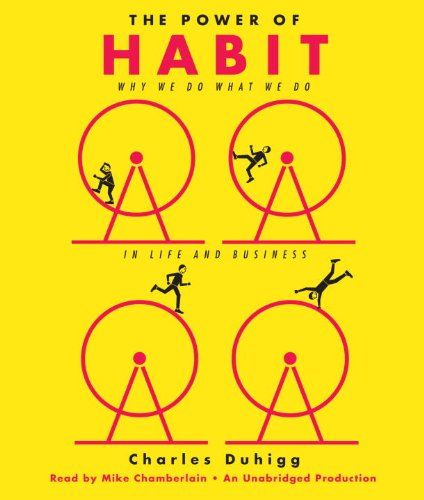
The Power of Habit
Why We Do What We Do in Life and Business
Introduction
Nova: Did you know that about forty percent of the actions you perform every single day aren't actually decisions? They are habits. From the way you tie your shoes to the route you drive to work, or even that afternoon snack you didn't really want but ate anyway, your brain is essentially on autopilot for nearly half of your waking life.
Atlas: Forty percent? That feels incredibly high. I like to think I'm making conscious choices, especially when it comes to the important stuff. Are you telling me I'm just a collection of pre-programmed routines?
Nova: In a way, yes. And that is exactly what Charles Duhigg explores in his fascinating book, The Power of Habit. He argues that if we understand the mechanics of how these habits are built, we can actually take the wheel and redesign our lives. Today, we are diving deep into the science of why we do what we do and how we can change it.
Atlas: I've heard the buzz about this book for years. It's not just about quitting smoking or going to the gym, right? It's about how entire companies and even social movements are built on these hidden patterns.
Nova: Exactly. We're going to look at everything from the neurology inside your skull to how a guy named Paul O'Neill turned a struggling aluminum company into a powerhouse by changing just one habit. It's a journey from the basal ganglia to the streets of Montgomery, Alabama.
Atlas: Well, I'm ready to look under the hood. If forty percent of my day is running on scripts I didn't consciously write, I definitely want to know how to edit them.
Key Insight 1
The Loop that Runs Your Life
Nova: To understand habits, we have to start with a tiny, golf-ball-sized piece of tissue in the center of your brain called the basal ganglia. While the rest of your brain is busy thinking about complex problems or what to say next, the basal ganglia is like a library of stored scripts.
Atlas: So it's like the hard drive where the shortcuts are saved?
Nova: Precisely. Researchers at MIT discovered this using rats in a maze. At first, when a rat was put in a new maze to find chocolate, its brain was working overtime. You could see massive spikes in neurological activity. The rat was sniffing, scratching walls, and making conscious choices.
Atlas: Right, because it's a new environment. It has to figure things out.
Nova: Exactly. But as the rat ran the maze hundreds of times, something strange happened. The brain activity actually decreased. The rat wasn't thinking about the maze anymore. It was just executing a habit. This is what Duhigg calls chunking. The brain converts a sequence of actions into an automatic routine to save mental energy.
Atlas: That makes sense from an evolutionary perspective. If we had to think about every single muscle movement required to walk or eat, we wouldn't have any brain power left to look out for predators.
Nova: Spot on. But here is the key takeaway from that research: the Habit Loop. Every habit consists of three parts. First, there is a cue—a trigger that tells your brain to go into automatic mode. Second, there is the routine, which is the physical, mental, or emotional action you take. And finally, there is the reward.
Atlas: The reward is the chocolate for the rat. But for us, what's a real-world example? Say, checking your phone first thing in the morning.
Nova: Great example. The cue might be the sound of your alarm or just the sight of the phone on the nightstand. The routine is scrolling through social media or email. The reward? A little hit of dopamine, a feeling of being connected, or even just the end of the boredom of being awake alone.
Atlas: And once that loop is established, the brain stops participating in the decision-making. It just waits for the cue to start the script.
Nova: That is the danger and the opportunity. Once a habit is formed, the brain stops working. Unless you deliberately fight a habit—unless you find new routines—the pattern will unfold automatically. The basal ganglia doesn't know the difference between a good habit and a bad one. It just loves efficiency.
Atlas: So the first step is really just identifying these loops. If I'm eating a cookie every day at 3:00 PM, I need to figure out what the actual cue is. Is it hunger, or is it just the time of day?
The Psychology of Anticipation
Creating the Craving
Nova: Identifying the loop is step one, but Duhigg adds a fourth element that explains why habits are so hard to break: craving. This is what actually drives the loop. He tells the story of Claude Hopkins, the legendary ad man who made Pepsodent toothpaste a global phenomenon in the early 1900s.
Atlas: Wait, people didn't brush their teeth before then? That sounds... unpleasant.
Nova: It was! Dental hygiene in America was abysmal. Hopkins didn't just sell toothpaste; he created a habit. He identified a cue: the film people feel on their teeth. He offered a reward: a beautiful, white smile. But he added something else. Pepsodent contained citric acid and mint oil, which created a cool, tingling sensation on the tongue and gums.
Atlas: I know that feeling. It's that fresh, clean sensation. Is that the reward?
Nova: Technically, the clean teeth are the reward. But the tingling sensation created a craving. People began to associate that tingle with cleanliness. If they didn't feel the tingle, their brains felt like their teeth weren't clean. They actually started craving the irritation caused by the mint oil.
Atlas: So the craving is like the brain anticipating the reward before it even happens?
Nova: Exactly. Wolfram Schultz, a professor of neuroscience, did a study with a monkey named Julio. Julio would see a shape on a screen, pull a lever, and get a drop of blackberry juice. Initially, Julio's brain spiked when he got the juice. But over time, his brain started spiking the moment he saw the shape on the screen.
Atlas: He was already celebrating the juice before he even tasted it.
Nova: Yes! And if the juice didn't come, Julio would get angry or depressed. That is what a craving is. It's the neurological anticipation of a reward. When you see a box of donuts, your brain starts craving the sugar hit before you even take a bite. If you don't get the donut, you feel a sense of loss.
Atlas: That explains why it's so hard to resist. Your brain is already living in the future where you've already had the reward. How do we fight that?
Nova: You have to become aware of the craving. If you want to start a new habit, like running in the morning, you need a clear cue—like putting your shoes by the bed—and a clear reward—like a sense of accomplishment or a nice smoothie. But you also need to allow yourself to crave that reward. You have to visualize the reward and anticipate it. That's how the habit sticks.
The Power of One Change
The Keystone Habit
Nova: Now, this is one of my favorite parts of the book. Some habits are more important than others. Duhigg calls these keystone habits. A keystone habit is a change in one area of your life that starts a chain reaction, shifting other patterns as well.
Atlas: Like how if you start exercising, you suddenly find yourself eating better and sleeping more? It's like a domino effect.
Nova: Exactly. The most famous example in the book is Paul O'Neill and the Alcoa aluminum company. In 1987, O'Neill became the CEO. Alcoa was struggling, and everyone expected him to talk about profit margins and synergy. Instead, in his first speech to investors, he said he was going to focus on one thing: worker safety.
Atlas: Safety? Investors must have thought he was crazy. You don't make more money by focusing on hard hats and safety goggles, do you?
Nova: The investors actually started selling their stock immediately! They thought he would ruin the company. But O'Neill understood that safety was a keystone habit. To get to zero injuries, the company had to change how it communicated. Workers had to be able to tell managers about problems without being punished. Managers had to report injuries within 24 hours and propose solutions.
Atlas: So to improve safety, he had to fix the entire culture of the company.
Nova: Precisely. The communication habits required for safety spilled over into manufacturing efficiency. If a machine was dangerous, it was usually because it was inefficient. By fixing the safety issue, they fixed the production issue. Within a year, Alcoa's profits hit a record high. When O'Neill retired, the company's market value had increased by five times.
Atlas: That's incredible. It's like finding the one loose thread that, when pulled, reweaves the entire fabric. How do we find our own keystone habits?
Nova: They usually provide what Duhigg calls small wins. They give you a sense of victory that makes you believe other changes are possible. Making your bed every morning is a classic keystone habit. It doesn't actually make you more productive directly, but it starts a chain reaction of feeling disciplined and organized.
Atlas: It's about the identity shift. If I'm the kind of person who makes my bed, I'm probably the kind of person who can finish my work on time. It's a psychological bridge to larger changes.
The Starbucks Method
Willpower is a Muscle
Nova: Let's talk about willpower. Most people think willpower is a character trait—you either have it or you don't. But Duhigg argues, based on research, that willpower is actually a muscle. It can get tired if you use it too much, but it can also be strengthened over time.
Atlas: I've felt that. By 8:00 PM, I have zero willpower. I can resist cookies all morning, but once I'm tired from a long day of making decisions, the cookie wins every time.
Nova: That's a real scientific phenomenon called ego depletion. A famous study by Mark Muraven showed that people who had to exercise willpower to ignore a bowl of chocolates were much quicker to give up on a difficult puzzle later. They had used up their willpower fuel.
Atlas: So how did Starbucks use this? They have thousands of employees, many of whom are young and in their first jobs, dealing with angry customers. That takes a lot of willpower.
Nova: Starbucks realized that they weren't just a coffee company; they were a willpower training company. They found that if they gave employees a plan for how to handle a stressful situation before it happened, the employees didn't have to use as much willpower in the moment. They developed the LATTE method.
Atlas: Like the drink? What does it stand for?
Nova: It stands for: Listen to the customer, Acknowledge their complaint, Take action by solving the problem, Thank them, and then Explain why the problem occurred. By practicing this routine over and over, it became a habit. When a customer started screaming, the employee didn't have to decide how to react. The habit loop took over.
Atlas: That's brilliant. You're pre-loading the decision so you don't have to make it when you're stressed. It's like a defensive script for your brain.
Nova: Exactly. And this is why habits are so powerful for willpower. If you turn a difficult task into a habit, it stops requiring willpower. You just do it. The goal isn't to have infinite willpower; it's to use your willpower to create habits so you don't need the willpower anymore.
Atlas: It's like building an automated system so the manual operator can take a break. But what about the really big habits? Not just for individuals, but for whole groups of people?
The Power of Movements
Social Habits and Change
Nova: This is where Duhigg scales up his theory. He looks at how social habits drive movements, specifically the Montgomery Bus Boycott started by Rosa Parks. We often think of it as a single act of defiance, but Duhigg explains it was actually a masterpiece of social habits.
Atlas: I always heard she was just tired and didn't want to give up her seat. Was there more to it?
Nova: She was tired, but she was also deeply embedded in her community. She had what sociologists call strong ties—close friends and family—but she also had an incredible number of weak ties. She was involved in the NAACP, her church, and various social groups. She knew everyone.
Atlas: So when she was arrested, it wasn't just her family who heard about it. It was every social circle in the city.
Nova: Right. And social habits are driven by peer pressure and community expectations. When the boycott started, people didn't join just because they were activists. They joined because their friends were doing it, and their neighbors expected them to. The habit of the community shifted.
Atlas: It's the habit of social obligation. If everyone in my church is walking to work instead of taking the bus, I'm going to feel like a jerk if I get on the bus.
Nova: Exactly. To sustain a movement, you need three things: the strong ties of friendship to get it started, the weak ties of a community to make it spread, and new habits that change a person's sense of self. Rick Warren's Saddleback Church is another example. He grew a small group into a massive megachurch by focusing on small groups where people formed habits of checking in on each other.
Atlas: So social change isn't just about a big idea; it's about the small, daily habits of how we interact with our neighbors. It's making the right thing to do the easiest thing to do socially.
Nova: And that's why these patterns are so hard to break. They aren't just in our heads; they are woven into our social fabric. But once you see them, you can start to pull the threads.
Conclusion
The Golden Rule of Habit Change
Nova: We've covered a lot, from the basal ganglia to the civil rights movement. But the most important thing Charles Duhigg wants us to know is the Golden Rule of Habit Change. You cannot extinguish a bad habit; you can only change it.
Atlas: You can't just delete the file? You have to overwrite it?
Nova: Exactly. To change a habit, you must keep the same cue and the same reward, but insert a new routine. If you smoke because you're stressed and you want to relax, you can't just stop smoking. You need to find a new routine that provides that same relaxation—maybe a quick walk or a breathing exercise—the moment that stress cue hits.
Atlas: And I guess that's where the belief part comes in. If you don't believe the new routine will work, you'll go back to the old one as soon as things get tough.
Nova: Belief is critical. Duhigg points out that in groups like Alcoholics Anonymous, the community provides the belief that change is possible. When people are in a group, the belief becomes contagious. You see someone else who has changed, and you realize you can too.
Atlas: So, to wrap this up, if I want to change my life, I need to map my loops, find my keystone habits, treat my willpower like a muscle, and find a community that supports the new version of me.
Nova: That is the formula. It's not magic, it's just mechanics. Once you understand that forty percent of your life is just a series of loops, you can start to redesign those loops one by one. The power of habit is that it makes change permanent once the routine becomes automatic.
Atlas: I'm definitely going to start looking at my 3:00 PM cookie a little differently now. It's not a failure of character; it's just a loop waiting for a better routine.
Nova: Exactly. You have the tools now. Go out and start editing your scripts. This is Aibrary. Congratulations on your growth!