

Mindfulness & Mental Fortitude: Building Inner Resilience
Golden Hook & Introduction
SECTION
Nova: Atlas, I've got a challenge for you. Imagine you're a world-renowned sculptor, and you’re handed two seemingly disparate tools: a fine, delicate chisel, and a heavy, powerful hammer. How do you create something beautiful and lasting?
Atlas: Oh, I love this! My first thought is you need both. The hammer to rough out the big shapes, the chisel for the intricate details. You can't just hack away, but you also can't chip endlessly at a mountain. This sounds like it's about balance, right? Or maybe, knowing which tool to use when.
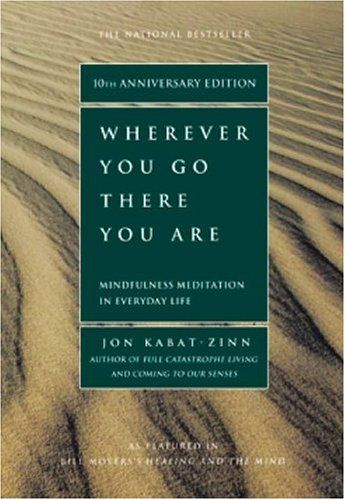
Nova: Exactly! That’s a perfect analogy for what we're talking about today. We’re exploring two incredibly powerful tools for sculpting our inner lives: the delicate chisel of mindfulness and the powerful hammer of habit formation. And we're doing it through the lens of two foundational books: Jon Kabat-Zinn's seminal work,, and Charles Duhigg's groundbreaking.
Atlas: Ah, Kabat-Zinn. He's the guy who really brought mindfulness into the Western mainstream, isn't he? I remember hearing that he essentially secularized ancient Buddhist practices to make them accessible, stripping away the spiritual jargon, and even creating the Mindfulness-Based Stress Reduction program in medical settings. That was a huge deal, making something so profound feel so practical.
Nova: Absolutely. He's a pioneer in integrating these practices into healthcare and everyday life. And then we have Duhigg, a Pulitzer Prize-winning investigative reporter who took a deep dive into the science of why we do what we do. His book isn't just about personal habits; it's about how habits shape corporations, societies, and even social movements. It’s been widely acclaimed for its narrative quality and accessible explanation of complex neuroscience.
Atlas: So, we're talking about the internal landscape – our state of being – and the external actions that shape our reality. That's a powerful combination, especially for anyone trying to navigate a demanding world while striving for personal growth.
Nova: Precisely. And that naturally leads us to our first deep dive: the profound simplicity of presence itself.
The Practice of Presence: Mindfulness as a Foundation
SECTION
Nova: So, let's start with Kabat-Zinn and the practice of presence. His core message in is disarmingly simple: mindfulness isn't about escaping your life or finding some mystical state. It's about showing up for your life, right here, right now, with full awareness.
Atlas: That sounds almost too simple for the kind of world we live in. We're constantly bombarded with distractions, urged to multitask, and told to plan for the future or regret the past. How does just 'being present' actually help? It feels like it goes against every modern instinct.
Nova: It absolutely does, and that’s part of its power. Kabat-Zinn argues that much of our suffering comes from not being fully present. We're either rehashing old arguments or catastrophizing about tomorrow. Mindfulness is the practice of gently bringing your attention back to this very moment, observing your thoughts, feelings, and sensations without judgment. He famously developed the MBSR program in the 1970s, initially for chronic pain patients who weren't responding to traditional treatments. The idea was that by changing their relationship to their pain, by observing it rather than fighting it, they could reduce suffering.
Atlas: Wow, that's a powerful real-world application. So, it's not about making the pain go away, but changing how you the pain. That's a subtle but profound shift. For someone in a high-pressure role, constantly problem-solving, it’s easy to get caught in a mental loop of 'what if' scenarios.
Nova: Exactly. Think of it like this: your mind is a river. Most of the time, we're thrashing around the river, getting carried away by every current. Mindfulness teaches us to sit on the bank and simply observe the river flowing by. You see the currents, the debris, the fish, but you're not swept up in it. Kabat-Zinn doesn't ask you to clear your mind, but to change your relationship with your thoughts. He’s often quoted saying, "You can't stop the waves, but you can learn to surf."
Atlas: I love that analogy. It’s not about achieving a blank slate, which feels impossible, but about gaining perspective. So, how does one actually this? Is it all just sitting meditation, or are there everyday ways to practice this presence?
Nova: He emphasizes integrating it into everyday life. It's not just about formal meditation sessions, though those are crucial. It's about mindful eating, mindful walking, mindful listening. It's about bringing a moment of awareness to brushing your teeth, doing the dishes, or even just waiting in line. The point is to wake up to the richness of each moment, however mundane it might seem. He’s very practical, focusing on accessible techniques like the body scan or breath awareness, which are just about noticing what's happening in your body and with your breath, without trying to change it.
Atlas: That makes sense. It’s like, instead of letting life happen you, you're actively participating in each moment. I can see how that would reduce the feeling of being overwhelmed. It sounds like a powerful way to cultivate a sense of inner calm, no matter what's going on around you.
Nova: It really is. And this inner calm, this heightened awareness, becomes incredibly useful when we start looking at the other side of our equation: our habits. Because often, we're not even aware of what we're doing or why.
The Science of Habit: Reshaping Our Automatic Lives
SECTION
Nova: So, if Kabat-Zinn gives us the lens of presence, Charles Duhigg, in, gives us the blueprint of how our actions are constructed. He argues that nearly 40% of what we do every day isn't a conscious decision, but a habit.
Atlas: Forty percent? That’s a huge chunk of our lives operating on autopilot! It makes me wonder how much of what I think are 'choices' are actually just ingrained routines. But how do these habits even form? It feels like magic sometimes, how effortlessly we can fall into bad patterns.
Nova: Duhigg breaks it down into what he calls the 'habit loop': Cue, Routine, Reward. The cue is the trigger – something that tells your brain to go into automatic mode and which habit to use. The routine is the behavior itself – physical, mental, or emotional. And the reward is what your brain gets from the routine, which helps it decide if this loop is worth remembering for the future. He illustrates this with incredible stories, like how a marketing team at Procter & Gamble discovered the habit loop behind Febreze's success. Initially, they marketed it as an odor eliminator, which flopped. Nobody wants to admit their house stinks.
Atlas: I can see that. That's a tough sell. So, what was the breakthrough?
Nova: They realized the real cue wasn't bad smells, but the of a cleaning task. The reward wasn't the absence of odor, but the that signaled a job well done. Febreze became the 'finishing touch' in the cleaning routine, providing a sensory reward that solidified the habit. It became less about problem-solving and more about feeling a sense of accomplishment and fresh delight. That insight turned Febreze into a billion-dollar product.
Atlas: That's fascinating! So the reward isn't just the obvious one; it's often an emotional or sensory payoff we might not even consciously recognize. It makes me think about my own routine. Like, why do I always grab a coffee right after I sit down at my desk, even if I'm not tired? The cue is sitting down, the routine is getting coffee, but what's the reward? It's probably not just the caffeine, but that feeling of 'starting the workday,' the ritual itself.
Nova: Exactly! And Duhigg applies this beyond individual habits, showing how companies like Alcoa transformed their safety records by focusing on one 'keystone habit' – safety. By meticulously improving safety, they inadvertently improved communication, efficiency, and quality across the entire organization. It wasn't just about reducing accidents; it was about instilling a culture of meticulousness. He also delves into the story of how Tony Dungy, a football coach, transformed the Tampa Bay Buccaneers by focusing on simplifying players' decision-making into automatic, practiced habits, reducing cognitive load and allowing for faster, more effective play.
Atlas: So, it's not just about identifying the loop, but understanding that some habits are 'keystone habits' that, when changed, pull other habits into alignment. That’s a powerful idea for personal change too. If I can nail one core habit, it could have a ripple effect.
Nova: Absolutely. The key insight from Duhigg is that you can't really a bad habit; you have to it. The cue and the reward are often too deeply ingrained. The trick is to identify the cue and the craving for the reward, and then consciously insert a new, healthier routine into that loop.
Atlas: That's a much more actionable approach than just trying to 'stop' something. It gives you a framework. But it still feels like it requires a lot of intention and self-awareness to even identify those cues and rewards in the first place, especially when they're so automatic.
Nova: And that, Atlas, is where our two books beautifully converge.
Integrating Mindfulness and Habit Change: Intentional Living
SECTION
Nova: So, we have Kabat-Zinn teaching us to be fully present, to observe our inner landscape without judgment. And we have Duhigg revealing the hidden architecture of our behavior through the habit loop. The magic really happens when you bring these two together.
Atlas: I see what you mean. The mindfulness practice, that 'sitting on the bank of the river,' gives you the awareness to actually the habit loop in action. Without that presence, you're just reacting unconsciously.
Nova: Precisely. Think of that 'tiny step' we mentioned earlier: choosing one routine behavior you'd like to change and meticulously tracking the cue and the reward. How do you even begin to do that if you're not paying attention? Mindfulness is the flashlight that illuminates the habit loop. It allows you to pause between the cue and the routine. That moment of pause, that space, is where choice enters.
Atlas: That's the 'deep question' right there: how does a daily mindfulness practice help you become more aware of your habits and thus more intentional in your choices? It sounds like mindfulness provides the 'why' and the 'when' to intervene in the habit loop, and Duhigg provides the 'how' to restructure it.
Nova: Exactly. Let's take your coffee example. With mindfulness, you might notice the exact moment you sit at your desk. You might notice the subtle craving for that ritual. And in that moment of awareness, instead of automatically going for coffee, you might choose to take three deep breaths, or stand up and stretch, or drink a glass of water. You're not fighting the craving; you're simply inserting a different routine to get a similar, or even better, reward—perhaps a feeling of calm readiness or physical invigoration.
Atlas: So, the mindful pause creates the space for intentional intervention. It’s like stepping out of the current of the river just long enough to choose a different path. This is huge for anyone feeling stuck in patterns they don't like. It offers a real sense of agency.
Nova: It fundamentally shifts you from being a passive participant in your habits to an active architect of your life. Kabat-Zinn would say that this is about cultivating 'beginner's mind' – approaching each moment, each habit, with fresh eyes, free from preconceived notions. Duhigg would add that this 'beginner's mind' allows you to truly deconstruct the habit loop and experiment with new routines. It's a powerful feedback loop: mindfulness enhances your ability to identify and change habits, and successfully changing habits reinforces your sense of presence and control.
Atlas: This isn't just about reducing stress or being more productive; it’s about building inner resilience. It's about knowing you have the tools to navigate challenges, to observe your reactions, and to intentionally shape your own path, rather than just being carried along by unconscious programming.
Nova: It’s about cultivating self-discipline, not as a harsh taskmaster, but as an informed, compassionate choice. It’s about moving from doing things unconsciously to living a life of purpose and intention.
Synthesis & Takeaways
SECTION
Nova: So, when we look at and, we're not just looking at two great books; we're looking at two sides of the same coin: the cultivation of an intentional life.
Atlas: It’s the ultimate toolkit for self-mastery. Mindfulness gives you the awareness to understand what's happening within you and around you, breaking free from autopilot. And the science of habit formation gives you the practical levers to actually change those automatic behaviors into something more aligned with your goals.
Nova: Exactly. The profound insight here is that true resilience isn't just about enduring hardship; it's about proactively shaping your responses and your environment. It’s about the conscious choice to pause, to observe, and then to act with intention.
Atlas: And it’s not about perfection overnight. It’s about the continuous, gentle practice of bringing awareness to your moments and making small, deliberate shifts in your routines. It’s a journey of self-discovery and purposeful cultivation.
Nova: This whole discussion makes me think of a profound quote from Kabat-Zinn himself, which really brings it all home: "Mindfulness is not about trying to make your mind quiet. It's about trying to quiet your mind enough so that you can hear what needs to be quieted." It’s a call to self-awareness that then empowers us to act.
Atlas: That’s a powerful closing thought. It's not about forcing change, but understanding what needs attention, and then applying the tools we've discussed today. What a journey.
Nova: Indeed. This is Aibrary. Congratulations on your growth!