The Intersection of True Fun and Mindful Calm
Golden Hook & Introduction
SECTION
Nova: The average person spends three hours a day on their phone, mostly scrolling through content that leaves them feeling drained rather than energized. That is twenty-one hours a week of what we call dead time. If you took even a fraction of those hours and invested them in genuine restoration, your productivity wouldn't just improve, it would transform.
Atlas: That hits hard because I feel that drain every single evening. I treat my downtime like a trash bin for my excess mental energy, just dumping it into a screen until I fall asleep. It sounds like you are suggesting that the way we think about fun and calm is fundamentally broken.
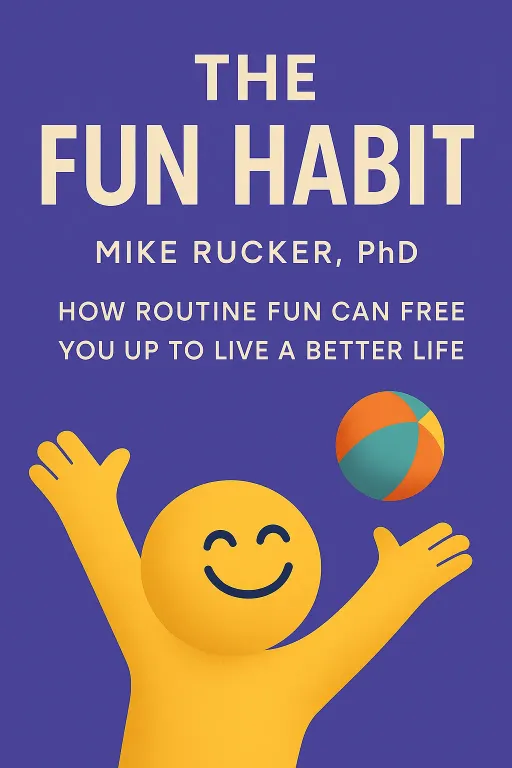
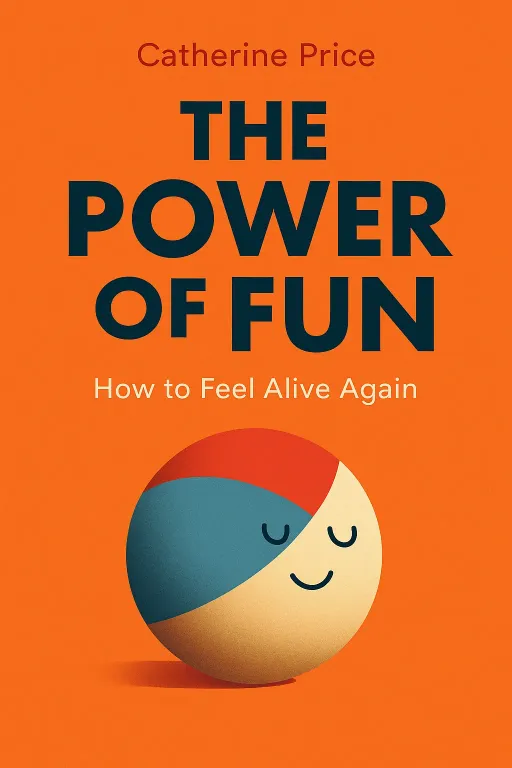
Nova: We have completely misunderstood the mechanics of downtime. Today we are looking at two powerful frameworks that solve this. First, we have The Power of Fun by Catherine Price, who brings a rigorous, science-journalist perspective to why play is a biological necessity. Then we have Anxious for Nothing by Max Lucado, which offers the C. A. L. M. framework to build a resilient, peaceful mind.
Atlas: I know Lucado as a massive voice in the world of personal development and spiritual growth, and Price is known for her deep dives into how our attention and habits shape our brains. Combining a science journalist and a veteran author of wisdom literature sounds like the perfect antidote to the burnout cycle.
Nova: It is the perfect pairing. Price helps us understand that fun is not a luxury, it is a physiological requirement for a healthy immune system. Lucado gives us the structural tools to keep our minds from spiraling when the pressure mounts.
The Science of True Fun
SECTION
Atlas: Let’s start with the fun part, because that feels like the most counterintuitive piece of advice for a high-achiever. Most of us think fun is just something you do when you have finished all your work. It is the reward, not the strategy.
Nova: That is the primary misconception. Catherine Price spent years researching the neurobiology of play, and she makes a very clear distinction between what she calls Fake Fun and True Fun. Fake Fun is passive. It is that mindless scrolling we talked about, or binge-watching a show you do not even really like. It numbs the brain, but it does not restore the body.
Atlas: I have definitely mastered the art of Fake Fun. It feels easy in the moment, but an hour later, I feel worse than when I started. What makes True Fun different?
Nova: True Fun is an active, physiological state. It occurs at the intersection of three specific elements: playfulness, connection, and flow. When these three intersect, your brain releases dopamine and reduces cortisol. It lowers your heart rate and actually boosts your immune function. It is not just about feeling happy; it is about biological regulation.
Atlas: The idea that having fun acts as a biological regulator is fascinating. Most people think of fun as a distraction from work, but you are saying it is a tool for performance.
Nova: Precisely. Think about the last time you were in a flow state. Maybe you were playing a sport, or working on a puzzle, or having a deep, hilarious conversation with a friend. You lose track of time. Your inner critic goes silent. That is the magic of True Fun. It is not about the activity itself; it is about the quality of your engagement with it.
Atlas: That makes sense, but I have to push back on the feasibility. If I am already swamped with deadlines and meetings, how am I supposed to find time for connection and flow? It feels like another item on the to-do list.
Nova: That is where the pragmatism comes in. You do not need a four-hour vacation to experience True Fun. You need to identify what Price calls your "Fun Magnets." These are the specific activities, people, or environments that reliably trigger that sense of play, connection, or flow for you.
Atlas: I like the sound of "Fun Magnets." It frames it as an experiment rather than a chore. For me, that might be a quick game of chess, or maybe just a specific type of conversation with a colleague that is not about work.
Nova: Exactly. And once you identify those magnets, you stop waiting for fun to happen. You schedule it. You treat it with the same respect you would give a high-priority meeting. If you know that playing a quick game of guitar or sketching for ten minutes puts you into that flow state, you block that time. You protect it.
Atlas: I can see the shift there. Instead of viewing fun as the thing I do when I have nothing left to do, I am viewing it as the thing I do to make sure I have something left to give. It is a maintenance strategy for my brain.
The C.A.L.M. Framework for a Peaceful Mind
SECTION
Nova: That maintenance strategy leads us directly into the second piece of the puzzle. Once you have managed your energy with True Fun, you need to manage your thoughts. This is where Max Lucado’s work on anxiety becomes essential. He uses the C. A. L. M. framework to help people move from a state of constant worry to a state of structured reflection.
Atlas: I have heard of frameworks like this, but often they feel too abstract. How does Lucado make this practical for someone who is dealing with real-world, high-pressure anxiety?
Nova: He breaks it down into an acronym. C stands for Celebrate God's goodness. A stands for Ask for help. L stands for Leave your concerns with Him. And M stands for Meditate on good things. Now, you can adapt this regardless of your personal beliefs. The core mechanism here is the shift from ruminating on problems to actively structuring your thoughts toward gratitude and release.
Atlas: Let’s break that down, because I think the "Celebrate" and "Meditate" parts are the ones that people often dismiss as just positive thinking. What is the actual process?
Nova: It is about cognitive reframing. When we are anxious, our brains are wired to fixate on the threat. We loop on the "what-ifs." Celebrating, in this context, is the act of intentionally forcing your brain to acknowledge what is working. It is a pattern interrupt. You are manually overriding the panic response by focusing on evidence of stability or success.
Atlas: That is a crucial distinction. It is not just "thinking happy thoughts." It is a deliberate pattern interrupt. It is like hitting the reset button on a frozen computer.
Nova: Precisely. And the "Ask" part is about humility. High-achievers often fall into the trap of thinking they have to be the sole architect of their own peace. Asking for help is an admission that you are not the center of the universe, which is actually a massive relief. It offloads the burden of total control.
Atlas: I feel that. The anxiety usually comes from the illusion that I am the only one who can solve this problem. If I am the only one who can solve it, then I have to be perfect. If I am not perfect, the world ends.
Nova: That is the exact trap. "Leave your concerns" is the next step. It is the practice of surrender. You write the worry down, you acknowledge it, and then you mentally set it aside. You are not ignoring the problem; you are choosing not to carry it in your pocket all day long.
Atlas: And the final step, "Meditate on good things," connects back to the gratitude piece. It is about filling the space you just cleared out. If you leave your mind empty after letting go of a worry, the worry will just rush back in. You have to occupy that space with something constructive.
Nova: You hit the nail on the head. You cannot just empty the mind; you have to replace the content. This is where the synthesis happens. You use the C. A. L. M. framework to clear the mental clutter, and then you use your "Fun Magnets" to fill that space with genuine, restorative energy.
Synthesis & The 10-Minute Ritual
SECTION
Atlas: This is starting to look like a complete system. I have been thinking about how to combine these. If I take the C. A. L. M. approach to settle the mind and then use a Fun Magnet to restore the energy, I am not just surviving my day; I am actually managing my capacity.
Nova: Exactly. And this is the deep question we started with. How do you schedule just ten minutes for this? It is not about finding an extra hour. It is about reclaiming the transition moments.
Atlas: Transition moments are usually when I check my email or scroll social media. That is the "Fake Fun" trap. If I replace that with a 10-minute ritual, I could change my entire afternoon.
Nova: Give me an example. How would you structure that in your current workflow?
Atlas: I think I would use the first five minutes for the C. A. L. M. reflection. Just a quick, structured check-in. What am I grateful for? What am I letting go of right now? And then the next five minutes, I engage with one of my "Fun Magnets." Maybe I listen to a specific song that makes me want to move, or I do a quick sketch, or I step outside and just look at the sky.
Nova: That is a perfect implementation. You are using the C. A. L. M. framework to decompress and the Fun Magnet to recharge. You are moving from a state of depletion to a state of restoration in under ten minutes.
Atlas: It sounds so simple, but the resistance to doing it is huge. The voice in my head keeps saying, "You don't have time for this, you have work to do."
Nova: That voice is lying to you. The cost of not doing it is much higher. We are talking about long-term burnout, immune suppression, and a narrowing of your cognitive abilities. True Fun and structured calm are not the enemies of high performance; they are the fuel for it.
Atlas: I appreciate how this reframes the goal. It is not about doing more things; it is about being more present for the things I am already doing. The goal is to finish the day with more energy, not less.
Nova: That is the ultimate metric of success. If you can protect your attention and your biology, you will naturally be more effective.
Atlas: I am going to try this tomorrow. I will treat the 10-minute slot like an appointment with a high-value client. If I miss that, I am failing my most important resource, which is my own mind.
Nova: That is the right mindset. You are the asset. Protect the asset. The work will still be there, but you will be in a much better position to handle it.
Atlas: This has been a great shift in perspective. It makes me realize that I have more control over my internal state than I usually give myself credit for.
Nova: You have all the control you need. It is just about being deliberate. Before we wrap up, remember that this is a practice. You will have days where you forget, or where the chaos takes over. That is okay. The goal is not perfection; the goal is consistency.
Atlas: I love that. Embrace the imperfection, keep the focus, and reclaim the hours.
Nova: That is the path to sustainable growth. Thank you for joining us in this exploration of how to balance the need for fun with the necessity of a calm mind. We hope you take these ten minutes today.
Atlas: It is worth it.
Nova: This is Aibrary. Congratulations on your growth!