

Reclaiming Your Cognitive Space
Golden Hook & Introduction
SECTION
Nova: If your brain were a computer, you would have had a total system crash about three weeks ago. We are running background processes, constant notifications, and high-stakes decision-making all day, every day, without ever hitting the restart button.
Atlas: That is an accurate, if slightly terrifying, assessment of my Tuesday morning. We treat our minds like they have infinite battery life, but the reality is that we are operating on a depleted power supply while expecting peak performance.
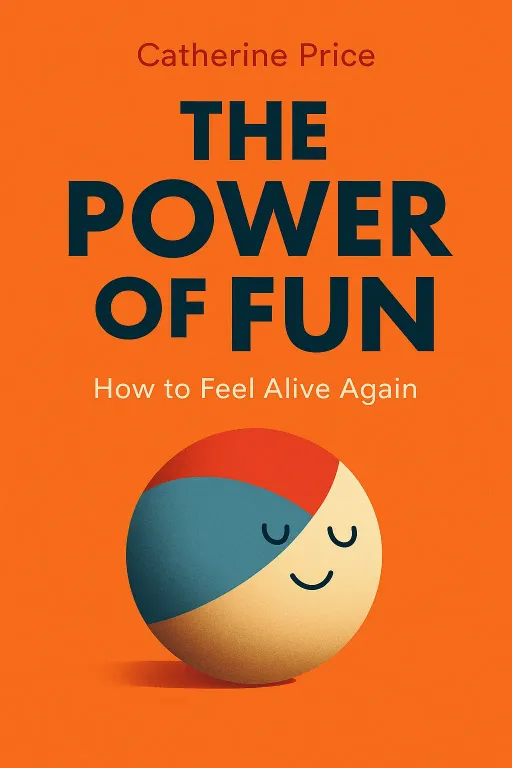
Nova: Exactly. We are looking today at the work of two incredible thinkers, Catherine Price and Manoush Zomorodi. Price wrote The Power of Fun, and Zomorodi authored Bored and Brilliant. Both of them tackle the same core tension: this obsession with hyper-productivity that is actually killing our ability to perform at a high level.
Atlas: It is fascinating to see these two perspectives side-by-side. On one hand, you have the idea of finding true joy, and on the other, the deliberate practice of doing nothing. It sounds counterintuitive for someone who wants to be efficient and successful.
Nova: That is the paradox. We think that to get more done, we need to do more. But these authors suggest the opposite. They argue that cognitive rest is the prerequisite for sustained high performance. If you want to be a top-tier performer, you have to master the art of stepping away.
The Hyper-Productivity Myth
SECTION
Atlas: I can already hear our listeners pushing back on that. Everyone listening to this is someone who values their time. They are likely thinking, if I take a break, I am falling behind. How do we reconcile the drive for excellence with this need for rest?
Nova: The first step is to dismantle the myth that busyness equals productivity. We often confuse movement with progress. When we are constantly checking emails, pinging colleagues, or scrolling through industry news, we feel like we are working hard. But that is just cognitive maintenance. It is not deep, high-leverage work.
Atlas: That hits home. It is the difference between being busy and being effective. I feel like my brain is constantly in this state of partial attention. I am trying to focus on a strategic document, but I have a tab open with messages, and my phone is buzzing in the corner. That constant task-switching is a tax on my mental energy, right?
Nova: It is a massive tax. Neuroscientists call it attention residue. Every time you switch tasks, a little bit of your focus stays stuck on the previous task. By the end of the day, you have a fraction of your cognitive capacity left for the things that actually matter. That is why Catherine Price emphasizes the concept of True Fun. It is not just about relaxation. It is about creating a state of flow that allows your brain to recover and reset.
Atlas: I have always viewed fun as a reward for finishing work. You grind, you hit your goals, and then maybe you get to do something fun on the weekend. You are saying that view is backwards?
Nova: It is completely backwards. If you wait until you are finished to have fun, you will never have fun, because the work is never finished. Price defines True Fun as the intersection of playfulness, connection, and flow. It is a biological necessity for your brain to function at its peak. When you engage in True Fun, you are not wasting time. You are actually replenishing the cognitive resources you need to be strategic and resilient.
Atlas: That reframing changes everything. If I treat fun as a performance-enhancing activity, suddenly I do not feel guilty about taking a break. I am not playing; I am recharging my battery so I can handle the next high-stakes challenge.
Nova: Precisely. And this leads us to the other side of the coin, which is Manoush Zomorodi’s work in Bored and Brilliant. She takes a different angle. She argues that we are terrified of boredom. The second we have a gap—waiting for the elevator, standing in line for coffee—we pull out our phones. We are killing the very moments where our best ideas are formed.
The Power of Boredom and Disconnection
SECTION
Atlas: I am definitely guilty of that. I cannot remember the last time I stood in a line without looking at a screen. Why is that gap so important? What happens when I am just staring at a wall?
Nova: When you are bored, your brain enters what researchers call the Default Mode Network. This is the state where your mind wanders, makes connections between seemingly unrelated concepts, and processes complex information. It is the incubation chamber for creativity. When you fill that void with a screen, you are effectively shutting down your brain’s ability to synthesize new ideas.
Atlas: So, by constantly consuming information, I am starving my brain of the chance to produce anything original. That is a sobering thought. I am trading my future breakthroughs for the temporary dopamine hit of a social media feed.
Nova: That is the trade-off we are making every single day. Zomorodi’s research suggests that intentional boredom is a skill. It is like a muscle. If you have spent years avoiding boredom, it will feel uncomfortable at first. You will feel that itch to reach for your phone. But if you push through that initial discomfort, you find a level of mental clarity that is impossible to achieve when you are constantly stimulated.
Atlas: I can imagine the discomfort. It is like trying to meditate for the first time. Your brain screams for distraction because it is used to being fed constant data. How do we start building this muscle? Because I suspect just telling myself to be bored is not going to work.
Nova: You are right. It requires a structured approach. This brings us to the practical application of these ideas. We have to be intentional about creating space. If you do not schedule the space, the noise will fill it.
Atlas: I like the idea of scheduling it. That appeals to the strategic learner mindset. We treat our meetings and deadlines with respect, but we treat our recovery time like it is optional or disposable. What does this look like in practice?
Nova: It starts with small, manageable commitments. You do not need to throw your phone in the ocean. You just need to create boundaries. Think about the concept of a digital sabbath. It is not about asceticism; it is about reclaiming your agency.
The Digital Sabbath and Practical Application
SECTION
Atlas: A digital sabbath. That sounds like a heavy commitment. Is that realistic for someone who has to be reachable for work?
Nova: It is more realistic than you think. Start with just one hour this weekend. One hour where the screen is off, hidden away. During that hour, you engage in an activity that brings you effortless joy. Not something you are doing to be productive, not something you are doing to learn a skill, just something that makes you feel alive.
Atlas: One hour. I can do that. That feels like a tangible, bite-sized goal. What happens during that hour? Do I just sit there?
Nova: You can, but you don't have to. The key is that it is unstructured. Go for a walk without a podcast playing. Cook a meal without checking a recipe on your phone. Play a game with your family. The goal is to disconnect from the digital stream so you can reconnect with your own thoughts.
Atlas: I have noticed that when I do that, the first ten minutes are the hardest. My brain is looking for that external stimulus. But if I make it past that, I start noticing things. I hear the birds, I notice the architecture of a building, I start thinking about a problem I have been stuck on from a different angle.
Nova: That is exactly the point. You are giving your brain the raw material it needs to solve problems. When you are constantly consuming, you are only processing other people's thoughts. When you disconnect, you start generating your own.
Atlas: It really comes down to energy management. We spend so much time focusing on time management—how to pack more into the day—but we ignore the energy management aspect. If I am running on empty, it does not matter how many hours I work. My output will be mediocre.
Nova: That is the core of the issue. The high-achievers who sustain their success over the long term are not the ones who burn the candle at both ends. They are the ones who know when to blow the candle out so it can be relit the next day. They treat their cognitive space as a limited, precious resource.
Atlas: I think I need to start protecting that first hour of my day. I often start my day by checking emails, and that sets a reactive tone for the next eight hours. If I could protect that first sixty minutes for deep work, or even just for some quiet, that could be the reset I need.
Nova: That is a brilliant implementation. If you protect that first hour as a sanctuary, you are setting the intention for the day. You are saying that your own priorities come before the priorities of everyone else who is trying to get your attention via email or Slack.
Atlas: It is about setting a boundary. A boundary is not a wall; it is a filter. It helps you keep the noise out so you can focus on the signal.
Nova: Exactly. And the beauty of this is that it is self-reinforcing. Once you experience the clarity that comes from an hour of disconnection, you will crave it. You will start to see the digital noise for what it is—a distraction that is preventing you from being your best self.
Synthesis & Takeaways
SECTION
Atlas: We have covered a lot of ground today. We started with the myth that we need to be constantly on to be successful, and we have arrived at the realization that true success requires intentional, scheduled disconnection.
Nova: It is a shift from a culture of depletion to a culture of restoration. We are moving from a mindset of "how can I do more?" to a mindset of "how can I be more effective by being more present?"
Atlas: And the takeaway is so simple, yet so powerful. Set a digital sabbath for one hour this weekend. Just one hour. It is low risk, but the potential upside for your creativity and your peace of mind is massive.
Nova: Make it a non-negotiable appointment with yourself. Treat it with the same respect you would treat a meeting with a high-value client. Because, in a way, you are the highest-value asset you have.
Atlas: I am definitely going to try that this weekend. I am going to pick a time, put the phone in a drawer, and see what happens. It is a small experiment with a potentially huge payout.
Nova: That is the spirit. And remember, this is not about being perfect. It is about being intentional. If you fail, you just try again next weekend. The goal is not to eliminate technology, but to change your relationship with it.
Atlas: It is about ownership. We own the tools; the tools should not own us. This has been a great conversation, Nova. It really highlights that the most productive thing we can do might be to stop being productive for a while.
Nova: It is the ultimate productivity hack. Thank you for joining us in this exploration of reclaiming your cognitive space. It is a journey, and every step counts. This is Aibrary. Congratulations on your growth!









