

Navigating the Unknown: Mastering Career Transitions
Golden Hook & Introduction
SECTION
Nova: You know, Atlas, for years, the advice about careers was always, "Find your passion! Discover your one true calling!" It's like we're all supposed to be detectives searching for a single, hidden treasure chest.
Atlas: Oh, I know that feeling. And then, when you don't instantly find it, you just feel like you've somehow failed the quest. It’s this immense pressure to have it all figured out, almost before you even start.
Nova: Exactly! It sets us up for disappointment because life, and careers especially, are rarely that linear. What if, instead of tirelessly searching for that elusive, singular passion, we approached our professional lives more like designers? Less about discovery, more about deliberate creation.
Atlas: That’s a fascinating reframe. I imagine a lot of our listeners, especially those who are natural problem-solvers and always looking for practical solutions, might feel a spark with that idea. It sounds less… passive, and more empowering.
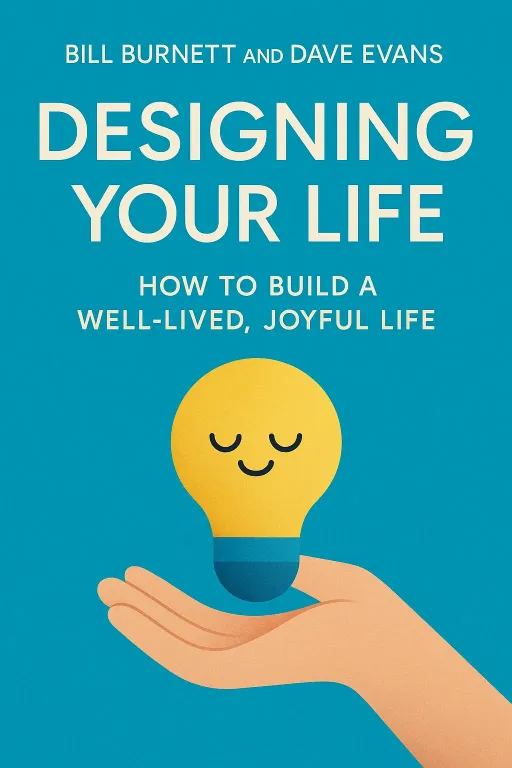
Nova: It absolutely is. And that's precisely what we're diving into today, drawing insights from two incredibly impactful books. First up, the foundational work, "Designing Your Life" by Bill Burnett and Dave Evans. These aren't just career counselors; they're design professors from Stanford University, and they literally brought design thinking principles, usually applied to products and tech, into the realm of personal and professional development.
Atlas: That’s such a unique background for a career book! It makes me wonder how that fresh perspective changes everything we thought we knew about career planning. And then, if we're talking about designing, we also need to talk about navigating the messiness of actual change.
Nova: Precisely. Which leads us to our second touchstone, "The Pivot Year" by Brianna Wiest. Wiest gives us the blueprint for navigating significant change, offering insights into those crucial mindset shifts we need, and how to embrace uncertainty not as a roadblock, but as a fertile ground for growth.
Atlas: So, we’re essentially talking about a dual approach today: how to actively blueprint and experiment with your next professional chapter, and then the essential internal work, the mindset alchemy, to embrace the unknown that inevitably comes with any pivot. I can already tell this is going to resonate with anyone who feels that innate drive for improvement and cares about creating new opportunities for themselves.
Nova: Absolutely. Today we'll dive deep into this from two perspectives. First, we'll explore how to actively 'design' your next professional chapter through prototyping, and then we'll discuss the crucial mindset shifts needed to embrace uncertainty and thrive during these significant pivots.
Prototyping Your Professional Path: Design Thinking for Career Transitions
SECTION
Nova: So, let's kick things off with this revolutionary idea from Burnett and Evans: applying design thinking to your life. For so long, career advice has been about identifying your strengths, finding a job description that matches, and then settling in. But design thinking flips that. It says, your career isn't a fixed destination you find; it's an evolving product you continuously design and iterate on.
Atlas: Okay, so you’re saying we should treat our careers like a new app we’re building? That’s a fascinating analogy. But what does that actually in practice? What does a 'career prototype' even look like for someone who’s, say, a project manager thinking about moving into sustainable tech, or an artist considering teaching?
Nova: That’s the perfect question, Atlas, because it brings it down to earth. A career prototype isn't about making a giant, irreversible leap. It's about small, low-risk experiments to test an assumption. Think about it: if you were designing a new product, you wouldn't spend years building the final version without ever showing it to a user, right? You'd create a minimum viable product, get feedback, and iterate.
Atlas: Right, you build something quick and dirty, see if it breaks, see if people even want it, then refine. So, how do we apply that "quick and dirty" approach to our professional lives without, you know, quitting our jobs or going into massive debt for a new degree we might not even use?
Nova: Exactly! Let me give you a classic example that Burnett and Evans often use. Imagine someone, let’s call her Sarah, has always dreamed of being a chef. She loves cooking, watches all the culinary shows, romanticizes the kitchen. The traditional path would be to enroll in a costly, multi-year culinary program, maybe even quit her stable job. That’s a huge, high-risk leap based on an untested assumption: that she'd actually the day-to-day reality of being a professional chef.
Atlas: Oh, I know that story. Or someone who goes to law school because they love legal dramas, only to find out real law is… less dramatic.
Nova: Precisely. So, a design-thinking approach for Sarah would involve prototyping. Instead of the big leap, she could take a single weekend cooking class, volunteer to cater a friend's small party, or even shadow a chef for a day. She could interview three working chefs about their daily routines, the challenges, the joys, the pay. These are all low-cost, low-risk experiments designed to gather data and test her assumptions.
Atlas: Wow. That's incredibly smart. It takes the pressure off. So, what might Sarah discover? That the heat of the kitchen is literally too much, or the hours are brutal, or the creative freedom isn't what she imagined?
Nova: Exactly. She might discover that she loves cooking as a hobby, but the professional grind isn't for her. Or, she might confirm her passion, but realize she needs to specialize in something specific, like pastry, to truly thrive. The point is, she gets real, experiential data without blowing up her life. It's about "failing fast and learning quickly," as they say in design.
Atlas: That sounds like a game-changer for so many people. It’s almost counter-intuitive to our ingrained idea that big decisions require big, decisive actions. We're taught to commit, right? To go all in.
Nova: We are, and that's precisely the mindset trap that design thinking helps us escape. It redefines "failure" not as an endpoint, but as a data point. Another powerful prototyping tool they suggest is the "life design interview." This isn't a job interview; it's simply talking to people who are doing the work you think you might want to do, or have taken a path you're considering.
Atlas: So, just having a conversation? That sounds almost too simple. How does that help you actually a career?
Nova: It’s deceptively simple, but incredibly effective. When you talk to someone about their actual experience—not just their LinkedIn profile—you uncover the hidden realities. What do they do all day? What are the unglamorous parts? What skills do they wish they’d developed earlier? What does success truly look like in their field? These conversations can either confirm your interest or, more often, reveal nuances and challenges you hadn't considered. It helps you build empathy for your "future self" and avoid potential pitfalls.
Atlas: I can see how that would be invaluable. It’s like getting a sneak peek behind the curtain before you commit to the whole show. And for someone who’s a practical strategist, that real-world data is gold. It helps you make informed decisions, not just emotional ones. So, it's about making our career path visible and tangible, one small experiment at a time.
Embracing the Unknown: Mindset Shifts for Navigating Career Pivots
SECTION
Atlas: That idea of small, iterative steps makes so much sense for testing the waters. But Nova, what about the fear? The uncertainty that inevitably comes with significant change, even small ones? Even if you're prototyping, you're still stepping into the unknown. For someone who’s forward-thinking and wants to envision a better future, that unknown can be paralyzing.
Nova: Exactly, Atlas. And that's where Brianna Wiest's "The Pivot Year" really shines. While Burnett and Evans give us the for action, Wiest delves into the crucial required to navigate those periods of significant change. She argues that uncertainty isn't just something to be tolerated; it's an opportunity for profound growth.
Atlas: That sounds good in theory, right? Like, "Embrace the unknown, it’s an opportunity!" But when your career feels unstable, or you're contemplating a massive change, it often feels more like a threat than an opportunity. How do you cultivate resilience when everything feels unstable?
Nova: It's a valid question, and Wiest tackles it head-on. She emphasizes that the first step is acknowledging the discomfort. It's okay to feel scared, lost, or uncertain. The problem isn't the feeling itself, but how we respond to it. Instead of resisting it, she suggests a radical acceptance of the present moment, even if it's messy. Then, it's about reframing.
Atlas: Reframing? Like, changing the narrative in your head? Can you give an example of how that works during a tough career transition?
Nova: Absolutely. Instead of saying, "I'm lost, I don't know what I'm doing with my career," Wiest encourages us to reframe it as, "I'm exploring new possibilities. This period of uncertainty is a phase of discovery." It’s a subtle shift in language, but it profoundly impacts your emotional state and your capacity for action. It moves you from a place of victimhood to one of agency.
Atlas: That’s powerful. It turns a scary blank space into an exciting map to be drawn. I can see how that would appeal to someone driven by personal growth. It’s about not just surviving the change, but actively growing through it.
Nova: Precisely. Wiest also talks about cultivating resilience by focusing on what you control. In a pivot, so much feels out of control—the economy, job market, external pressures. But you control your reactions, your learning, your small daily habits, and your mindset. It’s about building an internal locus of control rather than being swept away by external forces.
Atlas: I guess that makes sense. If you're a natural problem-solver, focusing on what you can control allows you to engage with the challenge, rather than just being overwhelmed by it. It’s like, instead of saying "I can't find a job," you say "I can refine my skills, network more effectively, and learn new interview techniques."
Nova: Exactly. And this ties back beautifully to our first topic on prototyping. Each "failed" prototype isn't a failure in the traditional sense; it's data. It’s a learning experience that builds resilience and clarifies your direction. It's about seeing the entire process as iterative experimentation, not a pass-fail exam. You're constantly learning, adapting, and growing. Wiest's work helps you ride the waves of that learning curve without getting capsized by self-doubt.
Atlas: So, it's about embracing the discomfort and seeing it as a sign that you're actually growing, that you're pushing past your old boundaries. It’s a fundamental shift from seeking comfort to seeking growth.
Synthesis & Takeaways
SECTION
Nova: So, what we've discovered today, Atlas, is that navigating career transitions isn't about finding a single, pre-defined answer. It's a dynamic, ongoing process that combines active design with a resilient mindset. It's not a linear climb up a ladder, but a creative dance between iterative experimentation and profound self-discovery.
Atlas: That's such a hopeful way to look at it. It completely reframes the daunting task of career change into something that's not only manageable but genuinely exciting. It speaks directly to that innate drive for improvement and the desire to create new opportunities.
Nova: It really does. And for our listeners who are aspiring architects of their own future, who are practical strategists by nature, the core takeaway is this: you don't need to have all the answers before you start. You just need to be willing to experiment and to trust the process of your own unfolding.
Atlas: That’s actually really inspiring. So, if there was one small, low-risk experiment our listeners could run this week to test an assumption about a potential new career path, what would you suggest they do?
Nova: I would challenge them to identify one burning question they have about a career they're curious about, and then find someone who's doing that work and ask them for a 15-minute "life design interview." Just a quick chat. It's amazing what you can learn in that short time, and it's a zero-risk way to gather real data. Or, if it's a skill, dedicate an hour to an online tutorial, just to see how it feels.
Atlas: I love that. It’s about taking a tiny, deliberate step forward, rather than waiting for the perfect moment or the perfect answer. It's about embracing the journey of self-discovery, one prototype at a time, and trusting your ambition.
Nova: Exactly. Your desire for more is a strength. Embrace the journey of self-discovery.
Atlas: This is Aibrary. Congratulations on your growth!









