

Unlocking Your Inner Vision: Mastering the Art of Seeing
Golden Hook & Introduction
SECTION
Nova: Stop looking. Seriously. The secret to extraordinary vision isn't about what you see, but how you everything you thought you knew.
Atlas: Unsee? Whoa. What does that even mean when you're trying to capture something, Nova? I mean, isn't photography all about?
Nova: Exactly, Atlas, but it's about seeing differently. It's about transcending mere recognition, moving beyond just identifying objects, to truly them. It’s the difference between looking at a tree and seeing the intricate dance of light and shadow on its bark, the way its branches reach, the story in its leaves. Today, we're diving into the journey of "Unlocking Your Inner Vision: Mastering the Art of Seeing." It’s a profound shift that elevates any creative work, especially photography, from good to extraordinary.
Atlas: That resonates with so many of our listeners, the creative crafters who feel like they've mastered the technical side, but their work still feels... well, a bit flat. Like there's a missing ingredient that makes it uniquely. So, if we’re trying to cultivate this 'inner eye,' where do we even begin? How do we actually learn to unsee and then re-see?
Deep Dive into Conscious Seeing: "The Photographer's Eye"
SECTION
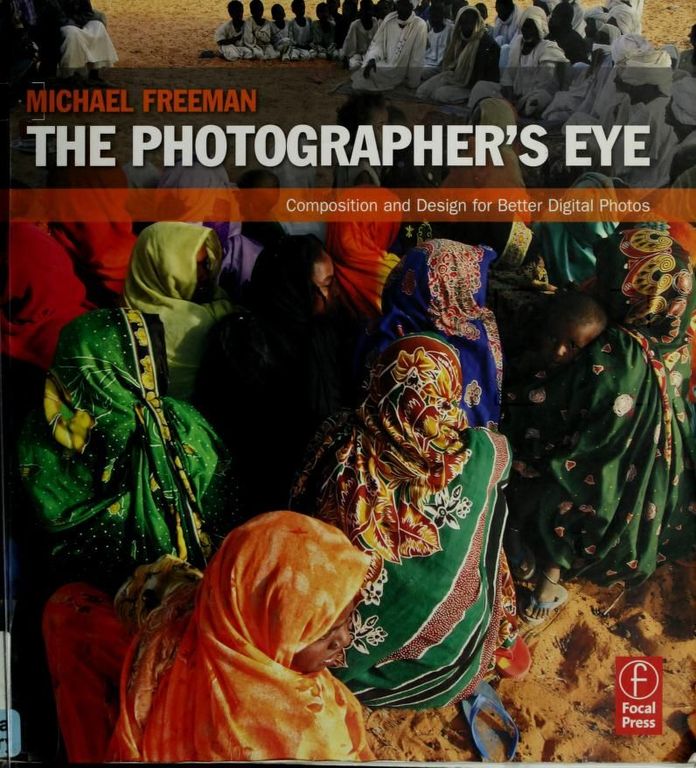
Nova: We begin with intention, with conscious understanding. And for that, we turn to a foundational guide: Michael Freeman's "The Photographer's Eye." This book isn't just about pretty pictures; it's a deep dive into the very language of visual communication. Freeman breaks down composition, light, and moment into understandable, actionable elements. He teaches you how to move beyond snapshots to create images with profound impact and intention.
Atlas: So, what's a core idea from Freeman that instantly shifts how you look at a scene? Give me something tangible, something a listener can take out on their next photo walk.
Nova: Absolutely. Think about "framing with intent," or what we might call "negative space awareness." Most people, when they take a picture, focus purely on the subject – the person, the landmark. But Freeman pushes us to see the the subject. Imagine a bustling street scene. A casual photographer snaps a shot of a street performer, but the background is cluttered, distracting. The image is okay, but it lacks punch.
Atlas: Yeah, I’ve been there. My eye goes straight to the main event, and then I realize later the trash can or the random guy walking by is ruining the shot.
Nova: Precisely. Now, imagine that same performer. Freeman would guide you to consciously look for natural frames – an archway, the gap between two buildings, the shadow cast by an awning. You actively compose not just the performer, but the around them, the negative space that isolates and emphasizes. The light might fall in a way that creates a dramatic silhouette, or a leading line on the pavement draws your eye directly to the performer. The cause is applying these compositional principles, the process is actively seeking out these visual elements, and the outcome is an image where every part of the frame contributes to the story, making the performer pop with incredible impact.
Atlas: I see that. That's about being deliberate. But wait, doesn't focusing so much on rules and composition make you rigid? Doesn't it take away from spontaneity, from just capturing a moment as it happens? I mean, if I'm thinking about the rule of thirds and leading lines, am I going to miss the magic?
Nova: That's a fantastic question, Atlas, and it highlights a common misconception. Rules, in this context, are not cages; they're a language. Think of it like learning to play the piano. You start with scales and chords, right? It feels stiff at first. But once those fundamentals are ingrained, they become second nature. You don't consciously think about each note; your fingers just know. Compositional rules train your eye to patterns, to understand visual harmony. Once that understanding is deep, it becomes intuitive. You're not applying a rule; you're simply a beautiful composition without even trying. It actually spontaneity because your visual literacy is so much higher.
Deep Dive into Intuitive Seeing: "Zen in the Art of Archery"
SECTION
Nova: And speaking of letting go of rigidity, that brings us to a seemingly unrelated but profoundly connected text that takes us even deeper into that intuitive space: Eugen Herrigel's "Zen in the Art of Archery."
Atlas: Okay, an archery book for photographers? That's definitely a leap. How does 'letting go' and 'zen' apply to capturing a moment in a visual art form? I'm picturing someone meditating with a camera, not exactly snapping a fast-moving street scene.
Nova: That's the beauty of it. Herrigel's insights into focused attention and intuitive action deeply resonate with creative practice. It's about letting go of overthinking, of the conscious ego, and trusting your inner sense. In archery, it's about "aiming without aiming," where the perfect shot arises not from intense calculation, but from a state of "no-mind," a deep presence. For a photographer, it's not about forcing the shot or frantically searching; it's about being so present, so attuned to your surroundings, that the moment to you.
Atlas: So, it's less about hunting for the perfect image and more about being receptive to it?
Nova: Exactly. Imagine a nature photographer in a forest. The conscious mind might be thinking, "I need a bird in flight, a deer, a perfect landscape." But the Zen approach is different. It's about deep observation without judgment. You stand, you breathe, you feel the light, hear the sounds, smell the earth. You're not actively for something specific; you're simply in the moment. Then, perhaps, a shaft of light cuts through the canopy in a breathtaking way, or a deer steps out, and because your mind isn't cluttered with expectation or technical worry, you're perfectly poised. The shot arises from that state of deep presence, where the camera becomes an extension of your intuitive awareness. The process is deep presence and non-judgmental observation; the outcome is a photograph imbued with life, authenticity, and a sense of timelessness, because it wasn't forced—it was received.
Atlas: That's a powerful distinction. So, if I'm understanding this right, Freeman teaches us the and of compositional seeing—the language, the structure. And Herrigel teaches us the and of intuitive presence—the state of mind that allows the magic to happen? It's like one builds the foundation of understanding, and the other helps you inhabit that space where creativity flows freely.
Synthesis & Takeaways
SECTION
Nova: You've absolutely nailed it, Atlas. The truly extraordinary vision comes from the synthesis of both. Conscious understanding, like Freeman's work, builds our visual vocabulary, allowing us to articulate what we see. Intuitive presence, inspired by Herrigel, allows us to the moment, to connect with our subject on a deeper level. When you combine the trained eye with the open heart, that's when you unlock your truly unique perspective. You start to see not just what there, but what there, what there.
Atlas: For our listeners, the creative crafters and curious explorers who are ready to start cultivating this 'inner eye,' what's one tiny step they can take this week to bridge this gap between theory and practice? Something tangible, something they can do right now.
Nova: Here’s your tiny step, and it comes directly from this exploration: during your next photo walk, take 5 minutes to intentionally observe light and shadow without taking a single picture. Don't even lift your camera. Just walk, breathe, and consciously notice how light falls on surfaces, how shadows define shapes, how they change as you move.
Atlas: Oh, I like that. That removes the pressure to "get the shot" and just lets you practice the act of seeing. It's a way to engage with the world more deeply, to train that 'inner eye' without the immediate burden of execution. It’s about building that foundational awareness.
Nova: Exactly. It's not just about improving your photography; it's about enriching your experience of the world. It’s about cultivating a deeper presence, a more profound appreciation for the subtle beauty that's always around us, if only we learn to truly see it. And that, I believe, is a skill that extends far beyond the lens.
Atlas: That’s a beautiful way to put it, Nova. It's about finding that profound connection, whether you're behind a camera or just walking down the street. Thank you for helping us unlock that inner vision today.
Nova: My pleasure, Atlas. Always a joy. This is Aibrary. Congratulations on your growth!