

Beyond the Lens: How to See the World Like a Master Photographer
Golden Hook & Introduction
SECTION
Nova: What if I told you the single most powerful tool a photographer owns isn’t a camera, a lens, or even a fancy filter… but something you carry with you every single day, completely free?
Atlas: Oh, I like that. You’ve got my attention. Are we talking about a secret handshake with the light? Or maybe a magic hat? What is this mystical, free tool Nova?
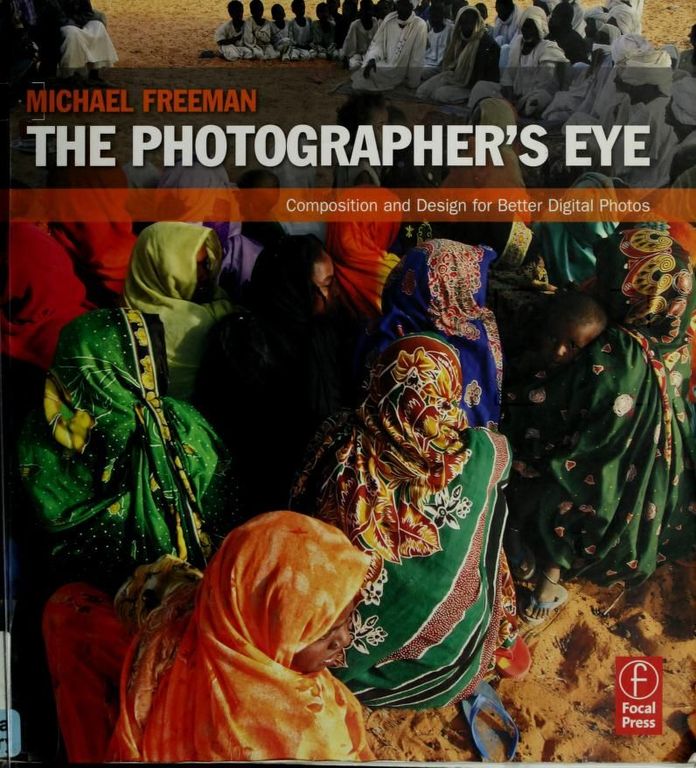
Nova: It’s your eye, Atlas. Or more accurately, you see. Today, we're diving into how to transcend the gear obsession and truly master the art of vision, drawing wisdom from two foundational texts: Michael Freeman's "The Photographer's Eye" and Bryan Peterson's "Understanding Exposure." Freeman, for instance, famously made complex art theory accessible to photographers, bridging the gap between academic visual language and practical application. He truly revolutionized how many artists approached their craft.
Atlas: Right. So, we're talking about moving beyond just pointing and shooting, and actually shaping what we capture. That makes perfect sense for anyone who feels stuck just taking snapshots.
Cultivating the Photographer's Eye: Seeing Beyond the Obvious
SECTION
Nova: Exactly. Freeman’s core argument in "The Photographer's Eye" is that seeing is a learned skill. It’s not something you’re born with; it’s cultivated. He breaks down the visual language of composition, light, and moment, showing how master photographers structure their vision they ever touch a camera. It’s like they’re composing the shot in their mind first.
Atlas: So you're saying that the real work happens in your head, not in the camera settings? That sounds incredibly powerful for someone who wants to move past the technical hurdles and really infuse their personality into their art.
Nova: Absolutely. Think of it this way: Imagine a master photographer walking down a bustling city street. Most of us see a blur of people, cars, buildings. But the master isn't just looking; they're. They spot a lone figure pausing at a brightly lit storefront, their silhouette stark against the warm glow. They notice the leading lines of the pavement drawing the eye towards this figure, the way the ambient light perfectly sculpts the scene, and they anticipate the precise moment the person turns their head, creating a compelling narrative. They’ve already composed that shot in their mind, understanding the interplay of light, shadow, and human emotion, long before they even raise their camera.
Atlas: Wow. So, how do you actually that, Nova? Because for a lot of our listeners, myself included, it’s one thing to hear about it, and another to actually it. Can you deliberately train your eye to see differently, even when you don't have a camera in your hand?
Nova: You absolutely can, and you should! It’s all about intentional observation. Try this: without a camera, frame scenes with your hands, consciously looking for leading lines, interesting light patterns, or moments of human connection. Notice how light falls on objects throughout the day. Observe the emotional impact of a scene—is it joyful, melancholic, serene? The more you consciously engage with the visual world, the more your "photographer's eye" develops. It's like a muscle you strengthen daily.
Atlas: I guess that makes sense. It’s about building awareness, almost like a visual mindfulness practice. That’s a great way to put it, making it accessible even for busy people.
Mastering Light: The Intuitive Language of Exposure
SECTION
Nova: And once you can like that, the next step is to the language of light itself. This is where Bryan Peterson’s "Understanding Exposure" comes in. He strips away all the intimidating technical jargon, making the relationship between aperture, shutter speed, and ISO incredibly intuitive.
Atlas: Oh, I know that feeling. Exposure sounds so technical, like a math equation. Aperture, shutter speed, ISO… it’s a lot of numbers. How does he make that intuitive?
Nova: He helps you understand them not as separate settings, but as a creative triad working together to control light. Think of capturing a majestic waterfall. If you want to isolate a single, delicate flower in the foreground, with the powerful cascade blurring beautifully behind it, you’d choose a wide aperture. That's your shallow depth of field, achieved with a low f-number.
Atlas: Right, so the background just melts away.
Nova: Exactly. Now, if you want to freeze every individual droplet of water in that waterfall, capturing its raw power, you’d use a very fast shutter speed—say, 1/1000th of a second or faster. But if you want that silky, ethereal, flowing look, where the water appears like a misty veil, you’d slow your shutter speed right down, perhaps to a few seconds.
Atlas: Whoa. So, the same waterfall, totally different emotional impact just by changing one setting.
Nova: Precisely. And ISO is your light sensitivity. If it’s getting dark, and you can’t open your aperture wider or slow your shutter speed further without blur, you’d boost your ISO. Peterson shows you how to balance these three. It’s not about finding the 'right' setting; it's about choosing the settings that achieve artistic vision for that waterfall.
Atlas: Okay, but for someone like me, who’s more of a creative crafter than a tech wizard, it still feels like a lot of numbers to juggle. How do you move past the technical to it, to make it intuitive, as you said?
Nova: That’s a perfect example of what Peterson tackles. Instead of rote memorization, he encourages understanding the of each setting. Think of exposure like a water faucet. Your aperture is the size of the pipe – how much water can rush through. Your shutter speed is how long you leave the faucet open – how long the water flows. And ISO is like boosting the water pressure in your house – making a small amount of light have a bigger impact, but sometimes with a bit of 'noise' or grain, just like too much water pressure can make the pipes rumble.
Atlas: That’s a great analogy! So basically you’re saying it’s about understanding the impact, not just memorizing the numbers. It’s about deliberate choice.
Synthesis & Takeaways
SECTION
Nova: Exactly. True photographic mastery happens when your inner eye, cultivated through the principles Freeman outlines, intuitively commands the language of light that Peterson demystifies. It’s about moving beyond merely capturing what’s there to actively expressing your unique artistic perspective. It’s that glorious moment when your vision and your technical control merge seamlessly.
Atlas: That really brings it all together. It’s about transforming that initial 'blind spot'—the focus on gear—into a profound 'shift' towards seeing and controlling light as a form of artistic expression. It's not just about getting a good shot; it's about making art. And for our listeners, the creative crafters and joyful learners, that’s incredibly empowering. It’s about unlocking a deeper joy in their creative journey.
Nova: It truly is. The joy of discovery, the joy of creation. And it all starts with that internal shift.
Atlas: So, for all of you out there, how can you deliberately practice 'seeing' differently in your daily life, even without a camera in hand? Take a moment today to truly observe the world around you, looking for those hidden compositions, those fleeting moments, that beautiful light.
Nova: This is Aibrary. Congratulations on your growth!