

Crafting Visual Narratives: Photography & Design with Purpose
Golden Hook & Introduction
SECTION
Nova: Atlas, quick game: I give you a keyword, you give me the first unexpected, slightly absurd self-help book title that comes to mind. Ready?
Atlas: Oh, I like this! Hit me. My brain's warmed up and ready for absurdity.
Nova: Alright. "Camera."
Atlas: "Camera"? Hmm... "How to Stop Taking Pictures of Your Lunch and Start Capturing Your Soul."
Nova: is brilliant! Okay, next one: "Ethics."
Atlas: "Ethics"... "Your Moral Compass: Is It Pointing North or Just Towards More Likes?"
Nova: Wow! You’re on fire today! That actually segues perfectly into what we're dissecting: the profound intersection of seeing and purpose, especially for visual storytellers.
Atlas: Right? I was today years old when I realized my absurd titles could actually be profound.
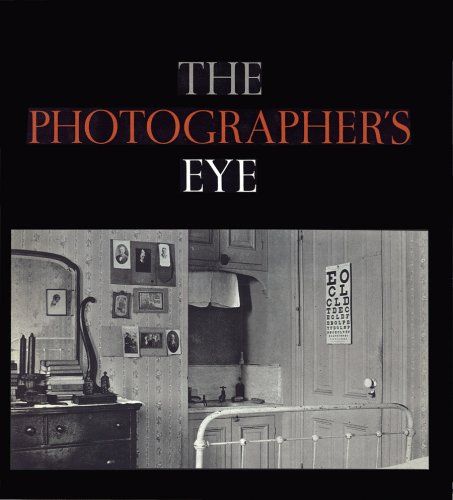
Nova: Exactly! And speaking of profound, today we're diving into two seminal works that, when combined, offer a masterclass in visual storytelling with integrity. We're talking about John Szarkowski's "The Photographer's Eye" and Victor Papanek's "Design for the Real World."
Atlas: Oh, I know those names. Szarkowski, a legendary curator at MoMA, reshaped how people thought about photography as an art form. He literally defined what 'good' photography meant for a generation. And Papanek, he was a design provocateur, really pushing for social responsibility in an era where design was often just about consumerism.
Nova: Absolutely. What’s fascinating about Szarkowski is that he wasn't just a critic; he was a revolutionary. He wasn't telling photographers to take pictures, but them, how to understand the medium's unique language. He served as the Director of Photography at the Museum of Modern Art for nearly three decades, and his influence is still felt today. His approach was less about technical prowess and more about philosophical inquiry into what makes a photograph truly meaningful.
Atlas: That makes sense. It’s like he was challenging the idea that photography is just documentation, saying, "No, it's a way of thinking, a way of interpreting." And that’s going to resonate with anyone who struggles with feeling like their photos are just snapshots.
Nova: Precisely. And that brings us directly to our first core idea: cultivating "The Photographer's Eye." Szarkowski argued that photography has its own distinct language, its own grammar, separate from painting or other visual arts. He distilled this into five categories of photographic meaning.
Atlas: Five categories? That sounds a bit academic. What does that actually mean for someone who just wants to take a great picture of a sunset or their dog?
The Photographer's Eye: Cultivating Discerning Vision
SECTION
Nova: Think of it less as academic and more as a framework for unlocking your visual intuition. It’s about understanding certain images resonate. The first is "The Thing Itself." This is about the photograph's ability to isolate a subject, to present it with a stark, undeniable reality that makes you see it anew. Like a perfectly framed apple that suddenly feels monumental.
Atlas: So you’re saying it's about making the ordinary extraordinary just by how you present it? Like, instead of just a 'tree,' it becomes tree, in all its gnarly detail?
Nova: Exactly! It's about respecting the inherent reality of the subject. Then there's "The Detail." This is where the photograph zeroes in on a fragment, hinting at a larger story or context without showing the whole. A close-up of a weathered hand, for instance, tells us so much about a life lived. It's the power of suggestion.
Atlas: Oh, I love that. It’s like a visual haiku. You give just enough to spark the imagination, and the viewer fills in the rest. It’s a bit like when you’re cooking and one perfect ingredient elevates the whole dish.
Nova: A perfect analogy! Next is "The Frame." This is crucial. It’s how the photographer chooses what to include and, more importantly, what to exclude. The edges of the frame are not just arbitrary boundaries; they are active decisions that define the meaning of the image. A slight shift in perspective can completely change the narrative.
Atlas: So it’s not just about what’s the picture, but what’s? That’s kind of profound. It’s like silence in music – it’s just as important as the notes.
Nova: Absolutely. And that leads to "Time." Photography captures a specific moment, a slice of time. It freezes a fleeting gesture, an expression, a confluence of elements that will never perfectly recur. This isn't just about a fast shutter speed; it's about the photographer's ability to anticipate and seize decisive moment.
Atlas: That makes me wonder... in an age of endless digital photos, where everyone's constantly snapping, does that sense of 'the decisive moment' get lost? Are we just documenting everything instead of truly capturing?
Nova: That's a critical question, Atlas. Szarkowski's work becomes even more relevant now. It challenges us to be more intentional. Are we just archiving, or are we actively and? The final category is "Vantage Point." This is about the photographer's unique perspective – literally and figuratively. Where do you stand? How high or low? What angle? This choice profoundly impacts how the viewer experiences the subject.
Atlas: So it's about adding your own voice, your own interpretation, through the physical act of choosing where to position yourself. Like how a chef chooses to plate a dish to tell a story about the ingredients.
Nova: Exactly! It’s all about intentionality. Szarkowski’s whole point was to move us beyond simply pointing and shooting. It’s about developing a conscious, discerning eye that understands the unique power and language of photography. It’s about making visible what might otherwise be overlooked, giving form to feeling.
Design for Impact: Integrating Ethics and Purpose in Visual Creation
SECTION
Nova: And that discerning eye, once cultivated, becomes an even more powerful tool when paired with purpose. This leads us to our second core idea, inspired by Victor Papanek: "Design for Impact," or integrating ethics and purpose into visual creation. Papanek, in his deeply influential and often controversial book "Design for the Real World," argued vehemently against design that was merely about aesthetics or promoting consumerism.
Atlas: Controversial, you say? That sounds like my kind of guy. What made him so provocative?
Nova: Well, Papanek believed that design, including visual design, had a moral obligation. He famously wrote that "There are professions more harmful than industrial design, but only a very few." He was basically telling designers they had a responsibility to address real human needs and environmental crises, not just make pretty packaging for disposable goods.
Atlas: Whoa. That’s a bold statement, especially for a designer. It implies that a lot of design, even if visually stunning, might actually be doing more harm than good.
Nova: Precisely. He criticized planned obsolescence, the creation of wants over needs, and the environmental toll of throwaway culture. Papanek championed principles of socially and ecologically responsible design. He advocated for sustainable materials, accessible design for all, and solutions for developing nations. He was really ahead of his time, predicting many of the environmental and social challenges we face today. His book, published in 1971, was a wake-up call that resonated deeply, even if it ruffled a lot of feathers in the design industry.
Atlas: So, how does that translate to a visual storyteller? If you're a nature photographer, for example, it's not just about taking a beautiful picture of a pristine forest, but perhaps using that image to highlight deforestation or conservation efforts?
Nova: That’s a perfect example. It's about moving beyond mere aesthetics to inspire tangible action. If Szarkowski teaches us to see, Papanek pushes us to consider we are seeing and we are doing with that vision. For a visual storyteller, this means asking: Is my work simply documenting, or is it advocating? Am I just showing beauty, or am I also revealing truth and inspiring change?
Atlas: That gives me chills. It’s like, once you develop that discerning eye, you also gain a responsibility for what you point it at and what message you amplify. It's like a superpower that comes with a moral obligation.
Nova: Exactly! Imagine a photographer capturing the devastating effects of climate change, not just to show destruction, but to galvanize support for environmental policy. Or a graphic designer creating powerful visuals for a non-profit fighting food insecurity, ensuring the message reaches those who need it most, and compels others to help. It's about designing with empathy and foresight. Papanek wasn't just talking about industrial products; he was talking about the of any created visual.
Atlas: So, for someone who loves to capture nature, it's not just about the perfect shot of a bird, but perhaps using that shot to highlight endangered species or the impact of plastic pollution on wildlife. It’s about turning your lens into a catalyst.
Nova: That's spot on. It's about weaving your diverse interests—your love for nature, for culinary art, for storytelling—into compelling narratives that serve a greater good. It's about aligning your lens with your values, capturing beauty responsibly, and exploring the stories behind everything you visually represent. It’s Integrated Design Thinking applied to visual art.
Synthesis & Takeaways
SECTION
Nova: So, what we're left with is this powerful duality: the art of seeing deeply, honed by Szarkowski, combined with the imperative of designing purposefully, as championed by Papanek. It's the ultimate marriage of aesthetic power and ethical impact.
Atlas: That’s actually really inspiring. It's like, don't just see the world; see it with intention. And then don't just create; create with a cause. It's a call to action for every visual artist out there, to think about the 'why' behind their 'what.'
Nova: Absolutely. It transforms a passion into a powerful force. It makes your vision not just beautiful, but meaningful, and that meaning resonates far beyond the frame. It's about asking yourself: how can your unique visual voice be a catalyst for something bigger than yourself, moving beyond mere aesthetics to inspire tangible action?
Atlas: And that’s a question that sticks with you. It challenges you to integrate your passions, to trust that unique blend of interests as your superpower, not a distraction. It's about making your art matter.
Nova: Indeed. This is Aibrary. Congratulations on your growth!