

Mastering Operational Excellence & Workflow Design
Golden Hook & Introduction
SECTION
Nova: Atlas, I want you to imagine a giant, multi-lane highway. But instead of cars flowing smoothly, you've got giant concrete blocks, construction zones randomly popping up, and every single driver trying to merge into the same lane all at once. What kind of traffic jam are we looking at?
Atlas: Oh man, that's not just a traffic jam, Nova. That's a full-blown, existential crisis on wheels! I imagine horns blaring, steam coming out of engines, and a lot of very frustrated people just sitting there, burning fuel, getting nowhere. Basically, my Monday morning commute if I lived in a cartoon.
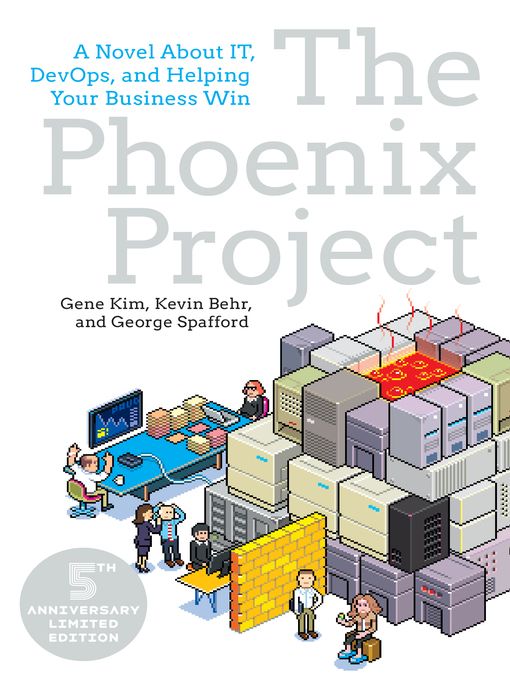
Nova: Exactly! And that, in a nutshell, is how many organizations operate their IT and development departments without a clear operational strategy. Today, we're diving into the world of operational excellence and workflow design, and we’re doing it through two incredibly insightful books. First up, we have "The Phoenix Project: A Novel About IT, DevOps, and Helping Your Business Win" by Gene Kim, Kevin Behr, and George Spafford. What’s fascinating about this book is that it presents complex IT management principles not as a dry textbook, but as a gripping novel. It's a page-turner that somehow teaches you about bottlenecks and value streams, which is a rare feat for a business book.
Atlas: A novel about IT? That sounds like a challenge to make compelling, but it really nails the human element of what happens when systems break down. So, what's our next stop on this journey to operational nirvana after we've untangled the IT chaos?
Nova: Once we've navigated the chaos, we need to ensure all that newly optimized effort is actually driving towards something meaningful. So, we'll be tackling "Measure What Matters" by John Doerr. This book isn't just theory; it's the framework that helped Google scale from a small startup to the tech behemoth it is today, all by setting clear, measurable goals.
The DevOps Revolution: From Chaos to Flow
SECTION
Nova: Let's start with "The Phoenix Project." This book is a fictional narrative, but it brilliantly illustrates the principles of DevOps. It tells the story of Parts Unlimited, a company whose IT department is a complete mess, perpetually behind schedule, and constantly putting out fires. The protagonist, Bill Palmer, is thrown into the deep end as VP of IT Operations, tasked with saving the company's critical 'Phoenix Project' from failure.
Atlas: Oh, I've been there. Not as a VP, but I've definitely felt like I was constantly putting out fires, just trying to keep things from completely collapsing. For a lot of our listeners who are managing high-pressure teams, this scenario likely hits very close to home. What's the core problem "The Phoenix Project" identifies in that kind of chaotic environment?
Nova: The core problem is revealed through what the authors call "The Three Ways of DevOps." The first is the "Flow" of work. Think of an assembly line. If one station is constantly overloaded or waiting for parts, the entire line grinds to a halt. In IT, this means work piling up, hand-offs breaking down, and a massive amount of "work-in-progress" that isn't actually progressing. The book shows how Bill and his team start by visualizing this flow, identifying the bottlenecks – often unexpected ones – and then systematically reducing them.
Atlas: So basically, instead of just pushing more work into the system, they figure out where the system is actually getting stuck. That sounds incredibly intuitive, but I imagine it's incredibly hard to do in practice when everyone feels overwhelmed. Can you give an example from the book that really drives this home?
Nova: Absolutely. There's a pivotal moment where Bill realizes that a single, highly skilled individual named Brent is the bottleneck for almost everything. Every critical task, every major release, every emergency fix – it all funnels through Brent. He's the hero everyone relies on, but he's also the biggest constraint on the entire organization's ability to deliver. He’s pulled in a million directions, constantly context-switching, and that creates massive delays and errors.
Atlas: Ah, the single point of failure! I imagine a lot of listeners are nodding right now, thinking of their own "Brent." It's tempting to think of that person as indispensable, but you're saying they're actually a huge risk and a drag on efficiency. So how do they fix that in the book? You can't just fire your most knowledgeable person, right?
Nova: Exactly. You don't fire Brent; you empower others to learn from him and distribute his knowledge. The book emphasizes cross-training, creating shared documentation, and automating repetitive tasks that only Brent could do. It's about moving from a siloed, individualistic approach to a more collaborative system where knowledge is shared, and processes are standardized. This reduces the reliance on any single hero and creates a more resilient system.
Atlas: That makes perfect sense. It's about building a system that can function even when the "hero" is on vacation, or, you know, just wants to focus on higher-value work. So that's the "Flow" part. What are the other two 'ways' of DevOps?
Nova: The second way is "Feedback." In chaotic environments, problems often go unnoticed until they become catastrophic. The book highlights the importance of creating fast, frequent, and low-latency feedback loops. This means monitoring systems, getting immediate alerts when something goes wrong, and empowering teams to fix problems quickly rather than escalating them up a long chain of command. It’s about building quality in, rather than inspecting it in at the very end.
Atlas: So, it's like having really sensitive gauges on that highway we talked about earlier. Instead of waiting for a 20-mile backup, you get an alert the moment traffic starts to slow down in one specific lane. That sounds like it would drastically reduce the "firefighting" mentality.
Nova: Precisely. And the third way is "Continuous Learning and Experimentation." This is about fostering a culture of constant improvement, where failures are seen as opportunities to learn, and teams are encouraged to experiment and innovate. The book shows how Bill’s team moves from a blame culture to one of psychological safety, where people can admit mistakes and collectively find solutions without fear of reprisal. This is crucial for adapting to change and continuously optimizing the flow.
Atlas: That’s actually really inspiring. It means that the biggest operational problems often aren't about the technology itself, but about the culture and how people interact with each other and the system. It sounds like "The Phoenix Project" is less about IT and more about human systems design.
Driving Outcome-Oriented Workflows with OKRs
SECTION
Nova: It absolutely is. And that leads us perfectly into our second book, "Measure What Matters" by John Doerr. Because once you've got your operational flow humming, you need to ensure it's flowing towards the right destination. This book introduces Objectives and Key Results, or OKRs, a powerful goal-setting system.
Atlas: Okay, OKRs. I've heard that term thrown around a lot, especially in tech circles. But for listeners who might not be familiar, what exactly are they, and why are they so effective? And how does this connect to our strategic orchestrators and practical innovators who want to build better systems?
Nova: At its simplest, an Objective is you want to achieve – something significant, concrete, action-oriented, and inspiring. A Key Result is you're going to measure progress towards that Objective – they must be specific, time-bound, aggressive yet realistic, and most importantly, measurable and verifiable. Doerr emphasizes that OKRs aren't just a list of tasks; they're a public declaration of your most important goals and how you'll track success.
Atlas: So it’s not just "do more stuff," it's "achieve X by doing Y, and we'll know we've succeeded when Z happens." That clarity seems like it would be a game-changer for people who are used to vague goals or constantly shifting priorities.
Nova: Exactly. Doerr actually credits Andy Grove, the former CEO of Intel, with developing the concept, and he brought it to Google when they were just a small startup. He saw how it could align everyone, from the founders to the newest engineer, on what truly mattered. The magic of OKRs is their focus and transparency. Everyone knows what the top priorities are, and how their individual work contributes to those larger objectives. This creates alignment and fosters engagement because people can see the impact of their efforts.
Atlas: That sounds incredibly powerful for a visionary leader who wants to drive impact and sustainable growth. But how does this system prevent teams from just setting easy-to-achieve goals? I mean, who doesn't want to hit all their targets?
Nova: That's where the "aggressive yet realistic" part comes in. Doerr talks about "stretch goals." The idea is that you aim high, even if you only achieve 70% of a stretch goal, that's often more impactful than hitting 100% of an easy one. It encourages innovation and pushes teams beyond their perceived limits. Google famously aims for 60-70% achievement on most OKRs, viewing anything higher as potentially not ambitious enough.
Atlas: That’s a fascinating perspective. It redefines what "success" looks like, moving it from simply checking boxes to genuinely pushing boundaries. It sounds like a fantastic framework for someone who wants to streamline processes and ensure every effort contributes to impactful outcomes.
Nova: Absolutely. Clear, measurable objectives linked to key results provide the necessary framework for efficient workflows and strategic execution. It ensures that every effort, every optimized process from our "Phoenix Project" discussion, contributes directly to the organization's most impactful outcomes. OKRs force you to ask: "Are we busy doing the right things, or just busy?"
Atlas: And for the strategic orchestrators listening, that’s the ultimate question. It’s about building better systems, not just managing existing ones. It’s about being grounded in practical innovation that actually moves the needle.
Synthesis & Takeaways
SECTION
Nova: So, bringing these two powerful ideas together, we see that operational excellence isn't just about speed, it's about direction and purpose. "The Phoenix Project" teaches us how to build a resilient, high-flow system, identifying those bottlenecks like the 'Brent' problem and fostering a culture of continuous learning.
Atlas: And "Measure What Matters" then provides the compass for that system, ensuring that all that efficient flow is directed towards truly significant, measurable objectives. It's the difference between a high-performance engine just idling and one driving a race car towards the finish line.
Nova: Exactly. The synergy is clear: you need the efficient, feedback-rich, continuously learning systems of DevOps to execute, and you need the clear, aligned, outcome-oriented framework of OKRs to ensure that execution is impactful. These aren't just books for IT departments or tech giants; they're blueprints for any organization striving for greater efficiency and meaningful results. It's about turning chaos into clarity, and effort into impact.
Atlas: It's about empowering teams to not just work hard, but to work smart, and to know that their smart work is making a real difference. For anyone feeling stuck in that metaphorical traffic jam, these two books offer a clear exit ramp and a map to a much smoother journey.
Nova: And for those seeking to anticipate future challenges and lead their teams through digital transformation, understanding these frameworks is absolutely essential. It cultivates the kind of self-sufficient, high-performing units that drive sustainable growth. This is Aibrary. Congratulations on your growth!