

Decoding the Classroom: How the Philosophy of Language Shapes How We Learn
Golden Hook & Introduction
SECTION
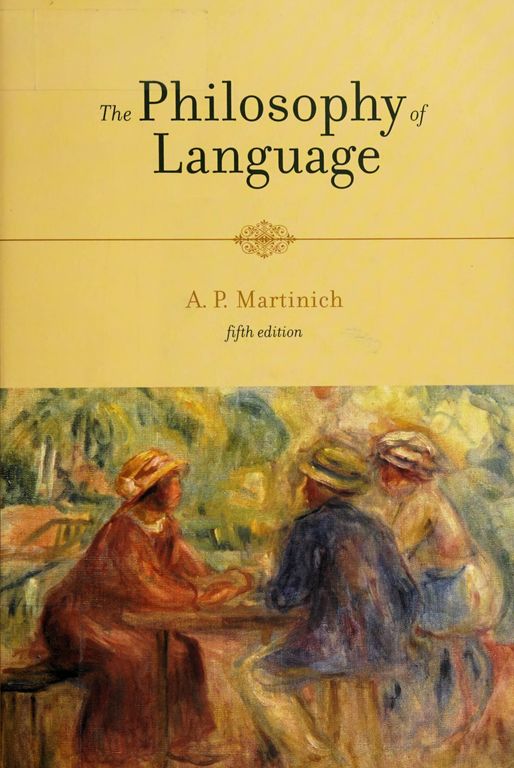
Nova: When a teacher looks at a struggling student and says, "You are a mathematician," are they simply describing that student, or are they actually creating a new reality for them? Welcome to another episode of Mind the Gap, where we bridge the worlds of deep academic theory and everyday practice. I am Nova, and today we are diving into a book that might sound abstract at first, but actually holds the secret key to how we communicate, teach, and learn. We are unpacking A. P. Martinich's landmark anthology, The Philosophy of Language. And to help us decode these profound ideas, we have a truly special guest with us today. Dr. Zen is a world-class educational researcher with over fifteen years of experience analyzing how knowledge is shared and constructed. Zen, it is an absolute pleasure to have you here.
Zen: Thank you, Nova. It is wonderful to be here. You know, as researchers, we often spend a lot of time looking at curriculum standards or standardized test scores, but we sometimes overlook the very medium through which all of this happens, which is language itself. Martinich's compilation of essays isn't just for philosophers in ivory towers. It is a diagnostic manual for anyone who wants to understand how minds connect.
Nova: I love that, a diagnostic manual for human connection. Today, we are going to tackle this book from three fascinating angles. First, we will explore how words are actually actions through J. L. Austin's Speech Act Theory. Then, we will discuss the art of reading between the lines using Paul Grice's conversational pragmatics. And finally, we will focus on how Gottlob Frege's classic distinction between sense and reference explains the very mechanics of how students learn new concepts. So, Zen, let us start with this idea of words as actions. When we think of language, we usually think of it as a way to describe things, like "the sky is blue" or "the book is on the table." But Martinich introduces us to J. L. Austin, who turned this completely on its head. Can you walk us through that?
Deep Dive into Core Topic 1
SECTION
Zen: Absolutely, Nova. Austin's breakthrough, which he delivered in a series of lectures later published as How to Do Things with Words, was the realization that a significant portion of our language does not actually describe the world at all. Instead, it performs an action. He called these performative utterances, as opposed to constative utterances, which are just statements of fact that can be true or false.
Nova: Right, like if I say, "It is raining outside," that is either true or false. But what is an example of a performative utterance?
Zen: Think about a wedding ceremony. When the officiant asks the couple if they take each other as spouses, and they say, "I do," they are not describing a marriage. They are actually performing the act of marrying. Or consider a ship-naming ceremony. When someone smashes a bottle of champagne against a hull and says, "I name this ship the Queen Elizabeth," they are not making a statement that can be true or false. They are changing the status of that ship in the real world. The ship is now named.
Nova: That is so powerful. The words themselves are the action. But Austin pointed out that these performatives can't just be said by anyone, anywhere, right? There are rules.
Zen: Exactly. Austin called these felicity conditions. For a performative utterance to work, or to be felicitous, it has to be spoken by the right person, in the right context, with the right intentions. If I walk up to a random ship in a harbor, throw a bottle of soda at it, and say, "I name this ship the Starship Enterprise," nothing happens. I do not have the authority, and the context is completely wrong. The act is void.
Nova: Ah, so the social context is everything. Now, Zen, as an educational researcher, how does this play out in a school or a classroom? Because I imagine teachers are using performative language all day long.
Zen: They absolutely are, and often without realizing the immense power they are wielding. In education, we talk a lot about classroom management and identity construction. When a teacher says, "Class is dismissed," that is a performative utterance. It changes the social reality of the room. But it goes much deeper than that. Think about labeling. If a teacher says to a student, "You are a leader in this classroom," they are not just making a passive observation. Under the right felicity conditions, because the teacher holds a position of authority and trust, that utterance acts as a performative. It initiates a process where the student begins to adopt that identity. It actually helps construct the very reality it claims to describe.
Nova: Wow, that is the Pygmalion effect in action, but explained through the philosophy of language. It is like the teacher's words are a magic wand, shaping the student's self-image.
Zen: It really is. And John Searle, who built upon Austin's work, categorized these speech acts even further. He talked about assertives, directives, commissives, expressives, and declarations. In a classroom, a teacher might use a directive like, "Please open your books to page forty." But they might also use commissives, which are promises or commitments, like, "If you finish this project, I will give you feedback by Friday." If a teacher fails to meet the felicity conditions of a commissive, say, by not delivering that feedback, it breaks the trust. The speech act fails, and the educational relationship is damaged.
Nova: That makes so much sense. We often think of broken promises as just a moral failing, but Searle's framework shows us it is a linguistic failure, a breakdown in the cooperative structure of communication. It really highlights how careful we need to be with our words, especially when we are in a position of influence.
Zen: Precisely. For researchers, analyzing classroom transcripts through the lens of speech acts allows us to see who holds the power, how agency is distributed, and whether the language being used is encouraging active learning or passive compliance. It is a incredibly sharp analytical tool.
Deep Dive into Core Topic 2
SECTION
Nova: It sounds like it. Now, let us pivot to our second topic, because this flows so naturally from what we just discussed. If words are actions, how do we understand those actions when they aren't explicitly stated? This brings us to Paul Grice and his theory of conversational implicature, which is featured prominently in Martinich's book. Zen, Grice has this famous example of a recommendation letter. Can you share that story with us?
Zen: Yes, this is a classic in the philosophy of language. Imagine a professor is writing a letter of recommendation for a student who is applying for a highly competitive job as a philosophy teacher. The professor writes: "Dear Sir, Mr. X's command of English is excellent, and his attendance at tutorials has been regular. Yours, etc." Now, on the surface, everything the professor wrote is positive. Having a good command of English and attending class regularly are good things. But what is the actual message being communicated here?
Nova: Well, if I were the hiring manager, I would think, "Oh dear, this student must be terrible at philosophy." Because if those are the only good things the professor can say, there is a huge problem.
Zen: Exactly. The professor has communicated a negative evaluation without actually saying a single negative word. Grice called this conversational implicature. The meaning is implied, or implicated, rather than explicitly stated. And Grice explained how this works through what he called the Cooperative Principle. He argued that when we communicate, we operate under an unspoken assumption that we are trying to be cooperative partners in the conversation.
Nova: And to be cooperative, we follow certain rules, right? What are those rules?
Zen: Grice called them maxims. There are four of them. The Maxim of Quantity: give just the right amount of information, not too much, not too little. The Maxim of Quality: tell the truth and don't say things you lack evidence for. The Maxim of Relation: be relevant. And the Maxim of Manner: be clear, brief, and orderly.
Nova: Okay, so in the case of the recommendation letter, the professor is violating the Maxim of Quantity and the Maxim of Relation. They are not giving enough relevant information about the candidate's philosophical abilities.
Zen: Yes, but here is the key. Because the reader assumes the professor is still being cooperative, the reader doesn't just think the professor is bad at writing letters. Instead, the reader searches for a reason the professor would violate those maxims. The only logical explanation is that the professor wants to convey that Mr. X is not good at philosophy, but doesn't want to put it in writing. This is what Grice calls flouting a maxim. We intentionally violate a maxim to send a hidden message.
Nova: That is brilliant. We do this all the time in daily life, don't we? Like if someone asks, "How was the dinner I cooked?" and I say, "Well, the plates were very clean." I am flouting the maxim of relation to avoid saying the food was terrible.
Zen: Exactly. It is a way of preserving social harmony. Now, in educational research, this is incredibly important because of what we call the "hidden curriculum." So much of what students learn in school isn't in the textbooks; it is in the implicatures of classroom life.
Nova: Oh, tell me more about that. How does that show up?
Zen: Think about how teachers give feedback. If a student works incredibly hard on a complex math problem but gets the wrong answer, and the teacher says, "Well, your handwriting is very neat," what is the implicature? The teacher is flouting the maxim of relation. The student immediately infers, "I am bad at math, and the teacher is just trying to find something nice to say." Even though the teacher's intention might have been encouraging, the linguistic structure of the feedback actually communicates a message of failure.
Nova: Oh, wow. That is a heartbreaking realization. The teacher thinks they are being kind, but because of how human brains process cooperative communication, the student decodes it as a polite dismissal.
Zen: Yes. And it works the other way too. When we scaffold learning, we often use implicature to nudge students toward deeper thinking. If a student makes a statement, and the teacher responds with, "Are you sure about that?" they are flouting the maxim of quality. They aren't actually asking for reassurance; they are implying that there is an error in the student's reasoning. An analytical student, like an INTJ profile, will immediately recognize this as a prompt to re-evaluate their premises. But a student who doesn't understand the implicature might just feel discouraged or confused.
Nova: This really highlights the need for educators to be incredibly precise and self-aware. We have to ask ourselves: what are we implying when we speak to our students? Are we accidentally sending messages of low expectations?
Zen: Absolutely. It is about aligning our explicit messages with our implicit ones. When there is a mismatch, students get confused, and trust erodes.
Deep Dive into Core Topic 3
SECTION
Nova: This is fascinating. Now, let us move to our third topic, which takes us into the realm of cognitive psychology and how we actually build mental models. We are going to look at Gottlob Frege's classic distinction between sense and reference, which Martinich includes as a foundational text. Zen, Frege used a very famous astronomical example to explain this. Can you set the scene for us?
Zen: Yes, Frege's puzzle of identity is one of the most elegant concepts in philosophy. He asked us to consider the terms "the Morning Star" and "the Evening Star." For centuries, people looked at the bright light in the morning sky and called it the Morning Star. They also looked at the bright light in the evening sky and called it the Evening Star. Eventually, astronomers discovered that both of these are actually the exact same celestial body: the planet Venus.
Nova: Right, so they both refer to the same physical object.
Zen: Exactly. Frege called the physical object itself the reference, or Bedeutung in German. So, the reference of both "the Morning Star" and "the Evening Star" is Venus. But Frege pointed out a puzzle. If we say "the Morning Star is the Morning Star," that is a boring, trivial statement. It is an identity statement that tells us nothing new. But if we say "the Morning Star is the Evening Star," that is a significant astronomical discovery. It contains actual cognitive value.
Nova: Ah, because even though they have the same reference, they don't mean the same thing to our minds.
Zen: Precisely. Frege argued that in addition to a reference, every term has a sense, or Sinn. The sense is the "mode of presentation" of the object. It is how the object is given to our minds. "The Morning Star" presents Venus in the context of the morning sky. "The Evening Star" presents it in the context of the evening sky. They are different senses pointing to the same reference.
Nova: That is a beautiful distinction. The sense is the mental pathway we use to get to the object, and the reference is the object itself. So, Zen, how does this apply to the classroom? How does this help us understand how students learn?
Zen: This is actually the very engine of conceptual change in education. When a student is learning, they are constantly trying to map new senses onto existing references, or vice versa. Let us take a simple science example. A young child knows "water" as the cold, wet stuff they drink from a glass. That is one sense. Later, in science class, they learn about "H2O." That is a different sense. The breakthrough of learning happens when they realize that "water" and "H2O" have the exact same reference.
Nova: Oh, I see. It is like their mental map expands. They connect two different pathways to the same destination.
Zen: Exactly. And if we don't understand this distinction, we can make major pedagogical errors. For instance, a teacher might assume that because a student can repeat the definition of "photosynthesis," they understand the concept. But the student might just have memorized a "sense" without actually connecting it to the real-world "reference" of how plants grow in their backyard. They have the linguistic label, but not the conceptual anchor.
Nova: That is such a common issue in education, isn't it? We call it rote learning. They have the words, but not the music.
Zen: Yes, they have the Sinn but not the Bedeutung. As educators and researchers, our goal is to help students build rich, interconnected webs of senses for the important references in their lives. We want them to see that "the square of the hypotenuse" is the same reference as "a squared plus b squared," and also the same reference as the physical area of those geometric shapes. When those connections click, that is what we call deep conceptual understanding.
Nova: It is like turning on the lights in a room. Suddenly, all these separate objects are revealed to be part of the same beautiful landscape.
Zen: Beautifully put, Nova. It really is about illumination.
Synthesis & Takeaways
SECTION
Nova: Well, Zen, we have covered some incredible ground today. We started with J. L. Austin and the idea that our words are active forces that shape reality and identity. Then we looked at Paul Grice and how we navigate the unspoken rules of communication, reading between the lines to find hidden meaning. And finally, we explored Gottlob Frege's sense and reference, showing how learning is the art of connecting different mental pathways to the same core truths. When you look at all of this together, what is the big takeaway for our listeners?
Zen: I think the overarching message is that language is not a passive pipeline for transferring data from one brain to another. It is an active, dynamic, and highly sensitive ecosystem. Whether you are a teacher, a researcher, a parent, or a leader, the linguistic choices you make are constantly constructing realities, implying expectations, and shaping how others conceptualize the world.
Nova: That is so profound. It really calls us to be more mindful of our speech. If you could give our listeners one practical action they can take today based on this discussion, what would it be?
Zen: I would challenge everyone to conduct a "Linguistic Audit" of their next important conversation. If you are a teacher or a parent, pay close attention to your feedback. Are you flouting maxims in a way that might confuse or discourage? If you are explaining a new concept, are you just giving them a new "sense" to memorize, or are you helping them anchor it to a real "reference"? By becoming conscious of the philosophy of language in our daily lives, we can communicate with far greater clarity, empathy, and impact.
Nova: A Linguistic Audit. I love that. It is a simple yet incredibly powerful way to bring these deep philosophical concepts into our daily interactions. Zen, thank you so much for sharing your brilliant insights with us today. You have truly helped us see the philosophy of language in a whole new light.
Zen: Thank you, Nova. It was a pleasure.
Nova: And to all our listeners, thank you for joining us on Mind the Gap. Remember, the words we use are the world we build. Until next time, keep questioning, keep connecting, and keep learning.