

The 'Unseen' Advantage: Cultivating the Mindset of a True Visionary
Golden Hook & Introduction
SECTION
Nova: Atlas, if I told you that the secret to becoming a true visionary wasn't about having a grand, earth-shattering idea, but about how you approach a simple problem, what would your first thought be?
Atlas: My first thought? Probably that someone’s selling me a bridge, Nova. It sounds almost too deceptively simple, especially for anyone who feels the pressure to constantly innovate and stay ahead of the curve. It’s like, we’re always looking for that next big thing, that 'aha!' moment.
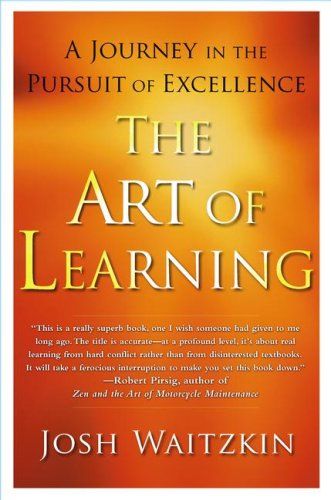
Nova: Exactly! That's the conventional wisdom we're challenging today. We're diving into the 'unseen' advantage, exploring how cultivating a specific mindset can transform how we approach mastery and innovation. And much of this wisdom is beautifully distilled in two remarkable books: "The Art of Learning" by Josh Waitzkin and "The Personal MBA" by Josh Kaufman.
Atlas: Oh, Waitzkin! The chess prodigy and martial arts champion. It’s fascinating how someone who achieved such high levels in two completely different domains could boil down success to a core learning process. I remember hearing about his background, how he started playing chess at Washington Square Park, and it wasn’t just about raw talent for him, but a systematic deconstruction of how to learn.
Nova: Absolutely. And Kaufman, on the other hand, gives us a business education without the MBA price tag, focusing on fundamental principles over complex theories. What's so compelling about both these authors is their ability to demystify success. They show that mastery isn't some mystical gift; it's a learnable process. It’s about understanding the deep mechanics, whether it's the 80/20 rule in business or the nuances of positional play in chess.
Atlas: That makes perfect sense. For anyone who’s constantly striving for mastery in their own field, whether it’s a craft or leading a team, the idea that there's a 'system' to learning, and not just innate genius, is incredibly empowering. It makes you wonder, then, what are the actual building blocks of that system?
The Mind's Edge: Beyond Conventional Wisdom
SECTION
Nova: Well, let's start with Waitzkin’s core philosophy, which he calls "The Art of Learning." He reveals that true mastery isn't about natural talent, but about a systematic approach to learning and growth. He emphasizes deep understanding over rote memorization. It’s about building a solid foundation, layer by layer.
Atlas: That sounds a bit counterintuitive. Most people, myself included, often think of mastery as accumulating more and more knowledge, or just practicing something until it’s perfect. What does "deep understanding" mean in this context, and how is it different from just knowing a lot?
Nova: It’s a fantastic question, Atlas. Waitzkin would argue that knowing a lot is like having a vast library, but deep understanding is about knowing how to every single book in that library, how they connect, and how to write new ones. He talks about "making smaller circles," which means taking complex concepts and breaking them down into their absolute simplest components. Then, you master those tiny components.
Atlas: Oh, I like that. So it’s not just about the breadth of knowledge, but the depth and interconnectedness of it? Can you give us an example of how that plays out?
Nova: Think of it this way: a chess master doesn't just memorize openings. They understand the behind why certain moves are strong, why they control the center, or how they set up future attacks. Waitzkin would practice endgames with just a few pieces, endlessly, understanding the micro-interactions, the subtle pressures. This isn't about memorizing moves; it's about internalizing the of the game.
Atlas: That’s a great way to put it. For me, I can definitely relate to that feeling of trying to just "get through" a new skill or concept, rather than really digging into the foundational elements. It's like trying to build a skyscraper without a proper blueprint, just stacking bricks on top of each other.
Nova: Exactly. And the beauty of this approach is that once you've mastered those micro-skills, you can then combine them in novel ways. Waitzkin calls this "the soft zone"—the ability to perform at a high level under pressure, not by rigid adherence to a plan, but by fluidly adapting based on deeply internalized principles. He talks about how this allowed him to transition from chess to martial arts, applying the same learning methodology to a completely different discipline.
Atlas: That’s really powerful. It makes me think about how much time we spend trying to optimize the surface-level stuff without ever really questioning if our foundations are solid. So, what about Kaufman's perspective in "The Personal MBA"? How does his take on fundamentals align with Waitzkin's "deep understanding"?
Nova: Kaufman, in his "Personal MBA," takes a very similar approach but applies it to the world of business. He distills the core principles of business—from marketing to finance to systems design—into accessible mental models. He argues that a deep understanding of these fundamentals is far more valuable for entrepreneurial success than complex theories or jargon.
Atlas: So, he’s basically saying you don't need a fancy degree to understand how business works, you just need to grasp the core mechanics. That’s going to resonate with anyone who’s ever felt overwhelmed by the sheer complexity of the business world. But what does he mean by "mental models"?
Nova: Mental models are essentially frameworks or concepts that help you understand how the world works. For Kaufman, it’s about identifying the universal laws of business. For instance, he talks about the "Iron Law of the Market," which states that if you create something people desperately want, they will find a way to pay for it. It's a fundamental truth, rather than a fleeting trend.
Atlas: Right, like understanding that at its core, business is about creating and delivering value. It’s not about having the most complex marketing strategy, but about solving a real problem for real people. So, both Waitzkin and Kaufman seem to be advocating for this deliberate, almost minimalist approach to learning and strategy.
Nova: Precisely. Nova’s take on this is that sustained success in any field, from art to business, stems from a deliberate and adaptable learning mindset, constantly refining both craft and strategy. It’s about building a robust internal operating system rather than just downloading a bunch of apps.
Atlas: That makes me wonder, then, how do we apply this to something we already consider ourselves "masters" of? It’s one thing to apply a beginner’s mind to a new skill, but what about something we've been doing for years, maybe even decades?
Your Next Masterstroke: The Beginner's Mind
SECTION
Nova: That's the deep question, isn't it? How can you apply a 'beginner's mind' to a styling technique you've mastered, seeking new efficiencies or creative variations? This is where the true visionary spirit of our listeners comes in. It’s about deliberately unlearning, or perhaps, re-learning.
Atlas: Huh. That’s actually a brilliant pivot. Because often, when you’ve mastered something, you get into a rhythm, a routine. You might even stop questioning you do things a certain way. It becomes muscle memory, and while that’s efficient, it might also be a blind spot for innovation.
Nova: Exactly. Think about a master chef. They can whip up a classic dish blindfolded. But a true visionary chef isn't just repeating the recipe; they're constantly asking, "What if I tried this ingredient? What if I changed the cooking method? Is there a more efficient way to prep this, or a way to elevate the flavor even further?" They approach their mastery with a beginner's curiosity.
Atlas: So, it’s about actively looking for those tiny inefficiencies or potential improvements, even in something that already works beautifully. It means not being complacent, even with success. I imagine a lot of our listeners, who are innovators and entrepreneurs, might find this challenging because they're already at the top of their game.
Nova: It is challenging, but it’s also the wellspring of true innovation. Waitzkin, after becoming a chess grandmaster, didn't stop. He moved to martial arts, essentially becoming a beginner again, applying his deep learning principles. Kaufman encourages business leaders to constantly re-evaluate their core assumptions, even the ones that made them successful. It's about being willing to dismantle and rebuild.
Atlas: That reminds me of the concept of "creative destruction" in economics, but applied to your own skill set. It's like, you have to be willing to destroy your own best practices to create even better ones. That requires a lot of courage, and a certain humility.
Nova: It absolutely does. It’s about embracing that journey of leadership, understanding that empowering others and yourself means constantly evolving. For our listeners who are salon owners or team leaders, this could mean dedicating time each week to brainstorming novel techniques, documenting those ideas, and then, crucially, them.
Atlas: So, it’s not just about thinking differently, but about differently. It’s about setting aside dedicated time, almost like a scientific experiment, to poke holes in your own mastery. That’s a tangible action step. And it ties into the idea of staying ahead of the curve, which is a major goal for our audience.
Nova: Precisely. Because to stay ahead, you can't just follow trends; you have to set them. And setting them comes from this relentless pursuit of deeper understanding and continuous refinement, even of what appears to be perfect.
Atlas: That makes perfect sense. It’s about fostering a culture of perpetual learning, not just for yourself but for your entire team. It’s not just about getting better, but about getting better at getting better.
Synthesis & Takeaways
SECTION
Nova: This whole conversation really crystallizes the idea that the 'unseen' advantage isn't a secret formula, but a profound shift in perspective. It's the commitment to understanding the fundamentals so deeply that you can play with them, dismantle them, and reassemble them in novel ways. It's the willingness to be a beginner, even when you're a master.
Atlas: That’s it, isn’t it? It’s about realizing that mastery isn't a destination, but a continuous process of refinement. And that applies whether you're a chess player, an entrepreneur, or leading a team in a creative industry. The moment you stop asking "why" and "what if," you stop growing.
Nova: And for our listeners, the innovators and leaders, this means embracing that journey. It means consciously carving out time not just for execution, but for deep, fundamental exploration. It’s the difference between doing things well and doing the things exceptionally well, and then questioning if they could be even better.
Atlas: So, the challenge isn't just to be good at what you do, but to be good at what you do, and then consistently pushing the boundaries of that understanding. That’s a powerful takeaway for anyone driven by impact and growth.
Nova: Absolutely. It’s about recognizing that your next masterstroke won't come from chasing the next big trend, but from looking inward, at the very foundations of your craft, and asking how you can approach it with a beginner's mind.
Atlas: That’s a fantastic way to put it. It's truly about cultivating that mindset of a visionary, not just having a vision.
Nova: This is Aibrary. Congratulations on your growth!