

Mastering the Art of Financial Acumen for Strategists
Golden Hook & Introduction
SECTION
Nova: Forget what you think you know about finance. It’s not just for accountants or Wall Street wizards. For strategists, mastering financial acumen isn’t a nice-to-have; it’s the ultimate cheat code to truly understand and influence every single major business decision.
Atlas: Wow, a cheat code? That’s a bold claim, Nova. But honestly, for anyone trying to navigate the complex world of business, those numbers often feel more like a locked safe than a cheat code. How does a strategist even begin to crack that?
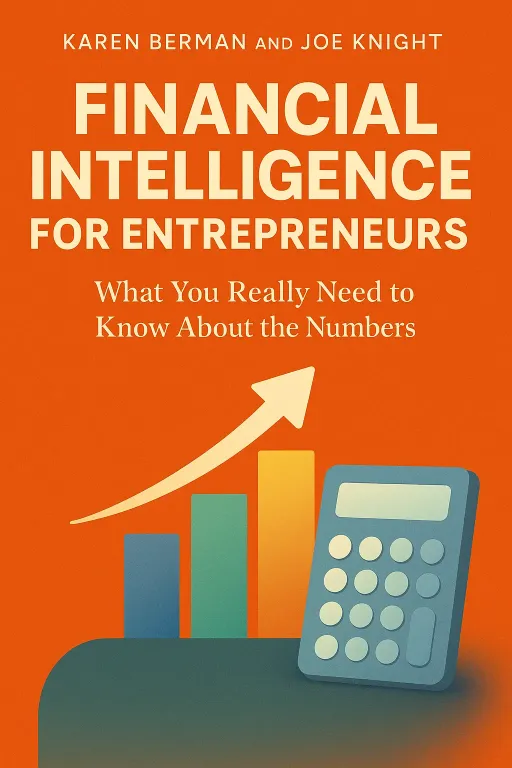
Nova: Exactly! And that’s why we’re diving into some incredible resources today. First up, we have "Financial Intelligence for Entrepreneurs" by Karen Berman and Joe Knight. These authors have a real knack for translating what can feel like impenetrable financial jargon into actionable business insights, making it so much more accessible. We’ll also touch on Josh Kaufman's "The Personal MBA" for a broader view of strategic financial principles. Berman and Knight, in particular, are brilliant because they speak directly to the non-financial professional, showing how to leverage these insights.
Atlas: Okay, so it’s less about becoming a CPA and more about becoming a fluent speaker of the "language of business." That makes sense. What’s the very first, most crucial step for a strategist to truly crack this code and understand what those numbers are actually telling them?
Decoding the Numbers Game: The Language of Strategic Health
SECTION
Nova: The absolute first step, Atlas, is understanding the three core financial statements: the Income Statement, the Balance Sheet, and the Cash Flow Statement. Think of them as three chapters in a company’s ongoing story, each revealing a different, yet interconnected, part of its strategic health report. If you want to understand where a company is going, you have to read these pages.
Atlas: What exactly are we looking for in an income statement beyond just profit? Isn't it just about the bottom line? Because for most strategists, that’s where their eyes go first.
Nova: It’s so much more! The income statement, often called the P&L, tells you about a company’s performance over a period – sales, costs, and ultimately, profit. But beyond the net income, a strategist looks at the in revenue growth, the to understand pricing power and cost efficiency, and operating expenses to see where the company is investing its resources for growth. Are they spending heavily on R&D for future innovation? Or on sales and marketing to capture market share? These aren't just numbers; they’re strategic choices laid bare.
Atlas: That’s a great way to put it – strategic choices. So, it's not just a historical report, but a map of current priorities. But wait, for someone who isn't an accountant, these documents often feel like reading hieroglyphics. How can a strategist, who needs to connect the dots quickly, really use this without getting bogged down in every single line item?
Nova: That’s where the "strategic lens" comes in. Take two hypothetical companies. Company A and Company B both report a million dollars in profit. On the surface, they look identical. But then you look at their balance sheets. Company A has very little debt, strong cash reserves, and is investing heavily in new, cutting-edge equipment. Company B, however, is heavily leveraged, has dwindling cash, and its assets are mostly old, depreciating machinery.
Atlas: Ah, I see! So, the balance sheet tells you what the company and at a specific point in time, essentially its financial structure. Company A sounds like it’s strategically positioned for growth and resilience, while Company B might be struggling, even with that million-dollar profit.
Nova: Exactly! The balance sheet reveals their strategic foundation. Then you have the Cash Flow Statement, which is arguably the most important for a strategist. It shows where cash is actually coming from and going. A company can be profitable on paper but cash-poor, or vice-versa. Are they generating enough cash from operations to fund their growth organically? Or are they constantly borrowing or issuing new stock? That tells you a lot about their sustainability and strategic flexibility.
Atlas: That makes me wonder, what’s a common mistake strategists make when looking at these numbers? Because it sounds like you can’t just glance at one statement and make a judgment.
Nova: A huge mistake is looking at any one statement in isolation, or just focusing on the "headline" numbers. You have to connect them. A dip in profit on the income statement might look bad, but if the cash flow statement shows massive investment in a new, disruptive technology, that’s a strategic choice for long-term gain, not necessarily a sign of failure. It's about seeing the whole picture, the full narrative of their strategic intent.
Beyond the Balance Sheet: Building Your Strategic Financial Toolkit
SECTION
Nova: And that naturally leads us to the second key idea: once you can read the report, how do you it? It's about building your strategic financial toolkit, moving beyond passive understanding to active influence. This is where you connect the dots between the numbers and market trends, innovation, and ultimately, impact.
Atlas: So, moving from understanding to. As an aspiring strategist, I want to apply this immediately. What's a practical, tiny step our listeners can take to start applying this immediately? Beyond just reading the books.
Nova: This is where the rubber meets the road. My absolute favorite "tiny step" is to grab a competitor's annual report, or even a potential partner's. Don't try to understand every line. Instead, focus on identifying their key revenue drivers – where are they making their money? What are their biggest cost structures – where are they spending? And crucially, where are they investing – what's their capital allocation strategy? This forces you to think like strategist, dissecting their choices through a financial lens.
Atlas: That's actually a brilliant idea. It turns the numbers into a competitive intelligence exercise. It’s like reverse-engineering their strategy from their financial footprint. But what if the numbers look bad? How do you interpret 'bad' numbers strategically? Is it always a red flag that they're failing?
Nova: Not at all! "Bad" isn't always bad; it depends entirely on the strategic context. A new startup, for instance, might show heavy losses and negative cash flow. That looks "bad" on paper, but if those losses are due to massive investment in R&D for a groundbreaking product, or aggressive market penetration, it could indicate a very strong long-term strategy. The key is to look at trends, compare them to industry benchmarks, and understand the strategic narrative behind the figures. Are they putting their money where their strategic mouth is? Are they allocating capital to innovation, market expansion, or shoring up existing operations?
Atlas: I love that. It’s about seeing the story behind the numbers, not just the numbers themselves. So, for a strategist who's driven by impact, how does mastering this toolkit directly translate into making a bigger difference within their organization? How do they leverage this understanding?
Nova: It's transformative. When you master this toolkit, you can build far stronger business cases for your ideas because you can articulate their financial implications. You can understand market trends beyond just marketing buzzwords, connecting them to revenue potential or cost implications. You can speak directly to the bottom line, influencing key decisions and driving innovative campaigns that aren't just creative, but also financially sound and strategically aligned. You move from being a contributor to being an indispensable strategic partner.
Synthesis & Takeaways
SECTION
Nova: So, what we’ve really explored today is how financial statements aren't just accounting documents; they are the fundamental language of business strategy. And by building your strategic financial toolkit, you move from passively observing to actively influencing, translating your strategic vision into tangible financial reality.
Atlas: It’s empowering, honestly. What initially felt like a daunting task—deciphering complex financial reports—now feels like learning a crucial skill for strategic influence. It’s about asking the right questions of the numbers.
Nova: Exactly. Think of financial statements not as an audit, but as a strategic mirror. They don't just reflect the past; they project the future, depending on how you read and react to them. Your ability to interpret that reflection is your greatest strategic asset. It's about seeing the future before it arrives.
Atlas: And the actual "tiny step" then isn't just to read, but to. Pick a company, pick a question—"How are they funding their innovation?" or "Are they preparing for a market shift?"—and let the numbers guide you. That’s a powerful path to growth.
Nova: Absolutely. Embrace that journey of continuous learning, see every challenge as an opportunity to grow, and remember that deep down, you are driven by a desire to contribute and make a real impact. This is how you do it.
Atlas: This is Aibrary. Congratulations on your growth!