

Mastering Strategic Financial Planning: Beyond the Numbers
Golden Hook & Introduction
SECTION
Nova: Alright, Atlas, quick game. I'll give you a common financial scenario, and you tell me the gut reaction most people have. Ready?
Atlas: Oh, I like this! Hit me.
Nova: You've got a fantastic new investment opportunity. It promises high returns, and everyone around you is buzzing about it. What's the immediate, instinctive thought?
Atlas: Oh, easy. FOMO. Fear of missing out. "Get in now before it's too late!" is screaming in everyone's head.
Nova: Exactly! Now, what's the, strategic play?
Atlas: Hold on. Research. Due diligence. Understand the risks. Probably consult an expert. But that takes... effort.
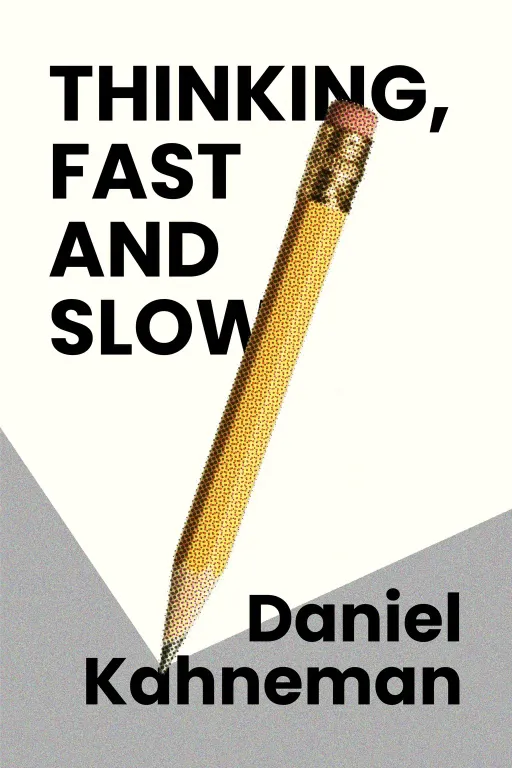
Nova: And time. That's the crux of what we're dissecting today, right? That fascinating chasm between our quick, intuitive financial impulses and the slow, logical decisions that actually build lasting value. We're diving into the masterful work of Daniel Kahneman with "Thinking, Fast and Slow" and Josh Kaufman's "The Personal MBA" to understand the dual engines of financial strategy.
Atlas: That's a great way to put it. I mean, Kahneman, a Nobel laureate, gave us this incredible framework for understanding how our brains trick us, especially with money. And Kaufman then comes along and says, "Okay, now that you know your brain might be working against you, here's the entire playbook for how business operate strategically." It's like a one-two punch for better financial planning.
The Silent Saboteurs: Our Own Minds
SECTION
Nova: Absolutely. And what's so captivating about Kahneman's work is how it pulls back the curtain on our financial decision-making process. He wasn't just some academic; he revolutionized economics by showing how psychology plays a starring role. His research, much of it done with Amos Tversky, completely upended the idea of humans as purely rational actors. They showed that, often, our brains are lazy, and they take shortcuts.
Atlas: Oh, I’ve been there. I totally know that feeling. So he talks about System 1 and System 2 thinking. Can you break that down for us, Nova? Because I imagine a lot of our listeners are thinking, "What does my 'thinking system' have to do with my portfolio?"
Nova: That’s a great question, and it's fundamental. System 1 is our fast, intuitive, emotional, and often unconscious thinking. It's what tells you "danger!" when you see a snake, or "buy now!" when a stock is skyrocketing. It’s effortless. System 2, on the other hand, is slow, deliberate, logical, and requires effort. It's what you engage when you're solving a complex math problem or analyzing a detailed financial report.
Atlas: So basically you’re saying System 1 is the impulsive teenager, and System 2 is the wise, albeit sometimes slow, adult.
Nova: Precisely! And Kahneman shows us how System 1 often overrides System 2, especially in high-pressure financial situations. Think about common biases like confirmation bias – where we only seek out information that confirms what we already believe – or anchoring bias, where an initial piece of information, even if irrelevant, heavily influences subsequent decisions.
Atlas: Hold on. That sounds rough, but how does that play out in a real-world financial situation? Give us an example where System 1 really messes things up.
Nova: Imagine a company launching a new product. System 1, driven by enthusiasm and early positive buzz, might lead investors to believe it's an instant success. They might ignore critical market data, dismiss competitors, or overlook potential manufacturing hurdles. They’re anchored to the initial positive news. System 2 would demand a deep dive into the business plan, competitive landscape, and realistic revenue projections. But that takes effort, and our brains prefer to conserve energy.
Atlas: So the "fast thinking" feels good, gives us that immediate dopamine hit, even if it leads us off a cliff. And the "slow thinking" is like eating your vegetables—necessary, but not always what you crave.
Nova: Exactly! And this isn't just about individual investors. Entire corporate boards can fall prey to these biases, leading to disastrous strategic choices. Consider the sunk cost fallacy: pouring more money into a failing project simply because you've already invested so much, rather than cutting your losses. That's System 1 saying, "Don't admit defeat!" when System 2 would say, "This is a black hole."
Atlas: That’s a perfect example. I mean, we’ve all seen that in business. Companies clinging to outdated technology or failing product lines because of past investment. It’s almost like the more we invest, the harder it is to let go, even when the data screams otherwise.
The Architecture of Business Success
SECTION
Nova: Which brings us to the perfect counterpoint from Josh Kaufman's "The Personal MBA." If Kahneman shows us the psychological pitfalls, Kaufman hands us the blueprint for avoiding them by understanding the fundamentals of business itself. Kaufman's book became a phenomenon because it distilled years of business school knowledge into practical, accessible models. He basically said, "You don't need an expensive degree to understand how businesses create value."
Atlas: Yeah, I can definitely relate to that. A lot of our listeners are growth-seekers, proactive learners. They don't just count numbers; they want to understand the story behind them. So, what are these fundamental architectural principles Kaufman lays out?
Nova: He simplifies everything into five core interconnected parts of every business: creating value, marketing, sales, value delivery, and finance. It sounds deceptively simple, but each component is crucial. He shows that true financial strategy isn't just about spreadsheets; it's about understanding how these five pieces fit together to generate and sustain profit.
Atlas: So basically you’re saying that if you're trying to build a strategic financial plan, it's not enough to just look at the P&L statement. You have to understand those numbers are there – what value is being created, how it's being sold, how it's delivered, and then how it's all financed.
Nova: Precisely. And this is where the two books intertwine so beautifully. If you're building a financial model for a new product, you need System 2 thinking to rigorously analyze each of Kaufman's five components. You can't let System 1's excitement about the "idea" overshadow the hard work of assessing the "value delivery" or the "marketing" costs.
Atlas: That makes me wonder, how does Kaufman advise against those cognitive biases Kahneman warns us about? Does he explicitly address them, or is it more of an implicit safeguard?
Nova: It's more of an implicit safeguard, but a very powerful one. By providing a clear, logical framework for analyzing a business, Kaufman essentially forces you into System 2 thinking. His models are designed to make you ask the hard questions: "What problem are we solving for customers?" "Is our marketing reaching the audience?" "Are we delivering value?" These questions inherently challenge assumptions and force a more rational, data-driven approach.
Atlas: That’s a great way to put it. It’s like having a checklist that makes it harder for your gut feelings to just take over. You have to fill in all the boxes, and if you can't, you realize maybe your initial excitement was just System 1 talking.
Nova: Exactly. He empowers you to develop a robust "mental model" of how businesses work. And once you have that, you're much less susceptible to the emotional swings and cognitive shortcuts that Kahneman so brilliantly exposes. You see the whole picture, not just the shiny object.
Synthesis & Takeaways
SECTION
Nova: So, to bring it all together, what we're left with after exploring Kahneman and Kaufman is a profound truth: mastering strategic financial planning isn't just about crunching numbers or understanding market trends. It's about mastering and understanding the fundamental engine of value creation.
Atlas: That’s actually really inspiring. It’s about building an internal firewall against our own biases, and then having a practical framework to actually build something robust. For anyone out there trying to lead teams effectively, or just make smarter decisions with their money, this combination is incredibly powerful.
Nova: Absolutely. The deep insight here is that superior financial planning hinges on a dual mastery: the psychological awareness to recognize and mitigate our inherent biases, and the foundational business acumen to build and evaluate value systematically. It's the art of seeing both the forest and the trees, and understanding the complex ecosystem of how money, psychology, and business architecture intersect.
Atlas: So, for our listeners, the tiny step we talked about earlier is to actively look for those biases in your next financial decision. And the deep question is: how can understanding human decision-making improve the accuracy and resilience of your long-term financial forecasts? It’s not just about the spreadsheet; it’s about the mind behind it.
Nova: Exactly. And if you want to keep exploring these fascinating intersections of psychology, business, and personal growth, make sure to follow us. This is Aibrary. Congratulations on your growth!