

Unearthing Your True Calling: Beyond the Job Description
Golden Hook & Introduction
SECTION
Nova: Atlas, five words. "Unearthing Your True Calling." Go.
Atlas: Stop chasing, start designing, testing.
Nova: Ooh, I like that! Concise, action-oriented, and a little bit rebellious. Exactly what we need today. Because for so long, the idea of finding your "true calling" felt like some mystical quest, right? You either had it, or you spent your life vaguely unfulfilled.
Atlas: Oh, I know that feeling. It's like you're waiting for a lightning bolt, or a whispering spirit, or maybe just a really insightful career counselor to tell you what you're to do. It can be paralyzing.
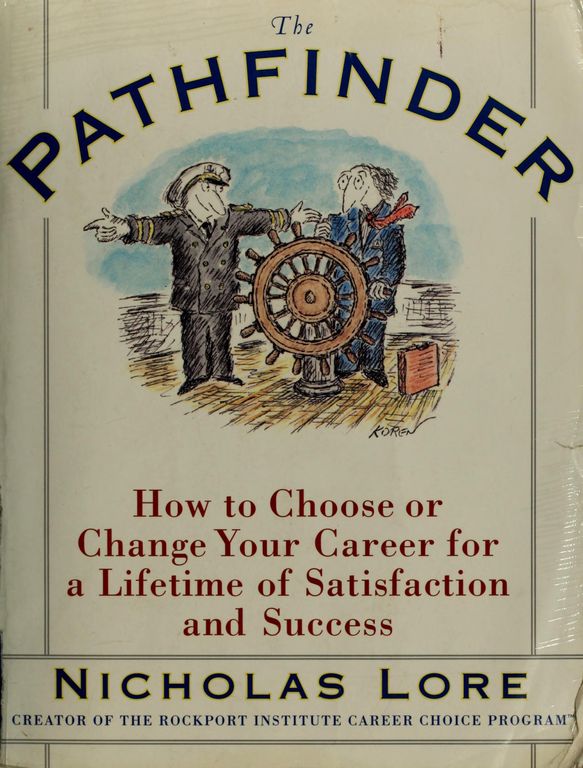
Nova: Absolutely. And that's precisely why we're diving into two phenomenal books that demystify this process, transforming it from a spiritual pilgrimage into something far more tangible and, dare I say, fun. We’re talking about "The Pathfinder" by Nicholas Lore and "Designing Your Life" by Bill Burnett and Dave Evans.
Atlas: Ah, "Designing Your Life." I've seen that one pop up everywhere. It’s by those Stanford D. School guys, right? The design thinking approach to, well, everything.
Nova: Exactly! Bill Burnett and Dave Evans are professors at Stanford's renowned Design School, bringing that innovative, problem-solving mindset to the messy, beautiful challenge of life planning. And Nicholas Lore, on the other hand, comes from a deep background in career counseling and coaching, with a more structured, analytical approach to self-discovery. They complement each other beautifully.
Atlas: So, Lore is the mapmaker, and Burnett and Evans are the expedition planners? That makes sense. But for someone who's feeling a bit lost, or maybe just bored with their current path, how do these books actually help them mapping, or planning, without feeling overwhelmed? Because a lot of our listeners, they're looking for answers, but they also want something that, something practical.
Structured Self-Discovery for Calling
SECTION
Nova: That’s the perfect question, Atlas, and it leads us directly into what Nicholas Lore champions in "The Pathfinder." He basically says, forget the vague notion of "follow your passion." That's often terrible advice because most people don't know what their passion, or it changes, or it won't pay the bills. Instead, Lore provides a highly structured, almost forensic approach to self-assessment.
Atlas: Wait, so it's not about waiting for an epiphany? It's more like... a scientific method for your soul?
Nova: Precisely! He takes you through a series of exhaustive exercises to identify your core strengths, your intrinsic interests—not just hobbies, but things that genuinely energize you—and most importantly, your non-negotiable values. It’s like breaking down your entire life into data points and then meticulously reassembling them into a clear picture of what makes you tick.
Atlas: That sounds incredibly thorough. But how is that different from just, you know, journaling? Or asking "what do I love?" Because I imagine a lot of our listeners have tried that, and they still feel stuck. They want clarity, but they also care about finding their way, not just following a template.
Nova: The key difference is the and the. Lore isn't asking you to just brainstorm. He has specific questionnaires, ranking systems, and cross-referencing methods that force you to look at patterns you might otherwise miss. For instance, you might list all the times you've felt truly alive, truly engaged, whether it was solving a complex problem at work, organizing a community event, or even just helping a friend untangle a tricky situation. Then, you analyze the underlying skills and values present in those moments.
Atlas: So you're building a profile of your ideal self, almost? What kind of results does that yield? Can you give me an example of someone who used this to actually pivot their life?
Nova: Absolutely. Imagine Sarah, who had a successful but utterly draining career in corporate marketing. She was good at it, but felt completely adrift. Through Lore's exercises, she realized her value wasn't about product launches or market share; it was about fostering growth in individuals and building strong, supportive communities. Her natural strengths were communication and empathy, which she used in marketing, but her interests kept pulling her towards personal development and education.
Atlas: Okay, so she had these pieces, but they weren't connected.
Nova: Exactly. Lore's process helped her see the pattern. It wasn't about abandoning marketing entirely, but reframing her skills and values. She eventually transitioned into instructional design for an online learning platform, where she could apply her marketing communication skills to create engaging educational content, directly aligning with her values of growth and community. It wasn't a "passion" she knew she had; it was a synthesis of her deep-seated drivers and talents. It’s about building a solid foundation of self-knowledge, not just chasing a fleeting interest.
Atlas: That’s fascinating. It sounds like it gives people a language to describe what they actually want, even if they didn't have the words for it before. But then what? Once you've mapped out your internal landscape, how do you actually it in the real world? Because knowing what you're good at and what you value is one thing, but making a change, especially a big one, feels incredibly risky.
Design Thinking for Life Experimentation
SECTION
Nova: And that, Atlas, is where Bill Burnett and Dave Evans gracefully pick up the baton with "Designing Your Life." If Lore helps you build your internal compass, Burnett and Evans give you the tools to chart your course and, crucially, run small, low-risk experiments to test different destinations. They apply design thinking principles—ideate, prototype, test—to life planning.
Atlas: "Prototype your life." That sounds… a bit cold, doesn't it? Like we're just products on an assembly line. How does that connect with finding your? I mean, a calling feels very personal, very human, not something you just A/B test.
Nova: That’s a common initial reaction, and it touches on that "Empath" aspect of wanting something authentic. But the beauty of their approach is that it the pressure. Instead of making one giant, terrifying leap of faith, you make a series of small, reversible steps. It's about learning through doing, rather than agonizing over the "perfect" plan. They emphasize that you can't if something is right for you until you experience it.
Atlas: So it's less about a grand master plan and more about iterative discovery? How does that actually work in practice? What does a "life prototype" look like?
Nova: Think of it this way: instead of quitting your high-paying but unfulfilling job to become a full-time potter, you "prototype" being a potter. That might mean taking an evening class, spending a Saturday volunteering at a pottery studio, or interviewing three full-time potters about their daily lives and challenges. It’s a way to gather real-world data and test your assumptions without risking your entire livelihood.
Atlas: That's a great example. So the goal isn't to commit, it's to. To see if the reality matches the fantasy, or if there are unexpected challenges or joys. That resonates with the "Builder" who wants practical solutions. But what’s one small experiment someone could run? For someone who feels stuck, what's a 15-minute "prototype" they could do?
Nova: That’s the deep question we posed earlier! And it directly answers the user's desire to "start small." A 15-minute prototype could be as simple as: if you're curious about writing, spend 15 minutes free-writing in a notebook. If you're interested in coding, try a free online tutorial for 15 minutes. Or if you've always wondered about a particular industry, spend 15 minutes finding and reading an interview with someone successful in that field.
Atlas: I love that. It’s not about finding your life's purpose in 15 minutes, it’s about gathering a data point. A tiny, low-stakes data point. And that makes it feel so much less intimidating than the overwhelming idea of "finding my calling."
Nova: Exactly. It's about shifting from overthinking to under-committing, in the best possible way. Both books, in their own ways, are telling us that finding your calling isn’t a single event, a sudden flash of insight. It’s an iterative process of exploration and experimentation. Lore helps you understand your internal landscape, and Burnett and Evans give you the tools to test that landscape against the real world.
Atlas: So it's less about finding answer and more about constantly refining answer, through action. That feels incredibly empowering, especially for someone who values their independence and wants to find their own way. It acknowledges that your feelings about being lost are valid, but then gently shifts the focus to what you control.
Synthesis & Takeaways
SECTION
Nova: And that's the profound insight here. We often wait for clarity to act, but these frameworks suggest we gain clarity action. Through those small experiments, through that structured self-reflection. We build our path by walking it, not by trying to see the entire journey from the starting line.
Atlas: Wow, that's actually really inspiring. It means you don't have to have all the answers to begin. You just need to be willing to ask the right questions, both internally and externally, and then take that tiny, almost insignificant first step. It's about continuous self-discovery, fueled by curiosity and practical action.
Nova: Precisely. It's an ongoing dialogue with yourself and the world. So, for everyone listening, what's that one small experiment you can run this week? That one 15-minute dive into a new interest or skill, no matter how unrelated it feels to your current path? Take that step. You never know what data point you'll discover.
Atlas: That gives me chills. The idea that everything is a prototype, and every step is a learning opportunity. It reframes the entire journey of life.
Nova: It truly does. And remember, every grand journey begins with a single, tiny, perfectly prototyped step.
Nova: This is Aibrary. Congratulations on your growth!